

TL;DR:
- Treating compliance as a strategic, integrated part of a food brand's operations enhances trust, market access, and resilience. It involves continuous documentation, hazard analysis, and proactive controls that protect consumer safety and drive growth. Building a robust compliance culture from the start prevents costly disruptions and turns regulatory adherence into a competitive advantage.
Compliance gets a bad reputation. Most food brand founders treat it like a legal tax: painful, unavoidable, and best handed off to someone else. That framing is expensive. The brands that treat compliance as a strategic function, baked into every product decision, formulation choice, and label claim, consistently outperform those that treat it as an afterthought. They get into more retail channels. They survive regulatory changes. They earn consumer trust that no marketing budget can replicate. This guide breaks down exactly how compliance works, what it costs you when it fails, and how to turn it into one of your brand's most durable competitive advantages.
Table of Contents
- What compliance really means for food brands
- Key regulatory frameworks and their business impact
- Compliance as a market access tool and competitive advantage
- Measuring, monitoring, and continuously improving compliance
- Our take: Why compliance is your brand's core business function, not just a cost
- How FormlyPro can help your brand excel at compliance
- Frequently asked questions
Key Takeaways
| Point | Details |
|---|---|
| Safeguard brand integrity | Robust compliance systems protect both consumers and your brand’s reputation. |
| Secure market access | Compliance enables your food brand to gain and maintain contracts with retailers and partners. |
| Leverage compliance strategically | Use compliance not only for risk control but also as a competitive differentiator in the marketplace. |
| Adopt continuous improvement | Successful brands measure and update compliance programs using data and regular monitoring. |
| Integrate compliance early | Make compliance a core value from the start to accelerate innovation and foster trust. |
What compliance really means for food brands
Most food brand entrepreneurs think of compliance as a stack of forms and a few label checks before launch. That's a dangerous oversimplification. In reality, why compliance matters goes far deeper than paperwork. Compliance is an integrated operating system for your brand, covering ingredient sourcing, manufacturing controls, labeling accuracy, allergen management, and post-market surveillance.
Think of it this way: compliance is the set of documented, repeatable processes that ensure your product is safe, accurately represented, and consistently made. When it works correctly, your customers never think about it. When it breaks down, it becomes front-page news.
"Compliance functions as a 'brand integrity' system: it protects consumer safety, preserves market access (preventing recalls/holds), and mitigates reputational and financial damage from enforcement actions." Compliance in the Food Industry
That framing should shift how you resource and prioritize compliance within your organization. It is not a cost center. It is brand infrastructure.

Here's how compliance activities map directly to business outcomes:
| Compliance Activity | Business Outcome |
|---|---|
| Hazard analysis and preventive controls | Prevents contamination-related recalls |
| Accurate allergen labeling | Reduces liability and consumer harm |
| Supplier verification programs | Protects supply chain integrity |
| Proper label claims and nutrient facts | Avoids FDA warning letters and FTC action |
| Documented corrective actions | Reduces severity of enforcement actions |
| Traceability recordkeeping | Faster recall response, limiting financial damage |
The most common misconception we hear from early-stage brands is that once the product is on shelves, compliance is done. In practice, compliance is continuous. Ingredient suppliers change. Regulations update. Your formulation evolves. Each of these events can trigger new compliance requirements that, if ignored, can pull your product from market entirely.
Pro Tip: Build a compliance calendar with scheduled quarterly reviews. Regulatory updates rarely give advance notice, and staying current protects your ability to ship product without interruption.
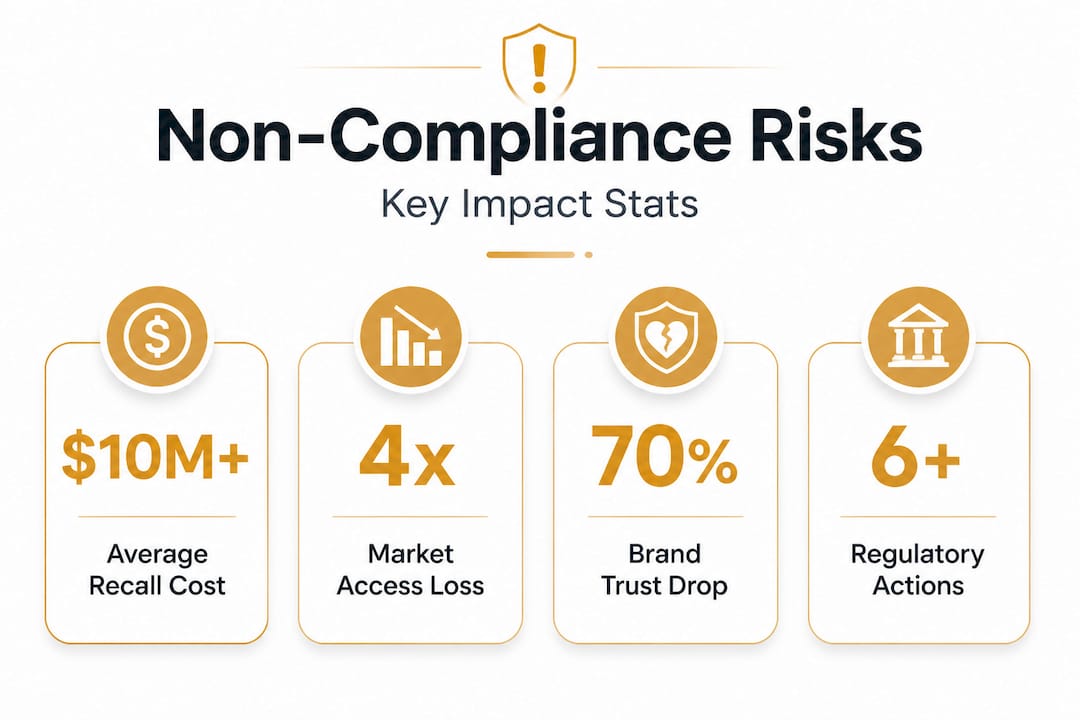
The financial cost of non-compliance is rarely a single fine. It cascades. A recall averages millions of dollars once you factor in logistics, destroyed inventory, legal fees, and lost retail placement. Brand reputation damage lingers far longer than the actual incident. This is why the strongest food brands invest in compliance proactively rather than reactively.
Key regulatory frameworks and their business impact
Understanding the specific rules that govern your brand is not optional. It is the foundation of every product decision you make, from how you source ingredients to how you write label copy.
In the U.S., the Food Safety Modernization Act (FSMA) represents the most significant overhaul of food safety law in decades. It fundamentally changed how the FDA expects food brands to approach safety. The old model was largely reactive: identify problems after they occur and respond. FSMA flipped that model. The FSMA compliance framework shifts the compliance mechanic toward preventive controls plus documented monitoring, verification, and corrective actions. You must anticipate hazards before they occur, write plans to control them, and keep detailed records proving you followed through.
Old versus modern compliance: a practical comparison
| Compliance Element | Pre-FSMA Approach | Modern FSMA Approach |
|---|---|---|
| Hazard identification | Reactive, post-incident | Proactive written hazard analysis |
| Documentation | Minimal, informal | Formal, auditable records required |
| Supplier oversight | Informal relationships | Documented supplier verification programs |
| Corrective actions | Ad hoc fixes | Written procedures with root cause analysis |
| Regulatory posture | Wait for inspection | Ongoing internal monitoring and verification |
The practical steps for bringing your brand into alignment with current standards follow a clear sequence:
- Conduct a written hazard analysis for each product, identifying biological, chemical, and physical risks at each production step.
- Establish preventive controls that directly address identified hazards, such as temperature controls, allergen segregation protocols, and sanitation procedures.
- Create a written food safety plan that documents every hazard, control, monitoring procedure, and corrective action.
- Implement supplier verification to confirm that incoming ingredients meet your safety standards.
- Train your team on procedures and document that training with dated records.
- Perform ongoing monitoring at defined intervals and log results every time.
- Conduct regular verification activities to confirm that your preventive controls are actually working as intended.
- Review and update your food safety plan annually or whenever you change formulation, process, or suppliers.
Skipping any of these steps creates a gap that regulators will find. The consequence is not always a fine. More often, it's a hold on your products, a mandatory recall, or loss of a key retail account that requires FSMA-compliant suppliers. For growing brands, that kind of disruption can be fatal. A strong regulatory compliance checklist built into your launch process eliminates most of these risks before they materialize. If you want full coverage across all compliance categories, a complete guide for brands will walk you through each layer systematically.
Compliance as a market access tool and competitive advantage
Here's where the conversation shifts from risk management to growth strategy. Many food brand founders view compliance as something you do to avoid getting in trouble. The smarter way to see it: compliance is something you do to open doors that are closed to your competitors.
Retailers, distributors, and foodservice operators increasingly require compliance documentation before they will even consider a new brand. This is especially true in fresh produce and specialty food categories, where compliance is a market access requirement. Being compliant is not a differentiator in those channels. It is the minimum entry requirement. Brands that cannot demonstrate documented compliance programs simply do not get the meeting.
But here is where the competitive advantage lives: most small and mid-size food brands have weak compliance infrastructure. Their documentation is inconsistent, their food safety plans are templates with blanks not filled in, and their supplier verification programs exist only on paper. Brands that invest in genuine, well-documented compliance programs stand out immediately during buyer evaluations.
Concrete ways robust compliance enables growth:
- Faster retailer onboarding: Buyers request fewer follow-up documents and can approve your brand with confidence.
- Export market access: Many international markets require FSMA or equivalent compliance as a baseline for import approval.
- Foodservice and institutional contracts: Large operators require third-party audits and documented food safety plans before awarding contracts.
- Private label opportunities: Retailers seeking co-manufacturing partners prioritize facilities with clean compliance histories.
- Investor credibility: Investors doing due diligence on food brands check compliance records. Clean records accelerate funding timelines.
- Insurance advantages: Some insurers offer lower premiums for brands with documented food safety programs and audit certifications.
Pro Tip: Lead with your compliance credentials in buyer presentations. Most brands talk about flavor and marketing. Walking into a meeting with your food safety plan, third-party audit results, and supplier verification documentation tells a buyer you are a serious operator. Use it as a differentiator. A detailed compliance checklist for safer launches can help you build the documentation package buyers expect to see.
The brands that integrate compliance into their brand story, not just their operations, find that consumers respond positively. Transparency about sourcing, safety practices, and quality controls builds the kind of trust that drives repeat purchase and brand advocacy. That is a marketing asset that no paid campaign can manufacture.
Measuring, monitoring, and continuously improving compliance
Strong compliance programs share one trait: they are measurable. Not just aspirational or policy-based, but tied to specific metrics, tracked over time, and actively used to drive improvement. Regulators operate this way, and your brand should too.
The FSIS publishes quarterly enforcement metrics including verification procedures performed, noncompliances documented, and compliance rates by establishment category. This matters because it shows regulators are not just inspecting your facility once and moving on. They are tracking patterns, measuring trends, and looking for brands whose compliance rates are slipping over time. If their data shows a problem, your brand will receive increasing scrutiny.
Your internal compliance program should mirror this approach. Here is a practical framework:
- Establish baseline metrics. Document your current compliance status: what percentage of production records are complete, how many supplier verifications are current, how often corrective actions are logged within 24 hours of a deviation.
- Schedule internal audits quarterly. Assign an internal lead or use a third party to review documentation, interview team members, and identify gaps.
- Track noncompliance events. Every time your process deviates from your food safety plan, log it. Document the root cause, the corrective action taken, and the verification that the action worked.
- Review supplier performance annually. Suppliers change practices, certifications lapse, and ingredients drift in specification. Annual verification keeps your supply chain risk current.
- Update your food safety plan after every significant change. New equipment, new ingredients, new co-manufacturers, and new packaging formats all trigger mandatory plan updates under FSMA.
- Train and re-train regularly. Document training dates, topics, and attendees. High turnover in food manufacturing is common, and regulators will check whether new employees received proper training before they handled your products.
- Report compliance performance to leadership. When compliance metrics are visible at the executive level, resource allocation follows. Leaders who see the data invest in the program.
Building a culture of compliance means every team member understands that documentation is not bureaucracy. It is protection for the consumer, the brand, and every person's job.
Integrating compliance into product development from the very first stage of formulation eliminates costly retrofits later. Likewise, packaging compliance deserves the same rigorous attention as ingredient safety, since label errors are among the most common triggers for FDA warning letters and mandatory recalls.
Our take: Why compliance is your brand's core business function, not just a cost
Here is the uncomfortable truth most compliance consultants will not tell you: the brands with the weakest compliance programs are often the ones that talk the most about compliance. They have binders. They have policies. They have someone with "compliance" in their job title. But when you look under the hood, the food safety plan was never updated after the first product launch, supplier verification is two years out of date, and corrective actions are never actually documented. That is compliance theater, and it creates more risk than no program at all, because it creates false confidence.
The brands that actually win on compliance treat it as a culture, not a checklist. Every person involved in production understands why they are logging temperatures, why they are documenting supplier certificates, and why they flag deviations immediately. The program is alive because it is used daily, not dusted off before an audit.
The second myth worth challenging: compliance slows innovation. We hear this constantly from brand founders who want to move fast and see compliance as friction. The opposite is true when compliance is integrated early. When your food safety plan is current and your documentation is clean, you can make formulation changes faster because you have a clear baseline to deviate from and return to. When your supplier relationships are formally verified, you can pivot to alternative suppliers quickly in a supply chain disruption because you have the documentation to onboard them efficiently.
The brands that retrofit compliance after rapid growth face enormous technical debt. They are rewriting food safety plans, backfilling supplier records, and scrambling before major retail audits. That process is disruptive, expensive, and sometimes unrecoverable if a regulatory action arrives before the fix is complete.
Our advice: treat compliance as the operating system your brand runs on. Build it right from the first product. Update it every time something changes. Make it visible to leadership. Use it to navigate market entry compliance with confidence rather than reacting to requirements after you have already committed to a launch. The brands that do this consistently grow faster, access better retail channels, and survive regulatory changes that disrupt their competitors.
How FormlyPro can help your brand excel at compliance
Compliance is not something you should manage across scattered spreadsheets and email threads. The documentation requirements alone, food safety plans, supplier verifications, label reviews, corrective action logs, can overwhelm a lean team without the right system underneath them.
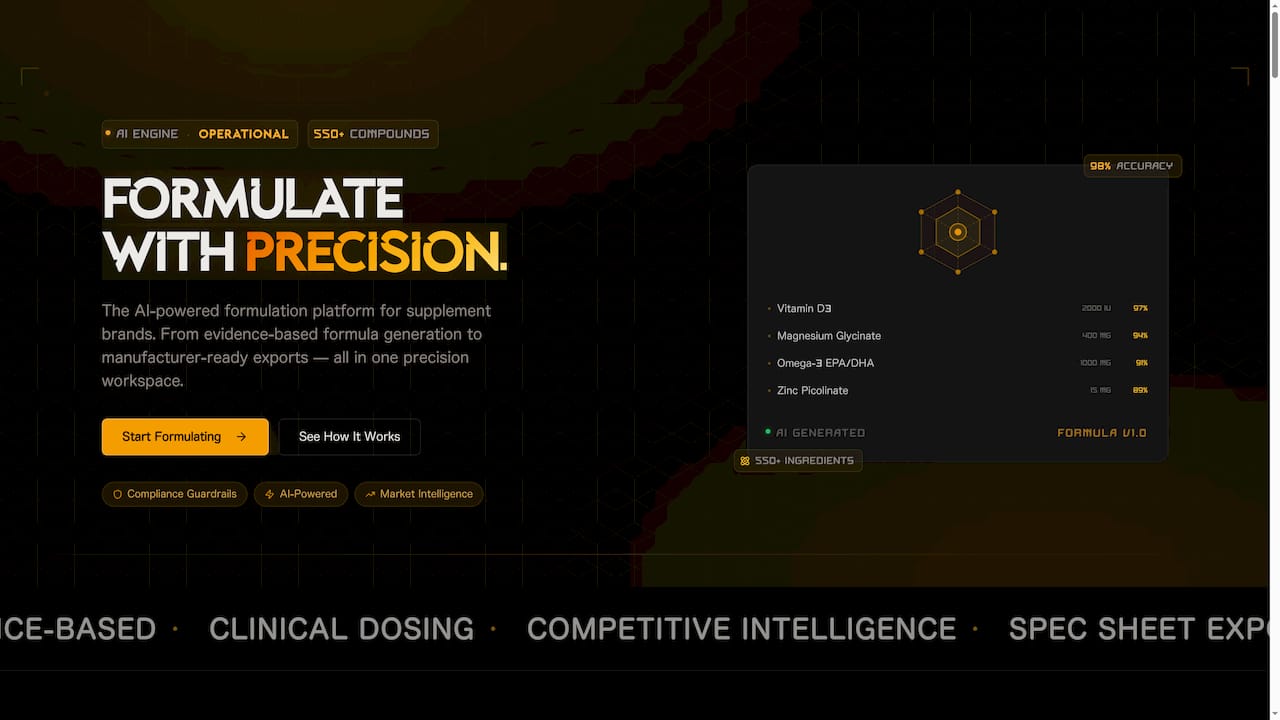
FormlyPro is built specifically for food brands that want to operationalize compliance without hiring a full regulatory team. The platform guides your brand through an 8-phase product development process that integrates compliance at every stage, from initial formulation through production. You get built-in regulatory guidance, competitor formulation analysis, market research, and an AI-powered packaging mockup designer that keeps label claims accurate and on-brand. Whether you are launching your first product or scaling an existing line, FormlyPro replaces the chaos of disconnected compliance workflows with a single, structured system designed for food brand operators.
Frequently asked questions
What are the main risks of non-compliance for food brands?
Non-compliance results in recalls, enforcement actions, loss of market access, reputational harm, and direct financial penalties that can threaten the viability of a brand at any stage of growth.
How does FSMA change compliance for U.S. food brands?
FSMA adds preventive controls, a written food safety plan, and formalized documentation of monitoring and corrective actions, shifting the entire compliance model from reactive response to proactive hazard prevention.
Can good compliance really improve my food brand's growth opportunities?
Yes. Compliance capability is increasingly a prerequisite for retailer acceptance, distribution contracts, and export market access, making it a direct driver of growth rather than just a protective measure.
How do regulators measure food brand compliance?
FSIS publishes quarterly enforcement metrics including verification procedures performed, noncompliances documented, and compliance rates by establishment, showing that regulators track compliance performance continuously, not just during single inspections.
Is compliance only important for large brands?
No. Every food brand, regardless of size, must meet regulatory requirements to avoid penalties and earn consumer trust. Small brands often face proportionally larger damage from a single recall or enforcement action than larger companies with more resources to absorb the disruption.