
TL;DR:
- Food chemists provide expertise in safety validation, regulatory compliance, and innovative packaging solutions.
- Sustainable biopolymers require enhancements like nanofillers to match traditional plastics’ barrier properties.
- Meeting global regulations and EPR standards involves verifying certifications and testing for chemicals like PFAS.
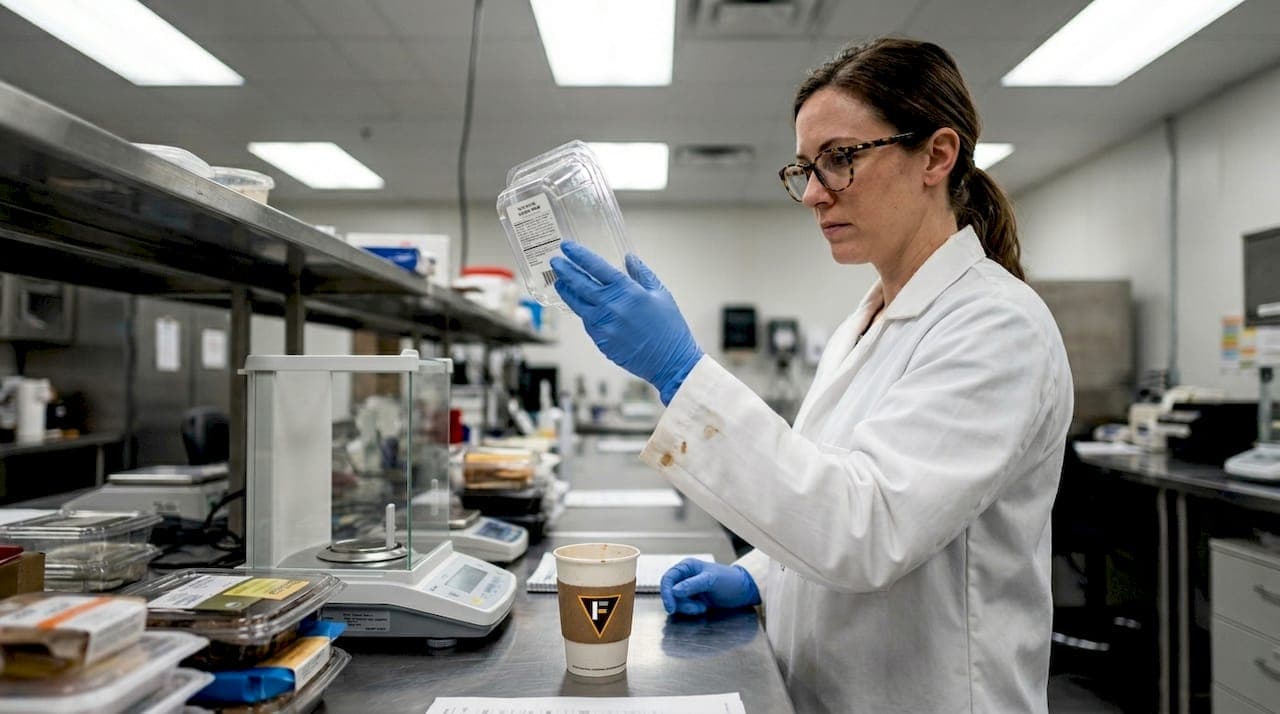
Packaging is one of the most technically demanding decisions a food brand makes. Get it wrong and you face compliance failures, accelerated spoilage, or a product that simply doesn't move off the shelf. Get it right and you gain a competitive edge that's backed by food science. Food chemists sit at the intersection of regulatory knowledge, material science, and consumer behavior, making their guidance uniquely valuable for brands navigating FDA requirements, sustainability pressures, and shelf appeal. This guide pulls from food chemist expertise to give you actionable strategies across safety validation, innovative materials, regulatory compliance, and packaging decisions that actually protect your brand.
Table of Contents
- Criteria for food-safe and market-ready packaging
- Innovative packaging solutions from food chemist insights
- Comparing traditional plastics vs. bio-based materials
- Regulatory and clean packaging essentials
- What most brands overlook in food chemist packaging strategies
- Bring expert-led packaging innovation to your brand
- Frequently asked questions
Key Takeaways
| Point | Details |
|---|---|
| Safety validation is essential | Every packaging material must meet FDA standards and migration testing for specific food types. |
| Smart innovations drive shelf life | Antimicrobial and intelligent packaging improve product longevity and consumer trust. |
| Compare materials for fit | Balance traditional and bio-based options, weighing performance, cost, and sustainability. |
| Global compliance prevents risk | Following strict global standards ensures clean packaging and regulatory success. |
| Food chemist tips boost outcomes | Document supplier guarantees and test lifecycles to avoid hidden risks. |
Criteria for food-safe and market-ready packaging
Before you choose a material or print a label, you need a framework for evaluating packaging that holds up to both regulatory scrutiny and real-world product conditions. Food chemists approach this with a layered checklist that most brands underestimate.
Safety validation is the non-negotiable starting point. Functional coatings must comply with FDA via GRAS (Generally Recognized as Safe) status or a Food Contact Notification (FCN), and migration testing is required for specific food types and time-temperature conditions. This means the coating or material must be tested for how much of it moves into your food under realistic storage and heating conditions. A packaging supplier who can't provide this data is a liability.
Here's what your safety validation process should cover:
- GRAS or FCN documentation from your packaging supplier, specific to your intended use
- Migration testing results for your food type (high-acid, high-fat, aqueous)
- Lifecycle documentation covering microwave, freeze-thaw, and long-term storage conditions
- Supplier Letters of Guaranty referencing specific CFR (Code of Federal Regulations) sections or FCN numbers
Beyond safety, lifecycle documentation matters more than most brands realize. High-acid foods like tomato sauces and high-fat products like nut butters accelerate chemical migration from packaging. If your supplier's testing was done on a neutral aqueous food simulant, those results may not apply to your product. Always request testing that mirrors your actual formulation.
Marketing impact is also part of the criteria. Shelf appeal, tactile experience, and visual differentiation all influence purchase decisions. You can use our compliance standards guide to align your packaging strategy with both regulatory and commercial requirements from the start.
Statistic: Over 60% of purchase decisions for packaged food are made at the point of sale, making shelf-level visual impact a measurable business driver.
Pro Tip: When vetting packaging suppliers, ask for their FCN or GRAS documentation upfront, not after you've committed to a material. Cross-reference the specific CFR citation with your food type and intended use conditions before signing any supply agreement.
With criteria in mind, let's explore innovative food chemist-backed solutions for packaging.
Innovative packaging solutions from food chemist insights
Food chemists aren't just gatekeepers of compliance. They're also the people pushing the industry toward smarter, more functional packaging. Several categories of innovation are worth your attention right now.

Antimicrobial packaging uses natural agents like nisin (a naturally occurring peptide) and cinnamon-derived compounds to inhibit mold and bacterial growth directly within the packaging material. These antimicrobial innovations extend shelf life without adding preservatives to the formulation itself, which is a major win for clean-label brands.
Intelligent packaging integrates pH-sensitive indicators or freshness sensors that change color when food begins to degrade. These aren't gimmicks. They give consumers a real-time quality signal and reduce food waste by replacing arbitrary "best by" dates with actual condition-based indicators.
Sustainable biopolymers like PLA (polylactic acid) and PHA (polyhydroxyalkanoates) are gaining traction, especially when enhanced with nanofillers that improve their oxygen and moisture barrier properties. Without nanofillers, biopolymers often underperform conventional plastics in barrier quality, but the gap is closing fast.
Here's a quick breakdown of what food chemists are recommending:
- Antimicrobial films with nisin or plant-based extracts for bakery and dairy products
- pH indicator labels for fresh meat, seafood, and ready-to-eat meals
- PLA or PHA containers with nanofiller enhancement for dry goods and snacks
- Metallized films for products requiring high oxygen barrier without full plastic reliance
"Innovations like metallized films, active packaging, and right-sized packages extend shelf life and reduce waste," notes Dr. Claire Sand, a leading packaging technologist. Her expert perspective emphasizes that antimicrobial normalization and intelligent indicators are no longer experimental but practical tools brands should be adopting now.
You can align these innovations with your product's industry standards to make sure every material choice has a regulatory foundation.
Pro Tip: Combining intelligent freshness indicators with active antimicrobial packaging creates a dual-function system. The indicator tells the consumer when freshness is declining, while the antimicrobial layer actively slows that decline. Together, they extend both real and perceived shelf life.
Now, compare traditional and modern packaging materials in detail.
Comparing traditional plastics vs. bio-based materials
Understanding the performance differences between conventional and bio-based materials helps you make decisions that balance sustainability goals with product protection requirements.
| Property | PET / HDPE (Traditional) | Cellulose / Polysaccharides (Bio-based) |
|---|---|---|
| Oxygen barrier | Excellent | Moderate (improves with nanofillers) |
| Moisture barrier | Excellent | Poor without modification |
| Mechanical strength | High | Lower, needs reinforcement |
| Environmental impact | High (fossil-based) | Lower (renewable sources) |
| Cost | Low to moderate | Higher |
| Recyclability | Established systems | Limited infrastructure |
| Compostability | No | Yes (certified types) |
Traditional plastics like PET and HDPE have decades of performance data behind them. They're cost-effective, well-understood by regulators, and supported by recycling infrastructure. The tradeoff is their fossil-fuel origin and end-of-life challenges.
Bio-based packaging materials like polysaccharides and cellulose offer genuine sustainability advantages, but they need nanofillers to reach mechanical and barrier parity with conventional plastics. Water sensitivity is a real limitation. A cellulose-based container that performs well in dry conditions may fail completely in a humid distribution environment.
Key considerations when selecting your material:
- Match barrier properties to your product's moisture and oxygen sensitivity
- Account for distribution conditions, not just end-use storage
- Verify compostability certifications rather than accepting marketing claims at face value
- Factor in cost at scale, since bio-based materials often carry a premium that affects margin
Food chemists advise against treating bio-based as automatically superior. The right material is the one that protects your product through its entire lifecycle while meeting your sustainability commitments. Use our compliance checklist to evaluate both material types against your specific regulatory requirements.
After weighing material options, it's vital to recognize compliance and regulatory best practices.
Regulatory and clean packaging essentials
Regulatory pressure on packaging is intensifying globally, and PFAS (per- and polyfluoroalkyl substances) sit at the center of the conversation. These chemicals have been widely used in grease-proof packaging for fast food and baked goods, but their persistence in the environment and human body has triggered bans across multiple jurisdictions.
Chemicals of concern like PFAS persist in packaging because they perform functions that are hard to replace. The transition to CoC-free (chemicals of concern-free) packaging requires full value-chain testing, not just a supplier declaration. Compostable packaging that contains PFAS, for example, contaminates the compost stream and defeats its own purpose.
Here's a regional compliance snapshot:
| Region | Key regulation | PFAS status | EPR requirement |
|---|---|---|---|
| United States | FDA FCN / GRAS | State-level bans expanding | Growing (CA, OR) |
| European Union | EU Framework Regulation | Near-total phase-out | Mandatory |
| Asia (Japan, Korea) | JIS / KFDA standards | Increasing restrictions | Emerging |
Global brands should design to the strictest applicable standard. If your product enters the EU market, EU packaging rules effectively set your global baseline.
Key clean packaging actions for your brand:
- Request CoC-free certification from every packaging supplier
- Conduct full migration testing for PFAS and other regulated substances
- Verify compostable claims with third-party certification (BPI, TUV)
- Understand your Extended Producer Responsibility (EPR) obligations by market
EPR (Extended Producer Responsibility) regulations require brands to take accountability for the end-of-life of their packaging. Cleaner recyclate, meaning packaging free of contaminants and incompatible materials, is essential for meeting EPR standards. This affects material choices, labeling, and even how you structure supplier contracts.
For a deeper look at how compliance shapes product decisions, our resources on compliance importance and the product compliance guide walk through these requirements in practical terms.
Pro Tip: When a supplier claims their packaging is compostable, ask for the specific certification standard and the testing conditions. Industrial compostable and home compostable are very different performance categories, and using the wrong one can trigger regulatory issues and consumer complaints.
With compliance covered, let's reflect on unique lessons food chemists share that brands often overlook.
What most brands overlook in food chemist packaging strategies
Most brands treat packaging as a finishing step. Food chemists treat it as a co-formulation decision. That gap in thinking is where expensive mistakes happen.
The most overlooked area is lifecycle edge-case testing. Prioritizing supplier Letters of Guaranty with specific CFR or FCN citations for your intended use, and documenting lifecycle conditions like microwave heating and freeze-thaw cycling, isn't optional for high-acid or high-fat products. These conditions accelerate migration in ways that standard testing doesn't capture.
We've seen brands launch products in packaging that passed baseline FDA requirements but failed within six months because no one tested the material under actual distribution stress. Supplier documentation should be treated like a contract, not a formality. If a supplier can't provide migration data for your specific food matrix, that's a red flag worth acting on.
Real-world condition testing, including temperature cycling, humidity exposure, and extended storage, gives you data that protects your brand long after launch. Pair that with ongoing product development compliance reviews as regulations evolve, and you build a packaging strategy that doesn't need to be rebuilt every time a new rule drops.
Bring expert-led packaging innovation to your brand
You've now got the food chemist framework. Applying it to your specific product, category, and target market is where the real work begins.
FormlyPro is built for exactly this stage. The FormlyPro platform gives food and beverage brands a full-stack system for compliance guidance, formulation support, and packaging design, including an AI-powered mockup designer that lets you visualize and iterate on custom packaging before committing to production. From regulatory checklists to competitor analysis and an 8-phase product development plan, FormlyPro connects every packaging decision to a broader brand strategy. If you're ready to move from guesswork to a science-backed process, this is where you start.
Frequently asked questions
How do I verify if a packaging material is FDA-approved for food contact?
Request documented GRAS or FCN status from your supplier along with migration testing data specific to your food type and storage conditions. Generic documentation that doesn't reference your food matrix is not sufficient.
What technologies help extend food product shelf life?
Antimicrobial packaging using agents like nisin and pH-sensitive freshness indicators are the top food chemist-recommended innovations for meaningful shelf life extension. These work best when combined into a dual-function system.
Are bio-based packaging materials always more sustainable?
Not automatically. Bio-based materials offer sustainability benefits but face real performance gaps in moisture and oxygen barrier quality that require nanofiller enhancement to overcome. Match the material to your product's actual protection needs first.
How can brands avoid chemicals of concern like PFAS in packaging?
Require CoC-free certification from suppliers and conduct value-chain testing rather than relying on declarations alone. Shifting to clean packaging means verifying every substance in the packaging system, not just the primary material.
What is Extended Producer Responsibility (EPR) and how does it impact packaging?
EPR regulations hold brands accountable for the recyclability and end-of-life management of their packaging. Cleaner recyclate requirements under EPR mean your packaging material choices directly affect your compliance obligations in markets like the EU and California.