

TL;DR:
- Effective formulation depends on pH and ingredient synergy rather than active ingredient concentration.
- A structured process and early cross-disciplinary collaboration reduce costly late-stage changes.
- AI-driven tools accelerate development, improve precision, and support market claims effectively.
Formulation development is widely misunderstood. Many brands assume that loading a product with higher concentrations of active ingredients automatically delivers better results, but pH and synergy matter more than raw quantity in determining whether a formula actually works. Whether you're building a moisturizer, a functional beverage, or a nutraceutical supplement, the real challenge is strategic balance: getting the right ingredients working together at the right levels, in the right system, for the right consumer. This article breaks down what formulation development actually involves, the process behind it, the advanced tools reshaping it, and the practical pitfalls that derail even experienced brands.
Table of Contents
- What is formulation development?
- Core steps in the formulation development process
- Advanced optimization techniques in modern formulation
- Practical challenges and nuances in formulation development
- Expert perspective: What most brands miss about formulation development
- Accelerate your next formulation with FormlyPro
- Frequently asked questions
Key Takeaways
| Point | Details |
|---|---|
| Balance is key | Optimal formulation is about synergy, not just adding more actives or trendy ingredients. |
| Advanced tools accelerate R&D | AI platforms and modern analytics can reduce testing time and improve results in both cosmetics and food. |
| Pilot runs matter | Empirical stability testing and real-world pilots protect against costly product failures. |
| Ingredient interactions are critical | Even clean label or natural claims can introduce complexity—every ingredient choice must be evaluated holistically. |
What is formulation development?
Formulation development is the science and strategy of combining ingredients into a stable, effective, and marketable product. It's not just a recipe. It's an engineered system where every component, from the active to the preservative to the emulsifier, plays a role in how the final product performs, feels, and lasts on the shelf.
For brands in cosmetics and food, the goals differ in meaningful ways. In food, formulation targets mouthfeel, nutritional profile, and process tolerance, while cosmetics formulation centers on emulsion stability, pH management, preservation, and sensory properties. These aren't just technical differences. They shape which testing protocols you run, which regulatory frameworks apply, and which claims you can make on your packaging.
The core attributes that formulation development targets include:
- Stability: Does the product maintain its intended form and potency over time?
- Efficacy: Does it deliver the promised functional or aesthetic benefit?
- Sensory experience: How does it look, feel, smell, and taste?
- Shelf life: Can it survive distribution, retail, and consumer use without degrading?
- Regulatory compliance: Does it meet the ingredient and labeling standards of your target market?
One of the most persistent mistakes brands make is treating formulation as a straightforward addition problem. Add more vitamin C, get more brightening. Add more protein, get a better bar. In practice, increasing actives can reduce stability or trigger unwanted interactions that undermine the entire formula. A well-designed market-ready formulations guide will always emphasize that optimization is about the system, not the individual ingredient.
This systems-level thinking is what separates brands that launch products with staying power from those that reformulate within 12 months because of stability complaints or consumer feedback.
Core steps in the formulation development process
Knowing what formulation development is sets the stage. Understanding the actual process is where most brands either gain a competitive edge or lose months of time and budget.
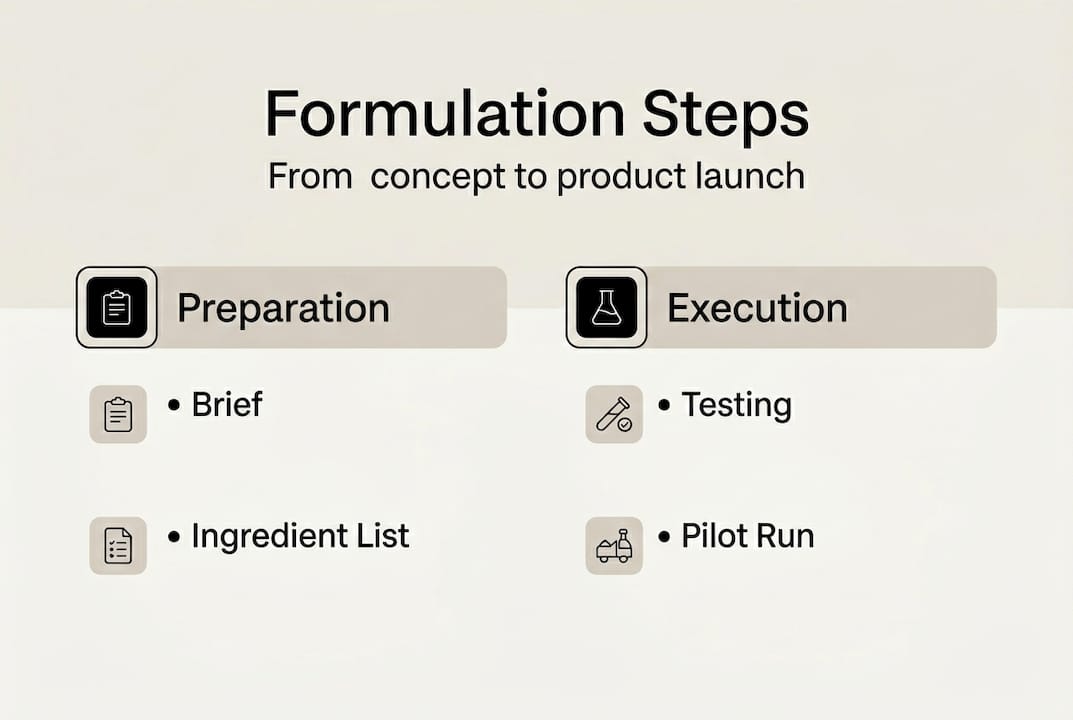
A structured formulation process typically moves through these stages:
- Ideation and brief: Define the product concept, target consumer, key claims, regulatory market, and performance benchmarks before a single ingredient is selected.
- Ingredient sourcing: Identify raw materials that meet your functional, clean label, cost, and regulatory requirements.
- Lab trials: Develop prototype formulas at bench scale, testing multiple variations to identify the most promising combinations.
- Compatibility testing: Evaluate how ingredients interact under different conditions, including temperature, light, and pH.
- Sensory and stability testing: Assess real-world performance through accelerated aging, consumer panels, and sensory evaluation.
- Pilot scale-up: Translate the bench formula to pilot manufacturing to catch process-related issues early.
- Shelf-life validation: Run real-time and accelerated shelf-life studies to confirm product integrity through the intended use period.
- Regulatory review: Confirm ingredient compliance, labeling accuracy, and claims substantiation for each target market.
Stability testing and pilot runs are empirically required for successful scale-up. Skipping or compressing these stages is one of the most expensive mistakes a brand can make, because problems discovered at full manufacturing scale cost far more to fix than those caught at the pilot stage.
The step-by-step approach to formulation also requires tight documentation. Every ingredient change, every trial result, every compatibility observation needs to be tracked. This isn't just good science. It's essential for your regulatory compliance steps and for building a defensible technical file if your product is ever questioned.
Pro Tip: Write your formulation brief before you touch a single ingredient. Define your target pH range, desired texture, key actives, and regulatory market upfront. This single habit prevents the most common and costly mid-development pivots.
Advanced optimization techniques in modern formulation
With the fundamentals covered, let's look at how the latest optimization methods can make or break successful formulation.
Traditional formulation relied heavily on trial and error. A skilled formulator would draw on experience, run batches, observe results, and iterate. That approach still has value, but it's slow and resource-intensive. Today, brands have access to tools that make formulation faster, more precise, and more aligned with market positioning goals.
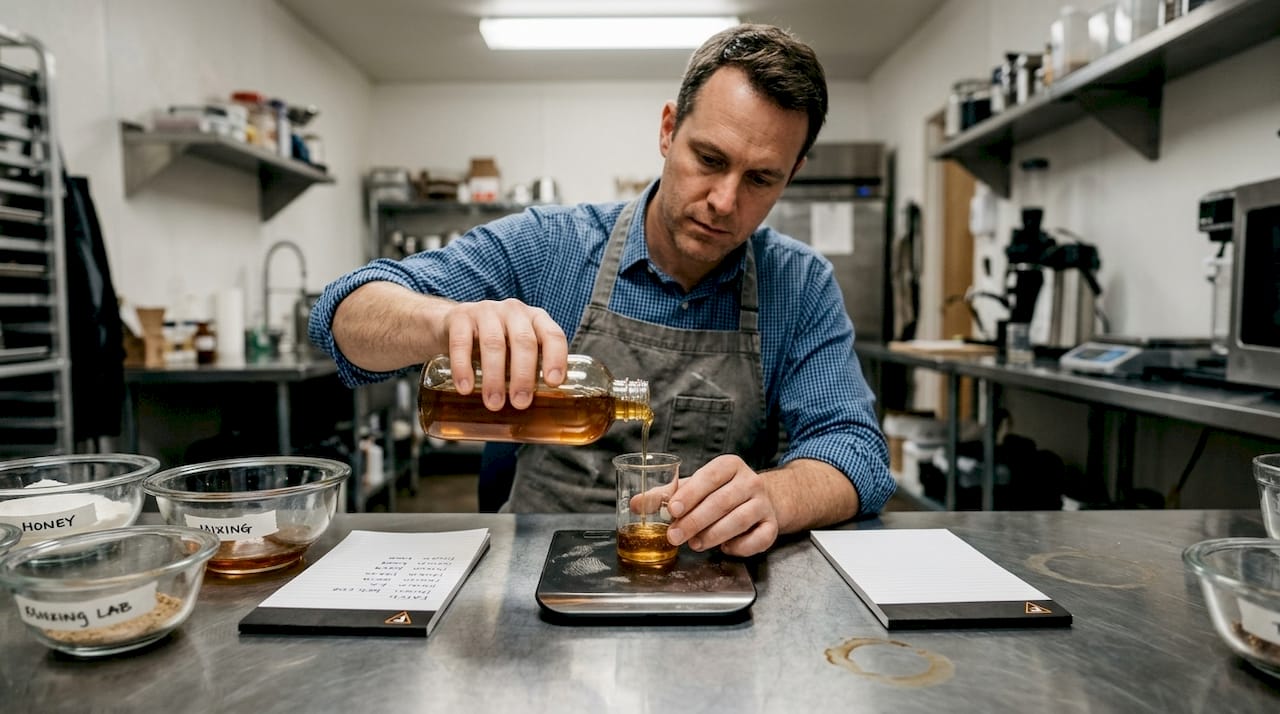
RSM and AI-driven models accelerate ingredient mapping and texture or antioxidant optimization in ways that manual methods simply can't match. Response Surface Methodology (RSM) maps the relationship between multiple variables and a target outcome, letting you identify the optimal formulation zone with far fewer experiments. Genetic algorithms go further, running thousands of simulated combinations to converge on high-performing solutions.
| Approach | Speed | Precision | Cost efficiency | Claims optimization |
|---|---|---|---|---|
| Traditional trial and error | Slow | Moderate | Low | Manual |
| RSM | Moderate | High | Moderate | Structured |
| AI and machine learning | Fast | Very high | High | Automated |
| Genetic algorithms | Fast | High | High | Scenario-based |
AI platforms also enable brands to optimize for market-facing goals, not just technical ones. You can model formulas that hit a clean label target while maintaining texture, or identify the minimum effective concentration of an active to support a specific claim. Nanoemulsions and mesoporous silica nanoparticles are also improving ingredient bioavailability and stability in cosmetics, opening up new performance claims that weren't achievable with conventional delivery systems.
The formulation analytics advantages are measurable. Brands using data-driven platforms report R&D timelines up to 50% shorter compared to traditional approaches. When you factor in the cost of lab time, raw materials, and delayed launches, that speed advantage translates directly into revenue.
If you're evaluating your current toolset, a formulation platform comparison can help you identify where your workflow has the most room to improve. The best platforms don't just speed up the process. They integrate AI in product development with compliance tracking and market data so your formulation decisions are grounded in both science and commercial reality.
Pro Tip: Use AI optimization tools not just to hit technical targets, but to build formulas that support specific marketing claims from the start. A formula engineered around a claim is far easier to substantiate than one where claims are added after the fact.
Practical challenges and nuances in formulation development
These modern tools are powerful, but formulation development is as much about understanding edge cases and trade-offs as it is about optimization.
Ingredient interactions are where even experienced formulators get surprised. Two ingredients that perform well independently can create instability, off-notes, or reduced efficacy when combined. Minerals can add bitterness, while high levels of actives lower stability. These are recurring issues in both food and cosmetics that no amount of theoretical modeling fully eliminates.
Common formulation challenges by category:
| Challenge | Food formulation | Cosmetic formulation |
|---|---|---|
| Ingredient interaction | Off-flavors, texture loss | Phase separation, discoloration |
| Clean label trade-offs | Reduced shelf life, texture change | Preservation gaps, instability |
| Active concentration | Bitterness, nutrient competition | Irritation, pH disruption |
| Scale-up variation | Process sensitivity, viscosity shift | Emulsion breakdown, batch inconsistency |
Clean label reformulation is a particularly sharp trade-off. Removing synthetic preservatives, reducing sugar or sodium, or switching to natural colorants almost always affects texture, flavor, or stability in ways that require additional testing cycles. This is why clean label compliance needs to be built into the formulation brief from day one, not retrofitted after the formula is set.
The core principle that experienced formulators return to again and again:
Higher does not always mean better. Lower, synergistic concentrations often outperform.
This is especially true for actives with narrow efficacy windows, where exceeding the optimal concentration triggers diminishing returns or outright negative effects. Ingredient interaction research consistently shows that balance and compatibility drive outcomes more than concentration alone.
Empirical testing always wins. No predictive model, however sophisticated, replaces a real pilot run. The pilot stage is where processing conditions, equipment behavior, and ingredient behavior under manufacturing stress reveal issues that bench-scale testing misses entirely.
Expert perspective: What most brands miss about formulation development
After working through the technical and practical sides, there's one pattern worth naming directly: most brands underinvest in the early stages and overinvest in fixing problems later.
The temptation to move fast is real. Competitive pressure, investor timelines, and trend cycles all push toward speed. But brands that skip or rush pilot testing, delay regulatory review, or treat stability studies as optional almost always pay a larger cost downstream. A recall, a reformulation after launch, or a compliance failure in a new market is far more expensive than a thorough development cycle.
The brands that consistently launch strong products share one habit: they involve cross-disciplinary experts early. Regulatory specialists, sensory scientists, and marketing strategists sitting alongside formulators from day one means fewer late-stage pivots and stronger claims documentation. Compliance in development isn't a final checkpoint. It's a design constraint that shapes every formulation decision.
Pro Tip: Build your regulatory and claims documentation in parallel with your formulation process, not after it. By the time your formula is finalized, your technical file should be nearly complete. This cuts weeks off your time to market and gives your marketing team credible, defensible language from launch day.
Accelerate your next formulation with FormlyPro
If the process described above sounds like a lot to manage simultaneously, that's because it is. Most brands don't have the infrastructure to run market research, competitor analysis, formulation optimization, compliance tracking, and packaging design in parallel.
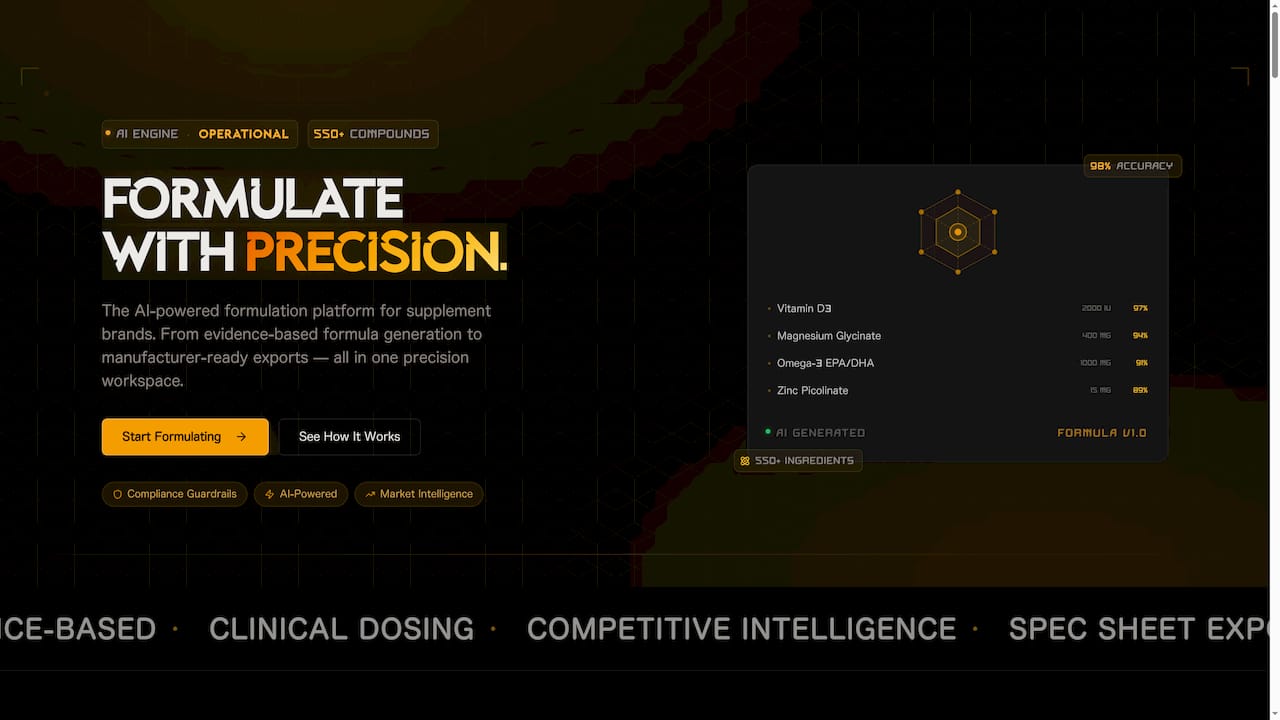
FormlyPro is built specifically for cosmetics and food brands that need to move through the full development cycle without losing scientific rigor. The platform's 8-phase system takes you from ideation through production, with AI-driven formulation tools, built-in compliance guidance, competitor ingredient analysis, and a custom packaging mockup designer integrated into one workflow. If you're ready to apply what you've learned here, the formulation guide is a strong next step to see how the platform structures the process end to end.
Frequently asked questions
What is the difference between formulation and product development?
Formulation engineers stability, efficacy, and sensory experience, while product development also encompasses marketing, legal review, and full-scale manufacturing. Formulation is one critical phase within the broader product development process.
How do ingredient interactions impact formulation success?
Minerals add bitterness and high actives reduce stability in both food and cosmetics, which is why every combination must be validated through empirical testing rather than assumed to be safe based on individual ingredient data.
Can AI really improve formulation outcomes?
AI and RSM enable up to 50% faster R&D cycles and more precise ingredient-to-outcome mapping, giving brands a measurable advantage in both speed and formulation quality.
What is the biggest mistake in formulation development?
Higher concentrations irritate and reduce product stability, so rushing to maximize actives without empirical testing is consistently the most costly formulation error brands make.