

TL;DR:
- Formulation analytics uses data, AI, and predictive models to improve product development.
- It reduces development time, costs, and failure rates while enabling personalized formulations.
- Successful adoption requires organized data, human insight, and category-specific analytics platforms.
Formulation analytics was once considered the exclusive territory of billion-dollar corporations with sprawling R&D labs. That assumption is now outdated. Mid-sized brands and startups are cutting development time by 50% using data-driven methods that were unthinkable a decade ago. Whether you're developing a new skincare serum, a functional beverage, or a nutraceutical supplement, the question is no longer whether analytics matters. It's whether you can afford to ignore it. This article breaks down what formulation analytics actually is, why it's reshaping how products get built, and how your team can start using it today.
Table of Contents
- What is formulation analytics?
- Transforming R&D: From trial and error to predictive science
- Beyond speed: New opportunities for personalization and compliance
- Practical steps: How to adopt formulation analytics in your process
- A smarter future: Why human + AI teams are unstoppable
- Level up your brand with FormlyPro
- Frequently asked questions
Key Takeaways
| Point | Details |
|---|---|
| Accelerate product development | Analytics can cut R&D timelines by up to 50%, getting products to market faster. |
| Reduce risk and cost | Fewer failed batches and smarter ingredient choices lower overall costs. |
| Enable personalization and compliance | Brands can tailor products and meet regulatory standards more efficiently. |
| Blend human expertise and AI | The best results come from a hybrid approach combining analytics and team insight. |
What is formulation analytics?
Formulation analytics is the practice of using data, algorithms, and computational models to guide how products are developed at the ingredient level. Instead of relying purely on a chemist's intuition or years of trial batches, you're feeding structured data into systems that predict how ingredients will behave together before a single gram hits a beaker.
The methods behind this are more varied than most people realize. Formulation analytics uses AI, ML, and predictive modeling to forecast ingredient interactions, stability, efficacy, and overall product performance. It also draws on meta-analysis (reviewing large bodies of existing research simultaneously), chromatographic profiling (identifying chemical composition), and rheological profiling (measuring how a product flows and behaves physically). Together, these tools give your team a far more complete picture of what a formula will do before you prototype it.
Here's what separates modern analytics from traditional approaches:
- Traditional formulation: Relies on bench testing, historical knowledge, and iterative trial and error. Cycles are long, failure rates are high, and scaling is unpredictable.
- Analytics-enabled formulation: Uses data models to simulate outcomes, flag incompatibilities, and predict stability. Teams test fewer physical batches and move faster.
- AI-assisted formulation: Layers machine learning on top of historical and real-time data to continuously improve predictions as more product data is collected.
For cosmetics developers, this means knowing how an emulsifier will interact with an active ingredient across different pH ranges before committing to a batch run. For food and beverage brands, it means predicting how a functional ingredient like ashwagandha or lion's mane will behave in a specific matrix without months of sensory testing.
The practical value is straightforward. You reduce waste, you reduce cost, and you get to market with a product that actually performs. Analytics doesn't eliminate creativity in formulation. It removes the noise so your team's expertise can focus where it actually matters.
Transforming R&D: From trial and error to predictive science
Traditional R&D in cosmetics and food development has always been expensive. You build a hypothesis, test it physically, analyze the results, adjust, and repeat. A single product launch can involve dozens of failed batches, and each one costs money, time, and team energy. For smaller brands, this cycle is often the biggest barrier to innovation.
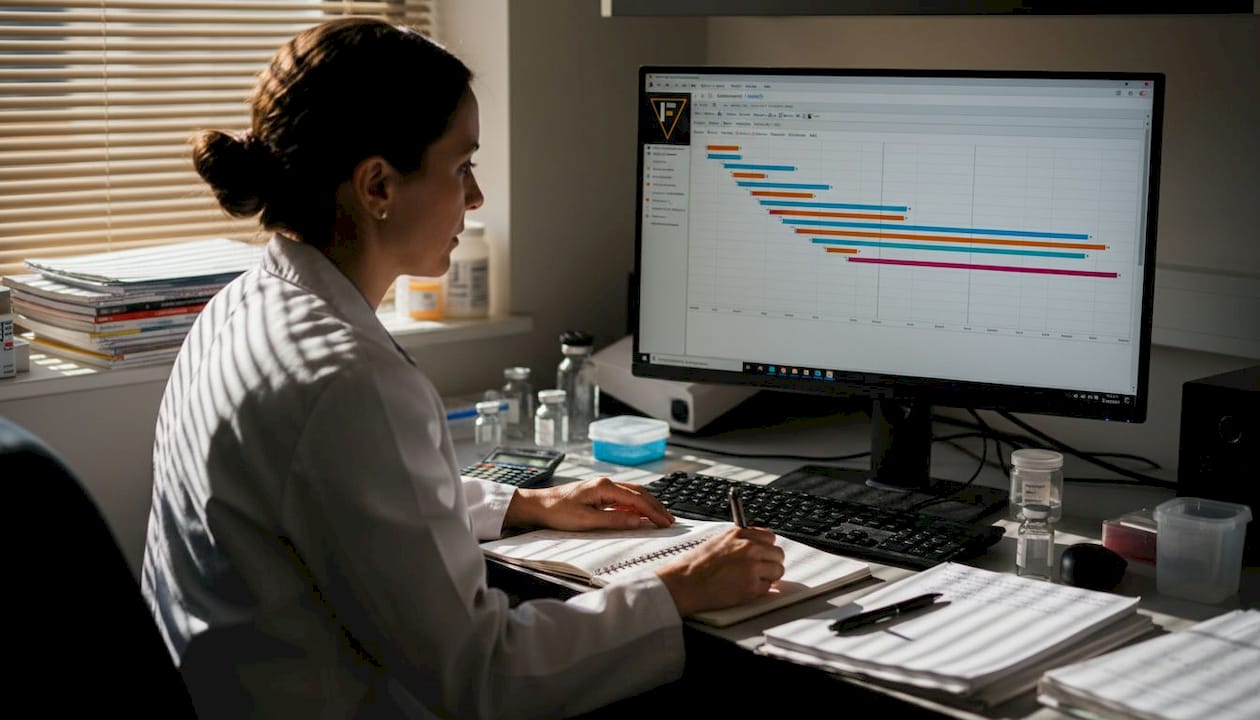
Formulation analytics changes the math. Development cycles shrink from 18 to 12 months when teams adopt data-driven workflows, and batch failure rates drop significantly. That's not a marginal improvement. That's a structural shift in how R&D operates.
| Metric | Traditional R&D | Analytics-enabled R&D |
|---|---|---|
| Average development cycle | 18 months | 12 months |
| Batch failure rate | High | Significantly reduced |
| Ingredient waste | High | Minimized |
| Compliance review time | Manual, slow | Automated flagging |
| Team bandwidth required | Large | Leaner teams possible |
Here's how a brand typically moves from concept to analytics-enabled production:
- Collect and organize existing data. Pull together historical batch records, stability reports, supplier ingredient data, and any consumer feedback you have.
- Identify the right analytics platform or partner. Choose tools that fit your product category, whether cosmetics, food, or supplements.
- Run predictive models on your target formula. Let the system flag potential incompatibilities, stability risks, and regulatory concerns before physical testing begins.
- Validate with targeted physical testing. Use analytics to narrow your testing scope, not eliminate it entirely.
- Automate repeatable workflows. Workflow automation reduces development time by 50% and lowers failed batch rates, freeing your team to focus on higher-value decisions.
The formulation platform benefits compound over time. The more product data you feed into the system, the more accurate your predictions become. Early adopters build a proprietary data advantage that's hard for competitors to replicate.
Pro Tip: Don't try to overhaul your entire R&D process at once. Start with a single product line where you have the most historical data. A quick win there builds internal confidence and gives you a proof-of-concept to justify broader adoption.
Beyond speed: New opportunities for personalization and compliance
Speed is the headline benefit most brands focus on, but analytics delivers something arguably more valuable: the ability to build products that are genuinely differentiated at the ingredient level.
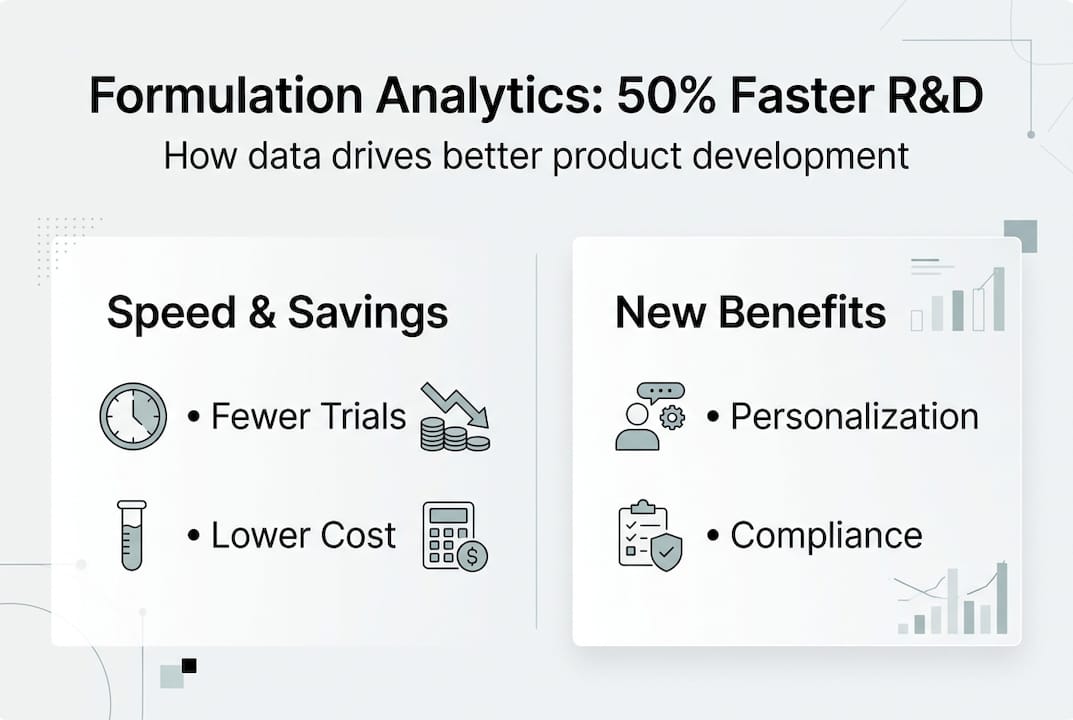
True personalization has always been the goal in nutrition, beauty, and wellness. Analytics makes it operationally realistic. Instead of creating one formula for a broad demographic, brands can now model how specific ingredient combinations perform for different consumer profiles, skin types, dietary needs, or health goals. Analytics accelerates the creation of compliant, sustainable, and personalized products in ways that manual methods simply can't match. Exploring personalized nutrition strategies shows just how far this approach is already reshaping consumer expectations.
| Capability | Analytics-enabled approach | Conventional approach |
|---|---|---|
| Personalization | Ingredient-level modeling per profile | Broad demographic targeting |
| Compliance screening | Auto-flagged before prototyping | Manual review post-formulation |
| Sustainability | Predictive ingredient screening | Reactive substitution |
| Speed to market | Months faster | Standard 18-month cycle |
Compliance is another area where analytics pays off in ways brands often underestimate. Regulatory requirements across cosmetics and food are complex and constantly evolving. A single non-compliant ingredient can delay a launch by months or trigger a costly reformulation.
Analytics platforms can auto-flag non-compliant ingredients against current regulatory databases before you ever prototype. Analytics streamlines compliance with EFSA requirements and similar bodies, reducing the risk of late-stage surprises. This is especially critical for brands selling across multiple markets with different regulatory frameworks.
On the sustainability side, predictive screening lets your team identify greener ingredient alternatives early in the process, rather than retrofitting a formula after the fact. That matters both for brand positioning and for meeting the growing demand from retailers and consumers for ethically sourced, environmentally responsible products.
- Personalization at scale: Model ingredient performance across consumer segments without running separate physical trials for each.
- Proactive compliance: Catch regulatory conflicts at the design stage, not after you've committed to a prototype.
- Greener formulation: Screen for sustainable alternatives before locking in your ingredient list.
- Reduced reformulation costs: Predictive models surface problems before they become expensive physical failures.
Practical steps: How to adopt formulation analytics in your process
Knowing analytics is valuable is one thing. Building it into your actual workflow is another. The good news is that adoption doesn't require a full organizational overhaul. It requires the right sequence.
- Audit your existing data. Before buying any platform, assess what you already have. Batch records, stability reports, consumer feedback, and supplier specs are all valuable inputs. Poor data readiness is the most common reason analytics projects underperform.
- Choose a platform that fits your category. Not all analytics tools are built for cosmetics or food. Look for platforms with category-specific models and regulatory databases relevant to your markets.
- Start with existing products, not blank-slate R&D. Running analytics on a formula you already know gives you a benchmark. You'll see where the system's predictions align with your real-world results and where you need to calibrate.
- Train your team on interpretation, not just operation. AI and analytics augment but do not replace formulation chemists. Your team needs to understand what the outputs mean and when to push back on a model's recommendation.
- Build a feedback loop. Every physical test result should feed back into your analytics system. This is how the models improve over time.
"The brands getting the best results aren't the ones with the most sophisticated AI. They're the ones with the most disciplined data practices and the clearest human judgment about when to trust the model and when to question it."
Best results come from a data-driven but human-in-the-loop approach. Understanding how biomarker-driven product development is evolving gives useful context for where analytics is headed next.
Pro Tip: Avoid the trap of treating analytics as a black box. If your team can't explain why the model flagged an ingredient or recommended a concentration range, you're not ready to act on it. Interpretability is not optional.
Pitfalls to watch for: rushing implementation without clean data, skipping subject matter expert input during model validation, and treating compliance automation as a complete substitute for regulatory expertise.
A smarter future: Why human + AI teams are unstoppable
Here's a perspective most analytics vendors won't share with you: the brands seeing the biggest returns from formulation analytics are not the ones with the most automated pipelines. They're the ones that treat analytics as a team member with specific strengths and clear limitations.
Pure automation sounds appealing until a model confidently recommends an ingredient combination that an experienced chemist knows has real-world texture problems that never showed up in the training data. Legacy knowledge and professional intuition have saved more than a few projects that the algorithm would have approved without hesitation.
What separates high-performing teams is culture. They trust the data enough to act on it quickly, but they also maintain the discipline to question outputs that don't match their domain expertise. Human-AI R&D strategies that build this trust systematically, through training, transparent model outputs, and structured review processes, consistently outperform teams that either over-rely on automation or resist it entirely.
Ongoing team development matters as much as the technology itself. Analytics is not a one-time implementation. It's a capability that compounds as your team gets better at using it and your data gets richer over time.
Level up your brand with FormlyPro
If you're ready to move from reactive formulation to a predictive, data-driven process, the infrastructure matters as much as the intent. FormlyPro is built specifically for brands in cosmetics, food, and supplements who want research-backed formulations without building an in-house data science team.
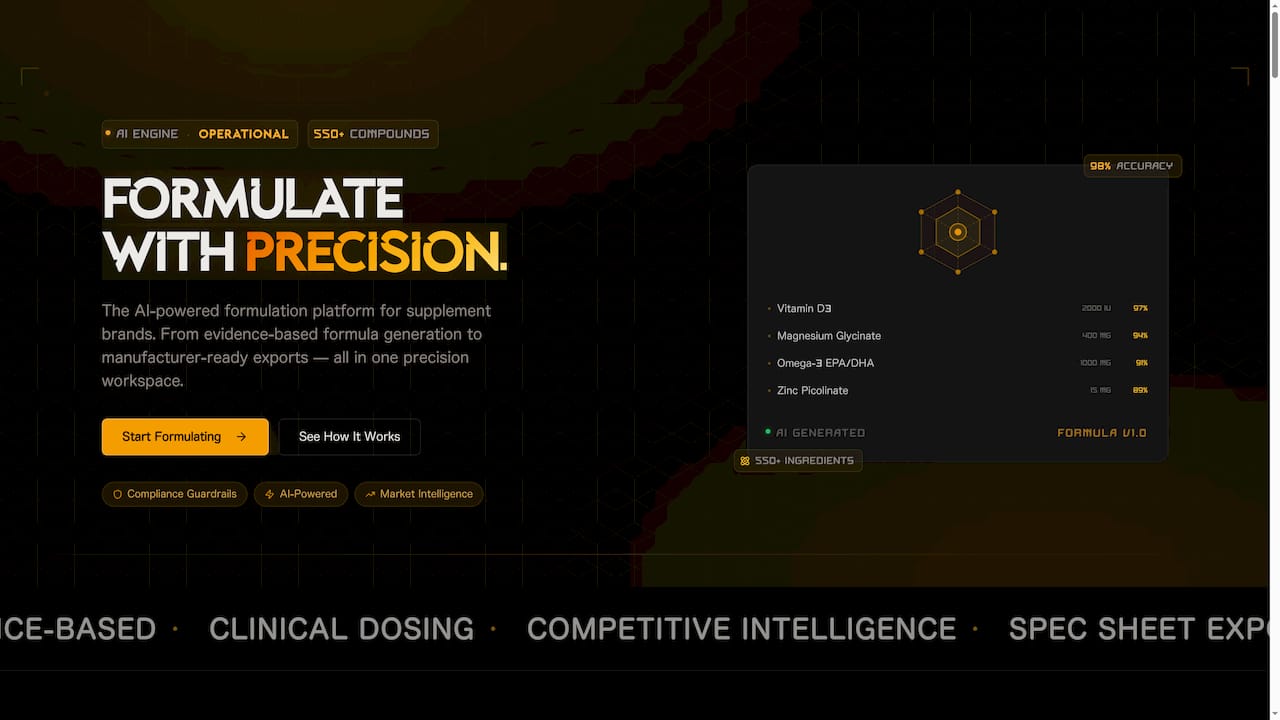
The FormlyPro platform gives you access to competitor analysis, market research, compliance guidance, and an 8-phase product development plan that takes you from ideation through production. You also get an AI-powered packaging mockup designer so your product looks as good as it performs. Whether you're launching your first SKU or scaling an existing line, FormlyPro gives your team the analytics advantage without the enterprise price tag. Book a demo and see what faster, smarter formulation looks like for your brand.
Frequently asked questions
How does formulation analytics save development time?
Formulation analytics automates testing simulations and predicts ingredient outcomes before physical trials begin. Development cycles shrink from 18 to 12 months with up to 50% faster time-to-market for brands that adopt it fully.
Can small brands use formulation analytics effectively?
Yes. Modern platforms are designed to scale, meaning startups and lean teams can access the same predictive capabilities as large R&D departments. Workflow automation reduces the need for large in-house teams to get results.
Does using analytics ensure regulatory compliance?
Analytics significantly improves compliance by auto-flagging non-compliant ingredients and streamlining documentation, but it doesn't replace expert regulatory oversight. Analytics streamlines compliance for EFSA and similar bodies as part of a broader compliance strategy.
Are chemists being replaced by AI in formulation?
No. Analytics augments chemists' expertise rather than replacing it. Hybrid human-AI teams deliver better outcomes than either working independently, especially when domain knowledge is used to validate model outputs.
What is required for a brand to start using formulation analytics?
You need organized product data, team alignment on how to interpret outputs, and a platform suited to your product category. Data readiness and hybrid human-AI approaches are the two most critical factors for a successful rollout.