

TL;DR:
- Skipping market research wastes capital and leads to product failures because founders often launch without validating customer demand, price, or channel fit. A structured process involving secondary data, primary research, and competitor benchmarking provides reliable insights to inform formulation, pricing, and distribution strategies. Continuous validation and disciplined research milestones are essential for developing a successful, competitive food product.
Skipping market research doesn't save time — it burns capital. Most food product launches that fail do so not because the formula was wrong, but because the founder never confirmed that real customers wanted what they built, at a price that worked, in a channel that reached them. The difference between a product that moves off shelves and one that quietly disappears comes down to how rigorously you validated the idea before investing in formulation, packaging, and production. This guide gives you a structured, data-backed process to do exactly that.
Table of Contents
- What you need before starting market research
- Step-by-step market research process for food products
- Turning research insights into winning formulations
- Testing, troubleshooting, and verifying your research results
- Why most food startups overlook critical market research steps
- Ready to streamline your market research and formulation?
- Frequently asked questions
Key Takeaways
| Point | Details |
|---|---|
| Start with a structured plan | Preparing prerequisites and using a checklist is vital for research success. |
| Blend primary and secondary research | Combining public datasets with direct surveys gives the best market insights. |
| Translate insights into action | Use validated research to drive product, pricing, and channel decisions. |
| Verify before launch | Cross-check findings and pilot test with your target market to minimize risk. |
What you need before starting market research
Before you run a single survey or pull one dataset, you need your foundations in place. Jumping into research without them wastes time and produces results you can't act on.
Start by documenting these three things clearly:
- Your product concept: What exactly is it? What problem does it solve, and for whom? A vague concept produces vague research.
- Your business goals: Are you launching a hero SKU to test a market, or building a full portfolio? Your goals determine how deep your research needs to go.
- Your available resources: How much time, budget, and team capacity do you have? This shapes which methods are realistic for you right now.
Once those are solid, you need to understand the four core pillars that every solid food product market research effort should cover. As the SBA outlines, a practical food-startup market research workflow should explicitly cover demand (is there desire), market size, location and channel fit, and competitive analysis for a defined edge. Miss any one of these and you'll have a gap that bites you later, either in pricing, distribution, or positioning.
Here's a quick comparison of the most commonly used tools and data sources to have ready:
| Tool or source | Best for | Cost |
|---|---|---|
| Google Forms / Typeform | Primary surveys | Free to low cost |
| USDA ERS public datasets | Market size benchmarks | Free |
| Nielsen / SPINS retail data | Channel and sales trends | High (enterprise) |
| FSIS product databases | Competitor ingredient review | Free |
| Census Bureau data | Regional demographic targeting | Free |
Pro Tip: Before you start any research phase, write down your current assumptions about your customer, price point, and top competitor. Revisit those assumptions after each stage. This practice alone prevents confirmation bias from distorting your results.
Staying current on 2026 formulation trends is also valuable at this stage, because emerging ingredient preferences and processing innovations can shape what your target market actually wants before you even begin surveying.
Step-by-step market research process for food products
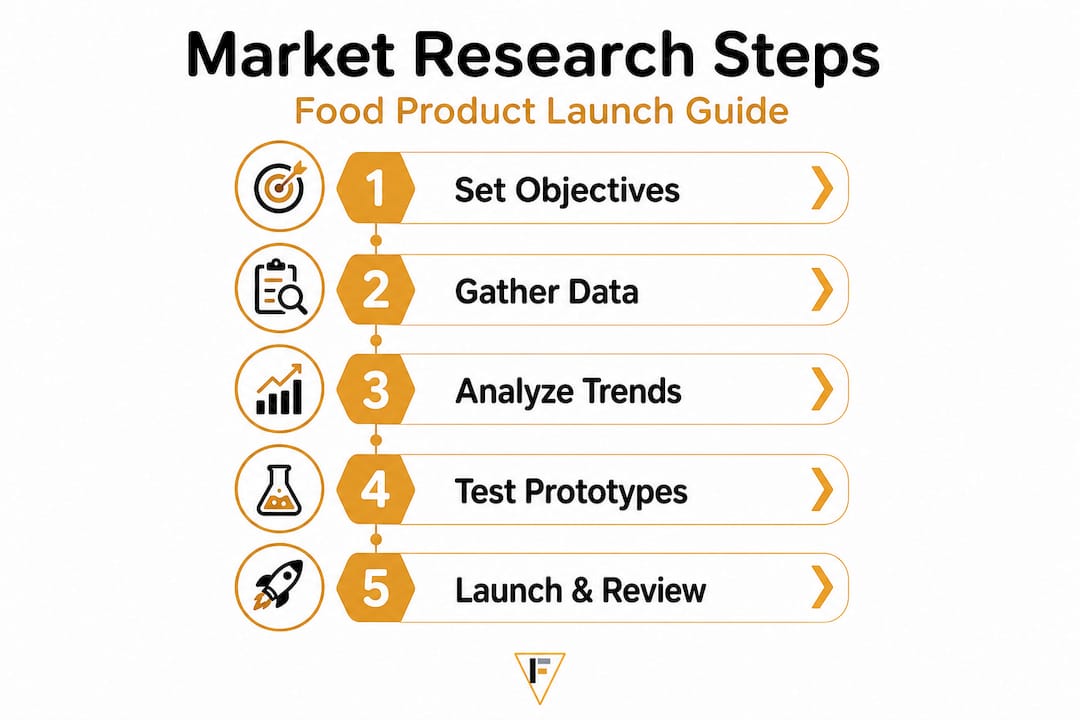
With your prerequisites documented, here's how to move through the process in the right sequence. Each stage builds on the last, so resist the urge to skip ahead.
A structured approach that distinguishes primary versus secondary research, and then analyzes competitors, is a baseline starting point you can customize by product type and channel.
-
Define your target consumer. Get specific. Age range, income bracket, lifestyle, dietary preferences, purchase occasion. "Health-conscious adults" is too broad. "Working parents aged 28 to 42 who buy clean-label snacks for after-school use" gives you something to research.
-
Run secondary research first. Pull public datasets, industry reports, government nutrition surveys, and trade publications. This is your cheapest and fastest layer of data. The SBA research steps walk through where to find reliable public information for new ventures. Don't shortchange this phase because it's where you find market-sizing numbers and existing consumer trend data without spending on surveys.
-
Design and execute primary research. Once secondary data tells you what's already known, use surveys, focus groups, or in-person tastings to fill the gaps specific to your concept. For ingredient benchmarking methods, primary research is especially useful when you need to gauge consumer response to specific flavors, textures, or label claims.
-
Run competitive benchmarking. Map every competing product in your target category. What are they priced at? What claims do they make? Where do they sell? What's their packaging language? This isn't about imitation — it's about identifying whitespace and understanding what you'd need to do to win.
-
Validate with willingness-to-pay testing. This step gets skipped more than any other, and it's one of the most damaging omissions. A study that surveyed 1,282 consumers and evaluated willingness-to-pay (WTP) across three processed products demonstrates that empirical consumer data for processed food preferences genuinely exists and can be replicated at the startup level with well-designed surveys.
Important: Don't skip secondary research. It's where missed insights cost startups later. Founders who jump straight to primary data collection often pay to rediscover information that was already publicly available, or worse, they never discover category benchmarks that would have changed their strategy entirely.
Here's a comparison of key survey tools to help you choose the right one for your primary research phase:
| Survey tool | Best use case | Average cost | Output quality |
|---|---|---|---|
| Typeform | Consumer experience surveys | $25–$83/month | High (visual, high completion) |
| Google Forms | Fast, low-budget validation | Free | Medium |
| SurveyMonkey | Structured quantitative research | $25–$75/month | High |
| AYTM (Ask Your Target Market) | Panel-based WTP testing | $250+ per study | Very high |
Pro Tip: Build a research calendar with hard deadlines for each phase. Assign a specific person to review results before moving to the next stage. Without checkpoints, research phases blend together and bias sneaks in unnoticed.
For deeper context on what consumers already want before you survey them, reviewing food and beverage trends in your category gives you a critical baseline, making your primary survey questions sharper and more relevant.
If you want to see how research integrates into a production-ready product, our guide on market-ready formulations walks through how validated insights translate to functional product specs.
Turning research insights into winning formulations
Data is only as valuable as what you do with it. This is where many food entrepreneurs lose momentum — they collect research and then struggle to turn it into concrete product decisions. Here's how to bridge that gap.

Producers can use results from studies such as willingness-to-pay data to inform product development, pricing, placement, and promotion. That's not a theoretical claim — it's a direct framework for action.
Step-by-step translation from data to formulation:
-
Set your product feature priorities. If your research shows consumers in your category rank "no artificial preservatives" higher than "low sugar," that informs which label claims you lead with and which ingredients you eliminate or replace.
-
Lock in your price corridor. Use WTP data and competitive pricing benchmarks to define a realistic retail price range. Then work backwards through your margin requirements to set a target cost of goods sold (COGS). This determines what ingredients are financially feasible.
-
Define your channel strategy. Research on where your target consumer shops shapes decisions that go far beyond logistics. A product destined for natural grocery channels needs different packaging language, certifications, and portion sizing than one going into club stores or direct-to-consumer boxes.
-
Plan your positioning narrative. What single, clear statement summarizes why your product wins? Your research should surface this. If 72% of surveyed consumers in your category prioritize protein content, that's your positioning anchor.
-
Map your go-to-market sequence. Don't try to be everywhere at launch. Research should tell you which one or two channels give you the highest probability of early traction.
Key things your research output should directly inform:
- Flavor profile and texture targets based on preference mapping
- Packaging hierarchy and on-pack claim priorities
- SKU count and size format at launch
- Suggested retail price and promotional price floor
- Channel-specific certifications needed (organic, kosher, non-GMO, etc.)
Working with solid ingredient benchmarking data ensures your formulation choices align with what's already performing in your category. Pair that with a market-ready formulations guide and you have a practical path from validated insight to production spec.
For packaging specifically, getting the visual and compliance elements right early prevents expensive redesigns. The packaging for brand appeal guide covers what to prioritize when you're translating brand positioning into packaging decisions.
Pro Tip: Run at least one rapid prototyping cycle with five to ten real target consumers before finalizing your formulation. Even informal in-home use tests reveal preference gaps that surveys can't capture, especially for texture, aroma, and eating experience.
Testing, troubleshooting, and verifying your research results
Research results are only as reliable as your process for checking them. Before you commit major budget to production or retail placement, verify that your findings hold up.
How to cross-check your results:
- Compare your survey findings to national public datasets. If your survey says 60% of your target audience is willing to pay $9.99 for your product, but broader category data suggests average category purchase prices are $5 to $6, you have a gap worth investigating.
- Run your competitive benchmarking against multiple sources: retail scanner data, product listings, and in-store observation all tell different parts of the story.
- Look for patterns across data types rather than treating any single source as definitive.
As USDA ERS FoodAPS data demonstrates, authoritative public datasets and representative surveys provide the most reliable benchmarks for consumer behavior and purchasing patterns, rather than relying only on convenience samples from your own network.
Common pitfalls to watch for:
- Sample bias: Surveying only people you know skews every result. If your social circle is health-obsessed and your product targets the mainstream, you'll over-index on willingness-to-pay premium prices.
- Outdated data: A trend report from 2022 may not reflect post-pandemic eating behavior or inflation-driven purchasing shifts. Always check the date on secondary sources.
- Information overload: Too many data points without a clear framework for weighing them leads to paralysis. Prioritize insights that directly answer your four core pillars from the start.
- Contradictory results: If your survey says one thing and secondary data says another, that's not a failure — it's a signal to dig deeper before deciding.
If results are unclear, consider a small pilot batch or a limited test launch in one channel or geography before scaling. A controlled soft launch in a single retail account or local farmers market gives you live sales data that no survey can replicate.
Pro Tip: Schedule a quarterly data audit even after launch. Consumer preferences shift, competitor products enter the market, and ingredient costs change. Fresh data leads to timely pivots that keep your product competitive.
For a structured view of how research connects to ongoing compliance, market analytics methods covers how food product teams use continuous data review to stay ahead. And if you're prepping for launch compliance requirements, start with the food compliance checklist to make sure your research phase accounts for all regulatory requirements.
Why most food startups overlook critical market research steps
Here's the uncomfortable truth: most food founders aren't lazy about market research — they're overconfident. They've tasted their product, shown it to enthusiastic friends and family, and received positive feedback. That feels like validation. It isn't.
The real reason market research gets deprioritized is that it competes with the emotional momentum of building. Making something tangible feels like progress. Running surveys, reviewing datasets, and documenting competitive maps feels like homework. So founders rationalize shortcuts. They poll their Instagram audience. They ask ten friends. They assume that if they want it, others will too.
The consequence is formulations built on vibes instead of data, price points that consumers reject in real retail environments, and channel decisions made without understanding what buyers in those channels actually require.
The greatest edge in food product development right now belongs to founders who treat research phases as non-negotiable milestones. Not optional background tasks. Not something to circle back to. Milestones with deadlines, deliverables, and go/no-go criteria.
Blending structured secondary research with first-hand consumer testing isn't just best practice — it's the mechanism by which disciplined founders find whitespace that competitors miss. Your competitors are also cutting corners on research. That's your opportunity.
One more thing worth saying directly: market research doesn't end at launch. The brands that build durable product lines treat product compliance insights and consumer data as ongoing inputs, not launch-phase tasks. Build that habit early and you'll make better decisions at every stage of growth.
Ready to streamline your market research and formulation?
Running a thorough market research process is rigorous work, and doing it well requires the right infrastructure. Most food entrepreneurs are managing it manually across spreadsheets, survey tabs, and disconnected competitor notes.
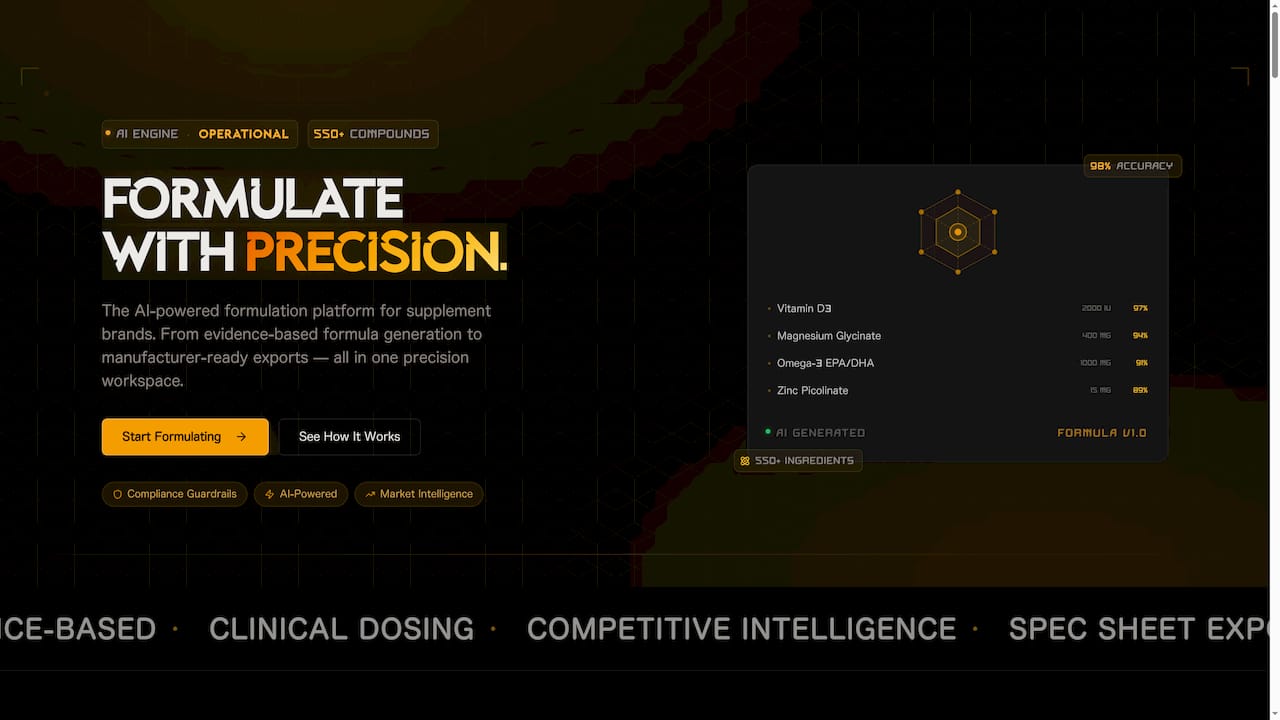
FormlyPro brings all of it into one platform. From integrated market research and competitor analysis to an 8-phase product development plan that takes you from ideation through production, FormlyPro gives food entrepreneurs the tools to do this right without building the infrastructure from scratch. The platform includes formulation support, compliance guidance, and an AI-powered packaging mockup designer so your brand looks as credible as your research is thorough. If you're serious about launching a food product that actually wins shelf space, it's built for exactly that.
Frequently asked questions
What are the most important steps in food product market research?
Focus on demand validation, market sizing, channel analysis, and competitor benchmarking for every new food product. The SBA recommends covering all four areas explicitly before committing to a formulation or launch plan.
How can I find reliable data for my target food market?
Check authoritative public datasets like USDA ERS and supplement with your own consumer surveys for specific preferences. USDA ERS FoodAPS is one of the most reliable sources for benchmarking actual household food purchasing behavior.
What is willingness-to-pay and why does it matter?
Willingness-to-pay (WTP) is the maximum price a real consumer would pay for your product, and it drives your entire pricing and positioning strategy. A study of 1,282 consumers across three processed food categories showed WTP data can directly inform pricing, placement, and promotional strategy.
How do I turn market research into a sellable product?
Translate your findings into concrete product specs: flavor targets, feature priorities, packaging claims, and a tested price point. Then run at least one prototype cycle with real target consumers before finalizing your formulation.
What's the biggest mistake food startups make in market research?
Relying only on convenience samples, such as friends, family, or your own social media audience, creates dangerous blind spots. USDA ERS FoodAPS and other public datasets exist precisely to give you the representative benchmarks that small-network sampling can't provide.