
TL;DR:
- Consumer trends in health, beauty, and food evolve rapidly, requiring precise filtering for viability.
- 2026 priorities include functional foods, biotech actives, AI personalization, clean labels, and multisensory experiences.
- Focused, validated adoption of select trends ensures product differentiation and market success.
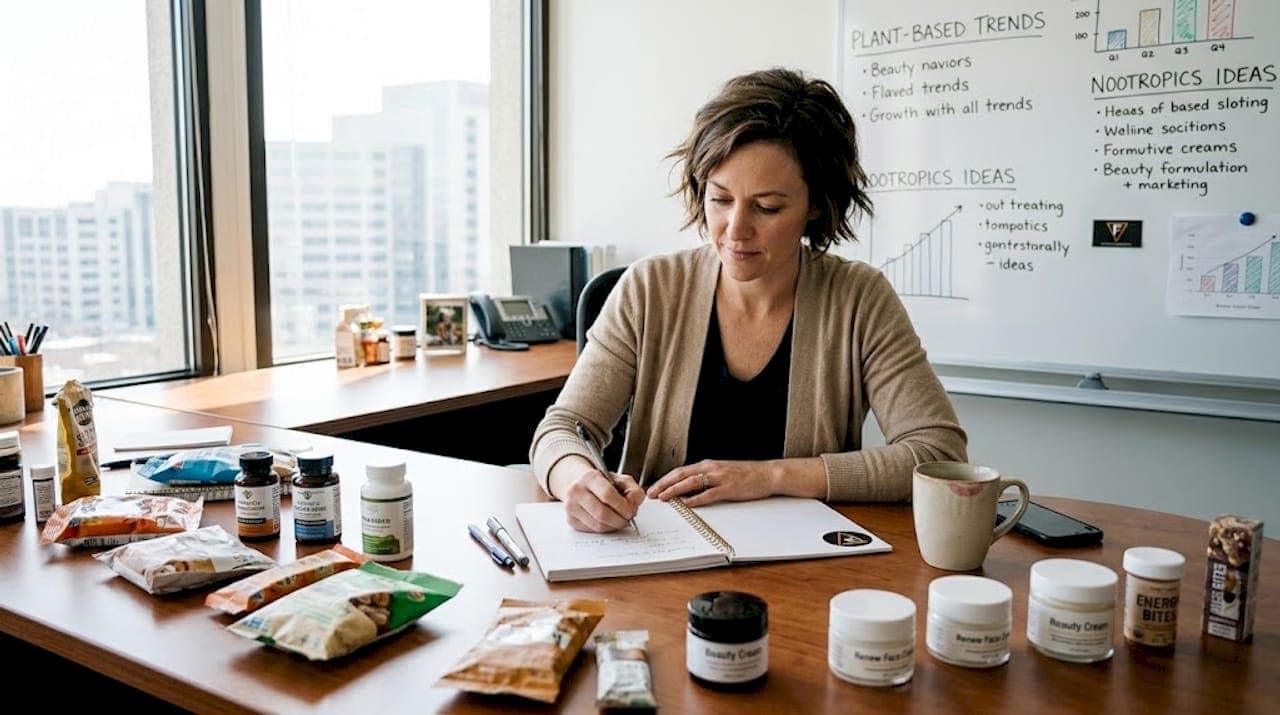
Consumer expectations in beauty, health, and food move faster than most product roadmaps can handle. One quarter, adaptogens are niche; the next, they're in every supplement lineup from Target to Whole Foods. For brand owners and product developers, staying ahead of formulation trends is not just about being current. It's about building products that win shelf space, earn repeat purchases, and stay compliant before regulators catch up. The shifts coming into 2026 are sharper than usual, spanning functional food claims, biotech beauty actives, and AI-powered supplement personalization. Here's what you need to know to make smart, timely formulation decisions.
Table of Contents
- What makes a trend matter? Defining the selection criteria
- Top 2026 formulation trends: Food, supplement, and beauty highlights
- Head-to-head: Comparing top formulation trends by value and feasibility
- Applying 2026's trends: Situational picks for maximum brand impact
- Why 'innovation overwhelm' holds brands back and how to break through
- Accelerate your formulation success with FormlyPro
- Frequently asked questions
Key Takeaways
| Point | Details |
|---|---|
| Criteria-driven innovation | Use clear selection criteria to identify formulation trends that fit your brand’s goals best. |
| Focus on actionable trends | Emphasize functional benefits, clean labels, and advanced delivery formats in your product pipeline. |
| Compare before you commit | Assess each trend’s feasibility and market potential with direct side-by-side comparisons. |
| Harness the power of focus | Choosing one or two trends and executing them well is more effective than chasing every innovation. |
What makes a trend matter? Defining the selection criteria
Not every emerging ingredient or format deserves a spot in your next product brief. The problem is that formulation trends get amplified by trade press and social media before anyone checks whether they're commercially viable, scalable, or even legally marketable. So before you pivot your roadmap, you need a clear filter.
The criteria that matter most for 2026 are:
- Market demand: Is there measurable consumer pull, not just trade buzz?
- Regulatory outlook: Is the ingredient approved in your target markets, or is it in a gray zone?
- Ingredient availability: Can you source it at scale without supply chain risk?
- Consumer health impact: Does it deliver a meaningful, defensible benefit?
- Sensory attributes: Will it perform in a finished product without off-notes or texture issues?
- Sustainability: Does it align with the environmental expectations of your target demographic?
The right trend must also offer genuine differentiation. If every brand in your category is already doing it, you're not innovating; you're catching up. Formulation trends in 2026 emphasize functional benefits, clean labels, and innovation, but the brands winning launches are the ones applying those principles with specificity, not generality.
Developers who want to stay ahead also need to build better intelligence habits. Reading trade journals is baseline. Real signal comes from tracking actual purchase data, SKU velocity, and consumer sentiment in real time. This is especially relevant for formulation for health and beauty brands, where trends can shift faster than a 12-month product development cycle.
Pro Tip: Track data from consumer insight platforms and retail analytics tools, not just IFT or CosmeticsDesign. Your competitors are already doing this, and you need the same live pulse.
Top 2026 formulation trends: Food, supplement, and beauty highlights
With a working framework in place, here are the trends that actually meet the bar. These aren't predictions; they're patterns already reshaping launch pipelines.
Food: Functional foods targeting energy, sleep, and immunity are moving from specialty to mainstream. Clean label continues to be a non-negotiable for a growing share of buyers. Low and no-sugar reformulations using natural sweeteners like allulose and monk fruit are accelerating. Plant-based protein and high-protein snack formats are both growing simultaneously, without the cannibalization many predicted. And multisensory flavors, products engineered for a specific texture or layered taste experience, are becoming a clear differentiator.
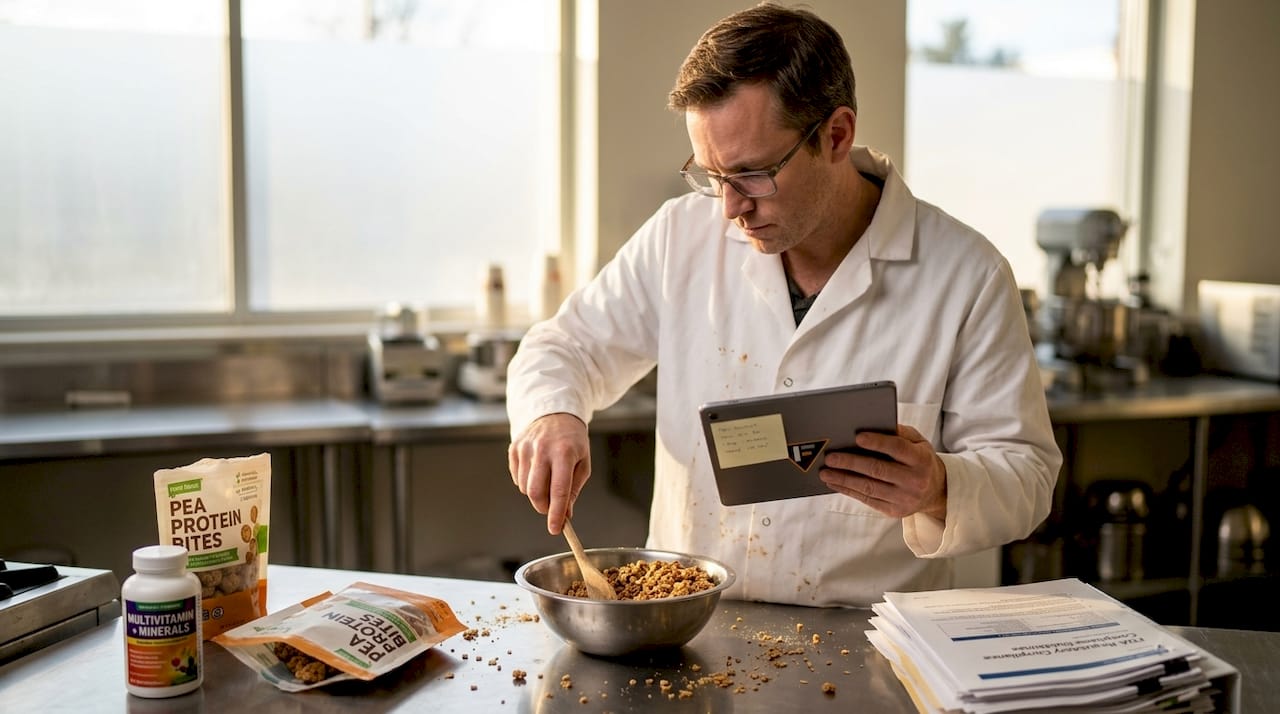
Supplements: Women's health, longevity nutrients, and postbiotics are the three fastest-growing supplement segments. Cognitive support (nootropics) is expanding beyond the biohacker niche. Non-pill delivery formats including gummies, powders, and on-the-go sticks are now expected rather than optional. AI-driven personalization, where formulas adapt to individual health data, is moving from a premium positioning play to a competitive requirement.
Beauty: Beauty-from-within is driving crossover between supplement and skincare categories. Probiotics, postbiotics, and clinically studied botanicals are replacing vague "nourishing blend" language. Biotech actives, including lab-grown peptides and precision fermentation-derived ingredients, are giving premium brands a science story that resonates.
Look at the formulation examples for cosmetics and food already out there, and you'll see a pattern: specific claims backed by specific ingredients, not broad wellness language.
"Adaptogens like ashwagandha, innovative proteins like chickpea, and AI-powered personalization will define stand-out launches."
Pro Tip: Look seriously at GLP-1 compatibility positioning and mood-based formulations. Both are still early enough to claim first-mover space in most categories.
Head-to-head: Comparing top formulation trends by value and feasibility
Knowing a trend exists is one thing. Knowing whether it fits your budget, timeline, and technical capabilities is another. Here's a direct comparison of the leading 2026 formulation trends across four dimensions.
| Trend | Consumer demand | Technical complexity | Time to market | Cost level |
|---|---|---|---|---|
| Clean label reformulation | Very high | Low to moderate | 3 to 6 months | Low |
| Functional foods (energy/sleep/immunity) | High | Moderate | 4 to 8 months | Moderate |
| Plant-based and high-protein | Very high | Moderate to high | 6 to 12 months | Moderate |
| Non-pill supplement formats | High | Moderate | 4 to 8 months | Moderate |
| AI-driven personalization | Growing fast | High | 12 to 24 months | High |
| Biotech beauty actives | Emerging | Very high | 12 to 18 months | High |
| Women's health and longevity nutrients | Very high | Low to moderate | 3 to 8 months | Moderate |
| Multisensory flavors and textures | Growing | Moderate | 4 to 8 months | Moderate |
Plant-based proteins and multisensory experiences are highly requested and commercially viable, but protein stabilization in particular adds development complexity that brands often underestimate. Simple global flavor systems, on the other hand, can be integrated into existing formulas quickly with less reformulation risk.
Over 70% of new launches now feature a functional benefit or clean label claim, which means the baseline has already shifted. Not having one of these is increasingly a liability.
Personalized, non-pill formats address new consumer habits and are in high demand across age groups, not just younger demographics. The key here is that the ROI on personalization is strong but requires data infrastructure to execute well.
The practical frame for this table is your own development pipeline. If you have 6 months, clean label and functional food are your fastest wins. If you have 18 months and a differentiation strategy, biotech actives or AI personalization can build a serious moat. Use formulation analytics for innovation to run this analysis against your actual category, and you'll see which moves have the highest return for your specific position. For more on execution, boosting product performance with formulation walks through how the right formula directly impacts your market results.
Applying 2026's trends: Situational picks for maximum brand impact
Choosing the right trends is really a business strategy question, not just a formulation question. Here's a structured way to think through your decisions.
-
Identify your business priorities and your customer's core health need. A brand in women's wellness has a different set of credible plays than a general nutrition brand. Match the trend to the problem your customer is already willing to pay to solve.
-
Match your trend to your investment horizon. If you're looking for a launch in the next two quarters, plant-based protein stabilization or biotech actives are not the answer. Clean label reformulation and functional flavor pairings can move fast. Longer R&D timelines are fine if they're funded and tied to a genuine differentiator.
-
Choose formats that fit your brand persona. A premium wellness brand has room to launch a powdered nootropic blend. A mass-market snack brand that launches a gummy supplement probably looks confused to its core buyers. Format integrity matters as much as formula integrity.
-
Run pilot launches and gather real feedback before full production. Market response data from a limited run is more valuable than any internal scoring model. Build iteration time into your calendar.
Brands must tailor trend adoption to product line, target demographic, and operational flexibility. That's not a soft recommendation; it's what separates brands that scale from those that over-invest in trends they can't execute well.
For teams building new lines, reviewing what custom formulations for health and beauty actually entail is a smart starting point. And if you want a step-by-step execution guide, market-ready formulations covers exactly what it takes to move from a concept to a compliant, commercial product.
Pro Tip: Partner with ingredient suppliers who provide regulatory documentation upfront. It removes one of the biggest bottlenecks between formulation and launch, and keeps your compliance team happy.
Why 'innovation overwhelm' holds brands back and how to break through
Here's what we see repeatedly: a brand's leadership team reads every trend report, gets energized, and then tries to fit five trends into a single SKU. The result is a product that's technically impressive and commercially vague. It can't be explained in a single sentence. Retail buyers don't know where to shelve it. Consumers don't know what problem it solves.
The most successful product leaders we've seen don't chase trends broadly. They pick one core trend that fits their brand story, they execute it with precision, and they validate it at small scale before committing full production budgets. Then they build from that win.
Focus is what turns a trend into a commercial advantage. FOMO is what turns a pipeline into a graveyard of half-finished prototypes. Looking at real formulation case studies makes this clear: the brands with the strongest launches made deliberate, narrow choices.
True innovation is saying yes to the trends that suit your story, and no to everything else. That discipline is harder than it sounds, but it's what the market rewards.
Accelerate your formulation success with FormlyPro
These trends are moving fast, and the gap between knowing what's coming and actually launching a product that captures it is where most brands lose time and money.
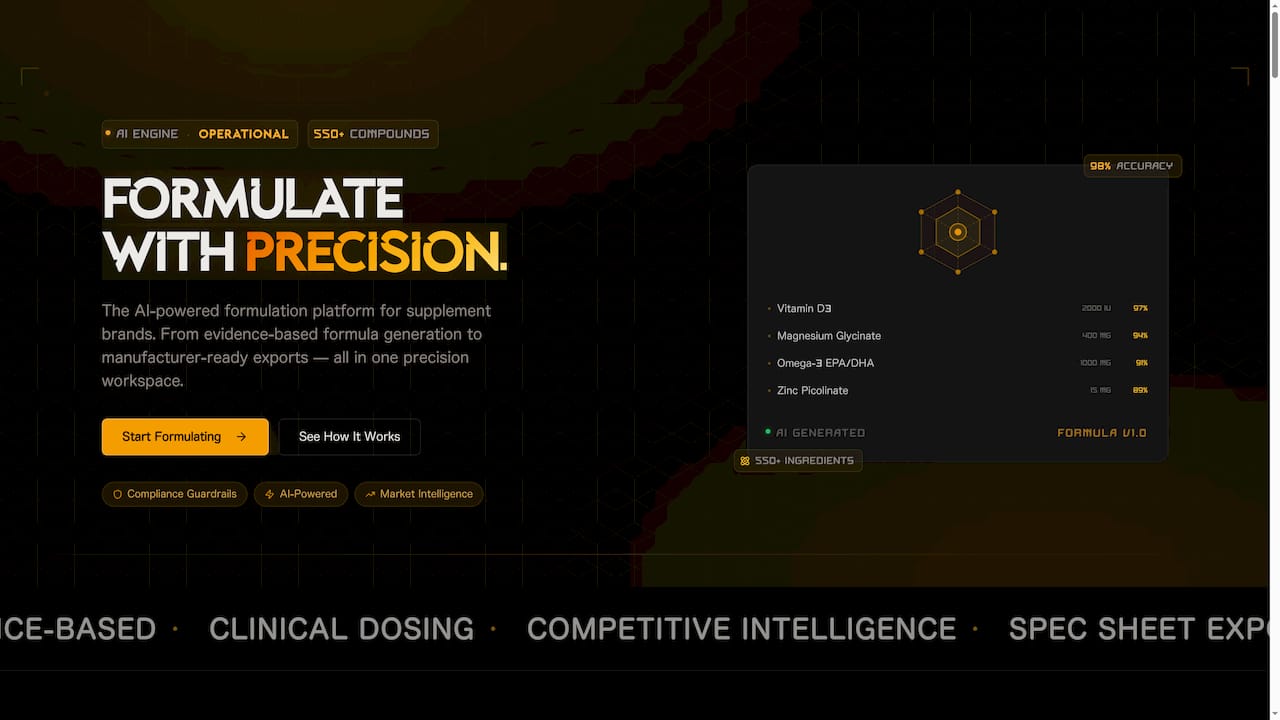
FormlyPro is built specifically for this problem. The platform walks your team through an 8-phase process that takes a new product from ideation through formulation, compliance, prototyping, and production. You get built-in competitor analysis, live market research, compliance guidance, and an AI packaging mockup designer, all in one place. Whether you're launching a functional food, a women's health supplement, or a biotech-forward beauty product, FormlyPro gives you the infrastructure to act on 2026's biggest opportunities without the guesswork.
Frequently asked questions
Which formulation trends are easiest to implement for small brands in 2026?
Functional foods with clean label ingredients and simple global flavors offer the lowest technical barriers and fastest timelines, making them ideal first moves for smaller teams with limited R&D budgets.
What new supplement delivery formats are trending in 2026?
Non-pill formats like gummies, powders, and on-the-go sticks are growing rapidly because they fit modern consumption habits and allow for more engaging branding and flavor experiences.
How important is AI personalization in formulations for 2026?
AI-driven personalization is shifting from a premium differentiator to a baseline expectation in supplement categories, especially for brands targeting health-conscious, data-savvy consumers.
Why are mood-aligned flavors and multisensory experiences trending?
Mood-aligned flavors and textures give brands a way to create a product experience that goes beyond nutrition claims, building emotional resonance and driving repeat purchase through sensory satisfaction.