

TL;DR:
- Research-backed formulations require multi-level testing, safety data, efficacy evidence, and regulatory alignment.
- Building validation data early creates a defensible product, reducing market and compliance risks.
- Rigorous testing and documentation are essential to substantiate claims and gain regulatory approval.
Proving your product actually works is one of the hardest problems in product development. Consumers are more skeptical than ever, retailers demand clinical evidence before shelf placement, and regulators are tightening claim requirements across both cosmetics and food. Brands that skip the research phase often discover the gap too late, after launch, when returns, complaints, or compliance flags start rolling in. The good news is that validated formulation examples already exist across both industries, and studying them gives you a direct shortcut to understanding what rigorous, defensible product development actually looks like in practice.
Table of Contents
- What defines a research-backed formulation?
- Example 1: Cosmetics formulation with hyaluronic acid and silk proteins
- Example 2: Multi-active cosmeceutical creams and clinical validation
- Example 3: Infant formula with advanced oligosaccharide blend
- Example 4: Claim substantiation and efficacy testing in skincare and food
- The uncomfortable truth about formulation shortcuts
- Build your research-backed formulation with Formly Pro
- Frequently asked questions
Key Takeaways
| Point | Details |
|---|---|
| Rigorous testing matters | Research-backed products use tiered testing and regulatory protocols for proven safety and effectiveness. |
| Validated ingredients boost claims | Ingredient-level substantiation simplifies regulatory hurdles and strengthens marketing credibility. |
| Clinical trials differ by sector | Cosmetics and food require tailored research and reporting methods unique to their industries. |
| Compliance is central | Following compliance checklists helps brands avoid costly delays and ensures smoother market entry. |
What defines a research-backed formulation?
Not every product with a published ingredient list qualifies as research-backed. The term has a specific meaning in formulation science, and understanding it is the first step to building credibility with regulators and consumers alike.
A research-backed formulation meets several distinct criteria:
- Multi-level testing: Formulations must pass through at least two validation layers. Most credible products use in silico, in vitro, in vivo methods including physicochemical characterization, toxicological screening, and human patch testing.
- Safety and stability data: pH, viscosity, and stability over time (typically 30 to 90 days under stress conditions) must be documented and reproducible.
- Efficacy evidence: Claims like "reduces wrinkles" or "supports gut health" require measurable endpoints, not just ingredient lists.
- Regulatory alignment: Your testing protocol must match the framework of your target market, whether that is the EU Cosmetics Regulation, FDA guidelines, or Codex Alimentarius for food.
Compliance is not a checkbox you add at the end. Understanding formulation compliance for cosmetics early in your R&D process prevents costly reformulations later. Brands that treat compliance as a parallel workstream, not an afterthought, consistently get to market faster.
Pro Tip: Before you finalize any formulation, map your claims to specific test methods. If you cannot name the test that validates the claim, the claim is not ready.
Learning how to create market-ready formulations means building your testing strategy before you finalize your ingredient deck, not after.
Example 1: Cosmetics formulation with hyaluronic acid and silk proteins
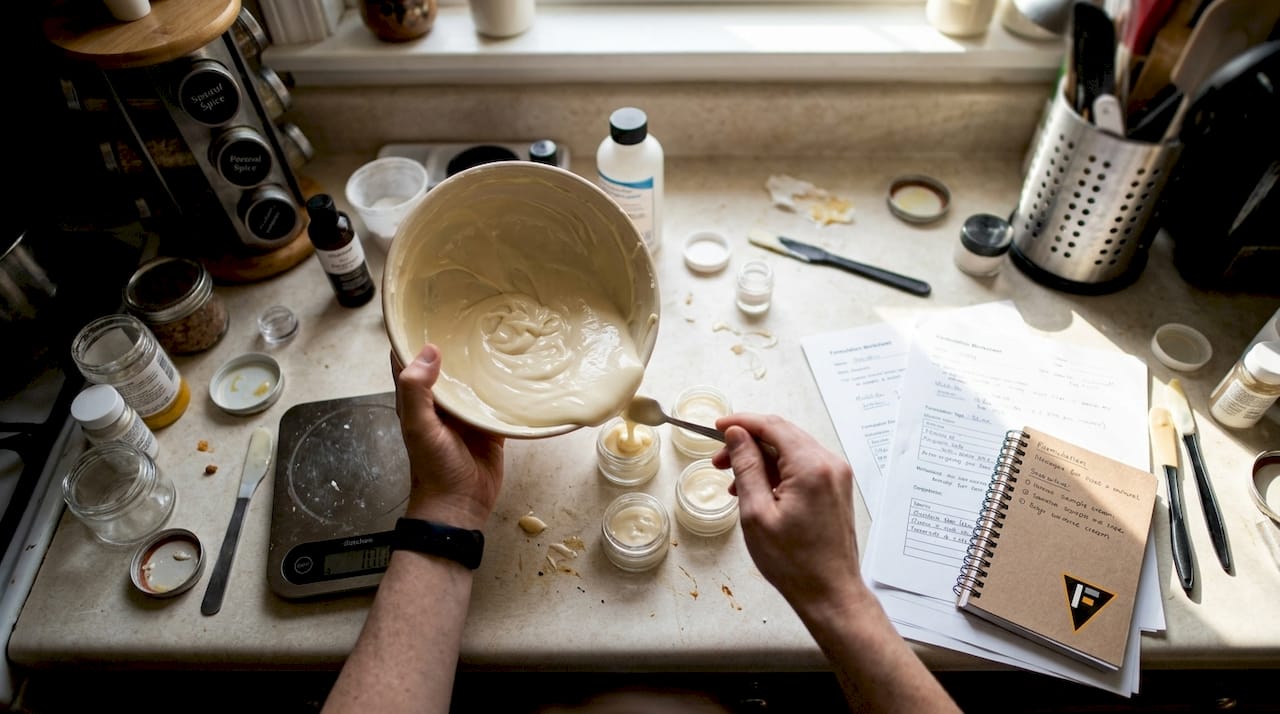
This anti-aging cream formulation is one of the clearest examples of what rigorous cosmetic science looks like when applied systematically. It combined low molecular weight hyaluronic acid (LMW-HA), medium molecular weight hyaluronic acid (MMW-HA), and silk proteins into a single cream matrix, then put it through a full validation sequence.
The testing protocol included:
- Physicochemical characterization: pH measurement, viscosity profiling, and 30-day stability assessment under controlled temperature conditions
- In silico toxicological screening to flag any computational red flags before human contact
- In vivo patch testing on 25 human volunteers to confirm real-world safety
The result? No irritation or sensitization was detected across all 25 volunteers. That is not a marketing line. It is a data point you can put in front of a retailer, a regulatory body, or a clinical review board.
"The combination of LMW-HA and MMW-HA targets both surface hydration and deeper dermal support, making the multi-molecular-weight approach more defensible than single-grade HA formulations."
For brands building anti-aging lines, this example demonstrates why the step-by-step formulation process matters more than the ingredient selection alone. The ingredients here are not exotic. What makes this formulation credible is the methodology behind it.
Silk proteins add a sensory dimension that also contributes to film-forming and moisture-retention properties, giving the formulation dual functionality: measurable efficacy and a premium skin feel. If you want to boost product performance without inflating your cost of goods, this kind of synergistic ingredient pairing is worth studying closely.
Example 2: Multi-active cosmeceutical creams and clinical validation
Cosmeceuticals sit at the intersection of cosmetics and pharmaceuticals, which means the bar for validation is higher than standard skincare. This example features two cream variants, EG01 and EG03, formulated with a multi-active ingredient stack and put through a rigorous validation sequence.
The active ingredient list included N-acetylcysteine (NAC), arginine HCl, Blainvillea acmella extract, tocopherol, and hyaluronic acid. The validation process followed this sequence:
- Stability testing under stress conditions (temperature cycling, light exposure)
- Sensory performance evaluation: spreading ease, skin absorption rate, and residue assessment
- Tolerance testing on the target demographic: women aged 50 to 65
- Regulatory compliance tracking throughout each phase
Both EG01 and EG03 achieved 100% tolerance in the target demographic. That figure matters because it directly supports the product's safety claim for a specific consumer group, which is exactly what regulators and retailers want to see.
One particularly instructive decision in this formulation was the choice of NAC over glutathione. NAC offers better stability in aqueous systems, lower cost, and stronger regulatory acceptance across multiple markets. It is a formulation decision that affects your compliance checklist as much as it affects your efficacy profile.
Pro Tip: When selecting actives for cosmeceutical formulations, always evaluate ingredient stability in your specific base before committing to a concentration. An active that degrades in your emulsion system delivers zero efficacy regardless of the clinical literature behind it.
Brands using formulation analytics can model ingredient interactions before committing to a prototype, reducing the number of failed stability cycles.
Example 3: Infant formula with advanced oligosaccharide blend
Food formulation research operates at a different level of rigor than cosmetics, and infant nutrition sits at the very top of that hierarchy. This example is a double-blind, randomized controlled trial involving 389 infants over 120 days, designed to test a formula containing OPO (sn-2 palmitate), GOS (galactooligosaccharides), PDX (polydextrose), FOS (fructooligosaccharides), alpha-lactalbumin, and lactoferrin.
Key outcomes from the trial:
| Outcome | Result |
|---|---|
| Weight gain | Non-inferior to control (within -3g/day) |
| Gassiness | Significantly reduced vs. standard formula |
| Stool consistency | Softer, closer to breastfed infant baseline |
| GI tolerance | Higher overall tolerance score |
| Safety events | No significant adverse events reported |
The non-inferiority growth outcome is the regulatory anchor here. Proving that a novel formula does not compromise growth is the minimum threshold for market entry in most regulated markets. The secondary GI outcomes are what differentiate the product commercially.
For food brands designing functional nutrition lines, this trial structure offers a template. The double-blind design eliminates observer bias. The 120-day window captures meaningful growth data. And the multi-ingredient stack allows you to study synergistic effects rather than isolating single compounds.
Understanding compliance for food and supplements is non-negotiable at this level. Infant formula is one of the most tightly regulated food categories globally, and the clinical design must align with regulatory expectations from day one.
Example 4: Claim substantiation and efficacy testing in skincare and food
Claim substantiation is where many brands stumble. The formulation might be solid, but if you cannot prove the claim in a way that satisfies your target market's regulatory framework, the claim cannot appear on your label or in your marketing.
| Industry | Common test methods | Regulatory purpose |
|---|---|---|
| Skincare | Corneometer, HRIPT, SPF testing | Hydration, safety, sun protection claims |
| Food/supplements | Clinical endpoints, inferential statistics | Efficacy and health claim support |
| Both | Ingredient literature review, instrumental analysis | Baseline claim substantiation |
For skincare, cosmetic claim substantiation uses a combination of efficacy testing, safety tests, clinical studies, instrumental analysis, and ingredient literature review. The corneometer is the gold standard for hydration claims. HRIPT (Human Repeat Insult Patch Test) is the benchmark for safety. SPF verification requires standardized in vitro or in vivo protocols depending on your market.
For functional foods, the challenge is different. Food clinical trials face unique obstacles including dietary variability across participants, difficulty controlling confounding variables, and the need for inferential statistics to draw meaningful conclusions from noisy data. Probiotics, for example, show limited and highly strain-specific GI effects, which means generic probiotic claims are increasingly difficult to defend.
A practical checklist for choosing the right substantiation protocol:
- Identify the specific claim first, then work backward to the test method
- Confirm the test method is recognized by your target market's regulatory body
- Document everything: raw data, statistical analysis, and third-party lab credentials
- Review competitor claims in your category to benchmark your substantiation level
Strong packaging tips for brand appeal also play a role here. Your packaging must accurately reflect your substantiated claims, nothing more, nothing less.
The uncomfortable truth about formulation shortcuts
Here is something most formulation guides will not tell you: the brands that copy competitor formulations without running their own validation are not just taking a regulatory risk. They are building a product that will never be truly theirs. If a competitor reformulates, your product becomes obsolete overnight. If a regulatory body challenges your claims, you have no data to defend yourself.
We have seen brands spend six months and significant budget on a product launch, only to pull it back because they could not substantiate a single claim on the label. The formulation was fine. The testing was missing.
The real competitive advantage in 2026 is not having a unique ingredient. It is having the data. Brands that invest in validation early, even at the prototype stage, build a defensible moat that competitors cannot easily replicate. The examples in this article are not just academic references. They are proof that rigorous methodology is achievable at a practical scale, with real consumer populations and real market outcomes.
Treat your formulation data as a business asset, not a regulatory obligation.
Build your research-backed formulation with Formly Pro
Every example in this article followed a structured, evidence-driven process. That process is exactly what Formly Pro is built to support.
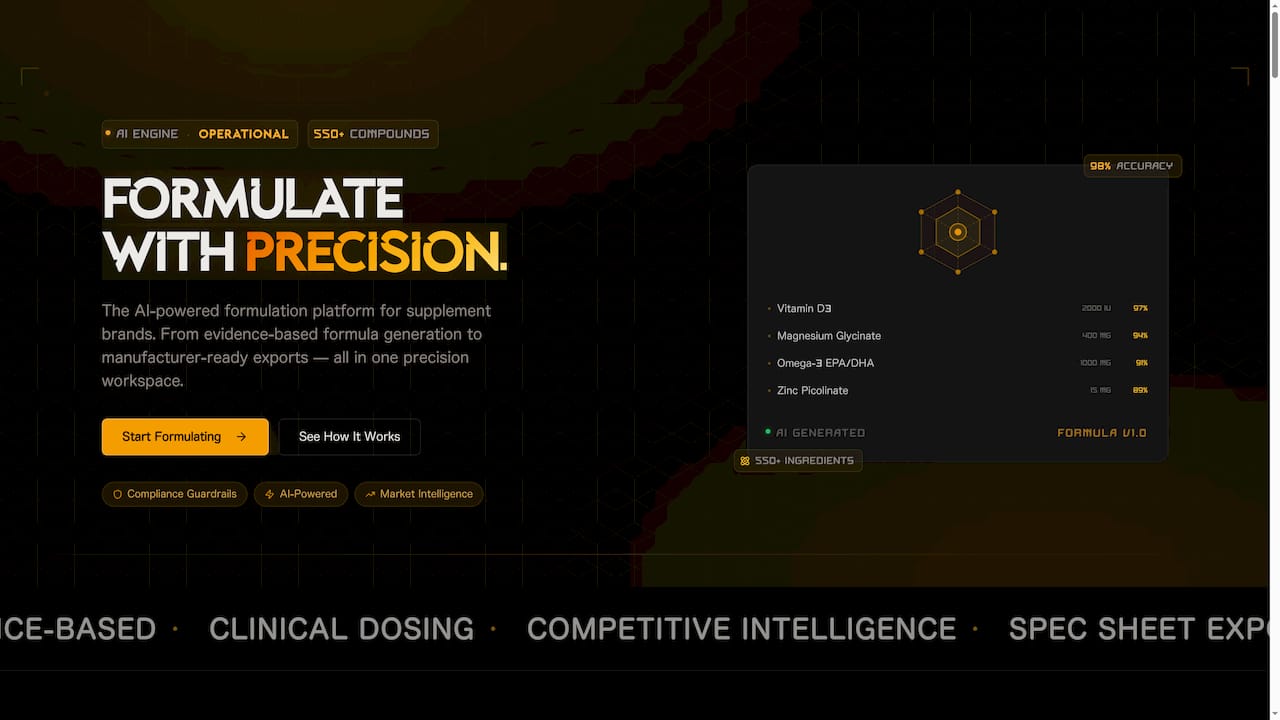
With Formly Pro, your brand gets access to an 8-phase product development plan that takes you from ideation through formulation, prototyping, compliance, and production. The platform includes built-in market and competitor analytics, so you can see what ingredients competing brands are using and which products are actually selling. Compliance guidance is integrated at every phase, and the AI-powered packaging mockup designer lets you visualize your product before a single unit is produced. If you are ready to build formulations that can stand up to scrutiny, Formly Pro is where that work starts.
Frequently asked questions
What does 'research-backed' mean in formulation?
It means formulations are supported by published data and standardized testing that meet regulatory and safety requirements across your target market.
How do you know a cosmetic claim is valid?
Cosmetic claims are valid when backed by clinical trials and instrumental measures like the corneometer, combined with a thorough ingredient literature review.
Are functional food trials different from pharmaceutical trials?
Yes. Food trials face unique challenges including dietary variability across participants and the need for specialized inferential statistical analysis to reach defensible conclusions.
Why use NAC instead of glutathione in creams?
NAC is preferred because it offers better stability and regulatory acceptance compared to glutathione, along with lower cost and improved solubility in aqueous formulation systems.