

TL;DR:
- Slow market research hampers product launches, compliance, and competitive positioning by relying on consumer-focused workflows. Manufacturers must adopt a B2B-specific, iterative research process grounded in technical, procurement, and regulatory realities to generate actionable insights. Proper planning, clear KPI definitions, and operational integration are essential to turning market intelligence into faster, compliant, and effective product development decisions.
Slow market research doesn't just frustrate your team. It costs you launches, compliance windows, and shelf space to competitors who move faster. Manufacturers and brand managers face a specific version of this problem: research workflows built for consumer goods that don't account for B2B decision-making units, technical specifications, or regulatory timelines. When your workflow isn't synchronized with your actual product development cycle, you end up making formulation and positioning decisions on incomplete data, or worse, outdated assumptions. This guide maps a practical, manufacturer-specific research workflow that ties directly to faster launches, stronger compliance, and competitive brand positioning.
Table of Contents
- Overview of the manufacturer market research workflow
- Preparing for market research: Planning, tools, and sample access
- Executing research: Primary and secondary data collection for manufacturing
- Interpreting results and operationalizing market intelligence
- What most guides miss: The real-world pitfalls and success factors
- Ready to streamline your market research workflow?
- Frequently asked questions
Key Takeaways
| Point | Details |
|---|---|
| Workflow steps matter | Following a manufacturer-specific workflow speeds decision-making and ensures compliance. |
| Preparation is critical | Planning for sample access and method fit prevents wasted research and improves outcomes. |
| Data sequencing boosts insights | Combining desk research and targeted primary methods delivers more actionable intelligence. |
| Operationalize for impact | Turning research into repeatable workflows enables ongoing improvement and competitive advantage. |
| Benchmark realistically | Set measurement basis and benchmarks carefully to avoid misleading performance reports. |
Overview of the manufacturer market research workflow
The foundation of any effective research process is a clear, repeatable structure. Six steps to follow in market research form a continuous cycle: define the problem, plan your approach, collect secondary and then primary data, analyze, interpret, and act. This isn't a one-time project. It's an ongoing discipline that feeds your product development and positioning decisions at every stage.
What makes manufacturing workflows distinct from consumer research is the nature of the buyer and the complexity of the decision. A consumer panel study won't give you the inputs you need when your real customers are procurement teams, formulators, and supply chain managers with specific technical requirements. Manufacturing market research methodology must account for industrial B2B realities: decision-maker access, technical understanding, and segmentation by firmographics, application type, and decision-making units (DMUs) rather than consumer-style sampling. Getting this distinction wrong is one of the most expensive mistakes a brand manager can make early in a product cycle.
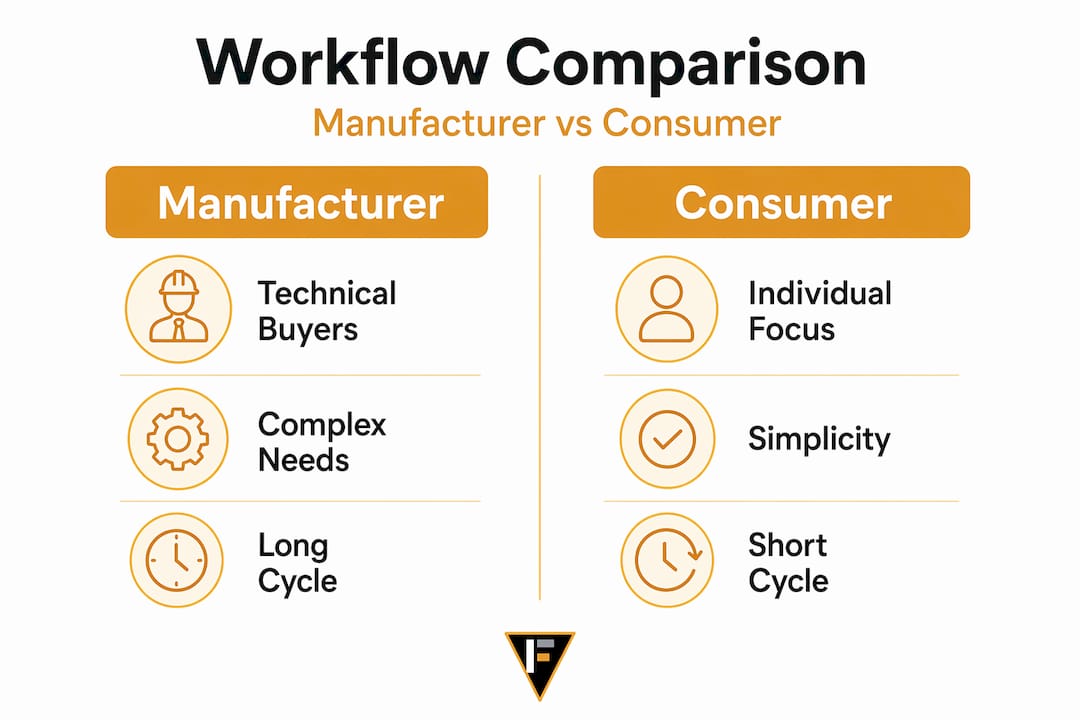
Manufacturer workflow vs. consumer research: A quick comparison
| Dimension | Consumer research | Manufacturing/B2B research |
|---|---|---|
| Segmentation basis | Demographics, psychographics | Firmographics, application, DMU |
| Primary contact | Individual end users | Procurement, technical, operations |
| Decision timeline | Days to weeks | Weeks to months |
| Data richness | High sample volume, low depth | Lower volume, high technical depth |
| Compliance overlay | Moderate | High (regulatory, safety, labeling) |
| Research cadence | Campaign-driven | Continuous, embedded in operations |
When you're building market-ready formulations, this structural difference matters enormously. Your research workflow needs to surface technical decision criteria and procurement patterns, not just preference data.
Key workflow adaptations for manufacturers include:
- B2B segmentation: Organize sample groups by industry vertical, company size, and application type rather than age or lifestyle
- DMU access planning: Map all stakeholders in the buying decision before designing any primary research instrument
- Technical criteria integration: Build specific product performance criteria into your survey and interview questions
- Compliance checkpoints: Embed regulatory review gates at research design, data collection, and interpretation phases
- Iterative feedback loops: Plan for multiple rounds of insight rather than a single research event
For teams tracking market analytics for food chemists and similar technical manufacturing categories, these adaptations aren't optional. They define whether your research delivers useful intelligence or just noise.
Preparing for market research: Planning, tools, and sample access
With the workflow mapped, preparation forms the foundation for effective research and meaningful results. Too many brand managers jump to tool selection or survey design before answering a more fundamental question: what specific decision will this research inform? Every research project should begin with a clearly stated business objective tied to a measurable KPI.

Workflow mechanics you can adapt for manufacturer and brand teams follow a clear sequence: define the decision and KPIs, plan methods and sample access, start with desk research, run targeted primary research with qualitative and quantitative sequencing, analyze and interpret in decision language, and turn insights into a tested action plan that you iterate. Each step must be completed before the next begins. Skipping ahead creates gaps that compound into expensive rework later.
Direct research is often needed for manufacturers to answer business-specific questions that general market data cannot address. Methods include surveys, focus groups, and in-depth interviews. These approaches require advance planning around sample recruitment, screening criteria, and incentive structures that are very different from consumer research panels.
Planning tools and sample access channels
| Planning element | Typical tools/resources | Sample access channels |
|---|---|---|
| Secondary research | Industry reports, trade journals, patent databases | Public databases, association publications |
| Qualitative primary | Interview guides, focus group screeners | Trade show contacts, LinkedIn outreach |
| Quantitative primary | Online survey platforms, analytics dashboards | Industry panels, CRM databases, partner networks |
| Compliance mapping | Regulatory databases, labeling checklists | Legal counsel, industry compliance bodies |
| Competitive benchmarking | Product teardown frameworks, ingredient databases | Retail shelf audits, distributor contacts |
Key preparation tasks before any primary research begins:
- Stakeholder mapping: Identify every internal and external stakeholder whose input will shape or be shaped by the research
- Define decision units: Map the actual buying committee structure for your target customers, including technical, commercial, and operational roles
- Technical fit criteria: Specify what product performance standards the research must evaluate
- Timeline alignment: Match research milestones to product development gates so insights arrive when decisions are being made
- Budget and incentive planning: Industrial respondents require different incentive structures and longer lead times than consumer panels
Pro Tip: Always confirm sample accessibility before designing your primary research instrument. Industrial buyers participate in surveys at significantly lower rates than consumers, and procurement committees often require organizational sign-off before participating. Design your methodology around who you can actually reach, not who you ideally want to reach.
Understanding ingredient benchmarking as part of your preparation phase ensures your research captures competitive performance data at the formulation level, not just at the brand level. This is a critical distinction for manufacturers developing differentiated products. Your brand compliance workflow should also be mapped alongside your research plan so that regulatory checkpoints don't create bottlenecks after data collection.
Executing research: Primary and secondary data collection for manufacturing
Once preparations are completed, the workflow moves into the practical phase of data collection. Sequencing matters more here than most guides acknowledge. Starting with secondary research before moving to primary is not just a best practice, it's a cost-control strategy. Desk research surfaces what's already known, which sharpens your primary research questions and prevents you from spending interview time on information that's available in published sources.
Here is a practical step sequence for manufacturing data collection:
- Complete desk research first: Pull industry reports, regulatory filings, patent data, trade press, and competitive product information. Identify gaps that only primary research can fill.
- Design qualitative instruments: Based on desk research gaps, build interview guides and focus group discussion frameworks targeting the specific DMU roles you identified during preparation.
- Run qualitative rounds: Conduct in-depth interviews or small focus groups with technical and procurement stakeholders. Use these findings to calibrate your quantitative survey questions.
- Design and field the quantitative survey: With qualitative insights incorporated, field a structured survey to a statistically meaningful sample within your firmographic targets.
- Cross-validate findings: Compare primary data against secondary research and flag inconsistencies for follow-up. These inconsistencies often surface the most valuable insights.
- Document compliance-relevant findings: Any data that touches regulatory positioning, labeling claims, or ingredient standards should be formally documented and passed to your compliance team immediately.
The biggest data collection mistake manufacturers make: Treating industrial procurement committees like consumer panels. Procurement managers don't check survey email folders regularly, they evaluate participation against internal time constraints, and they often defer to technical colleagues for specific questions. If you design your research around consumer panel assumptions, your response rates will be low and your data will be biased toward whoever happened to respond, not whoever actually makes the buying decision.
Industrial and B2B research edge cases confirm this: procurement committees and infrequent survey participation often make consumer-style panel approaches weak. Design research around DMU needs, technical fit, and real decision criteria using reachable primary sources. This means investing in relationship-based recruitment rather than mass email campaigns.
Pro Tip: Mix qualitative and quantitative methods in every project, even when budget is tight. A small round of five to seven in-depth interviews before your quantitative survey will dramatically improve question relevance and data quality. The qualitative round surfaces language your target buyers actually use, which reduces survey abandonment and improves the precision of quantitative findings.
For teams managing product compliance in formulation, data collection is also a compliance intelligence opportunity. Every primary research interaction can surface regulatory awareness gaps among your target buyers, which directly informs how you position compliant products. Similarly, tracking ingredient transparency through your research process builds the evidentiary base you need for substantiated label claims.
Interpreting results and operationalizing market intelligence
With your data collected, the next step is to transform insights into actionable, repeatable workflows for lasting impact. This is where most manufacturers fall short. They produce a research report, circulate it, and then let it sit. True operationalization means embedding research outputs directly into decision workflows so that insights influence formulation choices, positioning strategy, and compliance planning on an ongoing basis.
Smart manufacturing research from 2025 shows manufacturers should operationalize market intelligence into repeatable decision workflows focused on time-to-insight and governance, rather than treating research as occasional, slow projects. This requires dedicated roles, defined escalation paths, and clear accountability for acting on research findings within specific timelines.
Key elements of a results interpretation and operationalization process:
- KPI benchmarking review: Compare research findings against pre-defined KPIs. Flag any metrics that landed outside expected ranges and assess whether the variance is a data quality issue or a genuine market signal.
- Decision language translation: Reframe data outputs in the language of the business decisions they inform. Procurement teams need cost and performance data. Marketing teams need positioning and differentiation insights. Formulation teams need ingredient and performance benchmarks.
- Governance assignment: Assign a named owner for each insight category who is responsible for turning findings into actions within a defined timeframe.
- Iterative improvement scheduling: Build a research calendar that schedules follow-up data collection at regular intervals, so intelligence doesn't go stale between launches.
- Cross-functional review cycles: Hold structured sessions where research outputs are reviewed alongside formulation, compliance, and commercial data simultaneously.
One critical nuance: workflow analytics in manufacturing confirms that measured workflow improvements are often associated with better outcomes but should not be interpreted as causal without additional evidence. This distinction matters enormously when you're reporting research-driven improvements to leadership. Correlation between a workflow change and a performance metric is meaningful, but claiming direct causation without controlled analysis overstates the evidence and can lead to poor resource allocation decisions.
Your manufacturing compliance guide provides a useful framework for integrating regulatory milestones into your operationalization timeline. When intelligence about regulatory changes surfaces in research, it needs to trigger immediate compliance review rather than waiting for the next quarterly research cycle. This is where governance protocols pay off. Using formulation analytics for innovation alongside your market intelligence creates a closed loop between what the market demands and what your formulation can deliver.
What most guides miss: The real-world pitfalls and success factors
Most market research guides focus on methodology and tools. What they consistently underemphasize is measurement definition. Here's the uncomfortable truth: the way you define your KPIs before a research project begins will determine what "success" looks like when you report results. This isn't a minor technical point. It's the single biggest factor driving misleading workflow improvement reports in manufacturing.
OEE benchmarking and similar performance measurement frameworks demonstrate this clearly. Benchmarking work often specifies the measurement basis and what counts as "good" or "loss," because how you define those categories changes reported performance materially. A workflow that looks like a 15% improvement under one measurement definition might show only 6% improvement under a different but equally valid definition. When you report the 15% number without disclosing the measurement basis, you create expectations that future iterations may not meet.
For manufacturers and brand managers, this plays out in research workflows when teams track metrics like time-to-insight, decision cycle length, or research-to-launch velocity without agreeing upfront on how those metrics are measured. You end up with competing narratives about whether the workflow is actually working.
The fix is straightforward but requires discipline. Before any workflow improvement initiative, document exactly what you're measuring, how you're measuring it, what baseline you're comparing against, and what you would accept as meaningful change versus noise. Review this document with all stakeholders before the research cycle begins. Then lock it. Don't adjust definitions after you see results.
The second overlooked factor is organizational readiness. A technically perfect research workflow will fail if the organization isn't structured to act on insights at the pace the market requires. Ingredient benchmarking for KPIs works only when the formulation team has a clear handoff protocol from the research function. Building that protocol before you need it is the difference between insights that drive launches and insights that collect dust in shared drives.
Pro Tip: Build KPI realism into your workflow analytics before scaling any process changes. Run a small pilot with your new workflow, measure outcomes using your pre-defined metrics, and validate that the measurement approach captures what actually matters to the business. Scale only after the measurement framework is confirmed to be stable and meaningful.
Ready to streamline your market research workflow?
Knowing the right workflow is one thing. Having the tools to execute it without rebuilding your process from scratch every time is another challenge entirely.
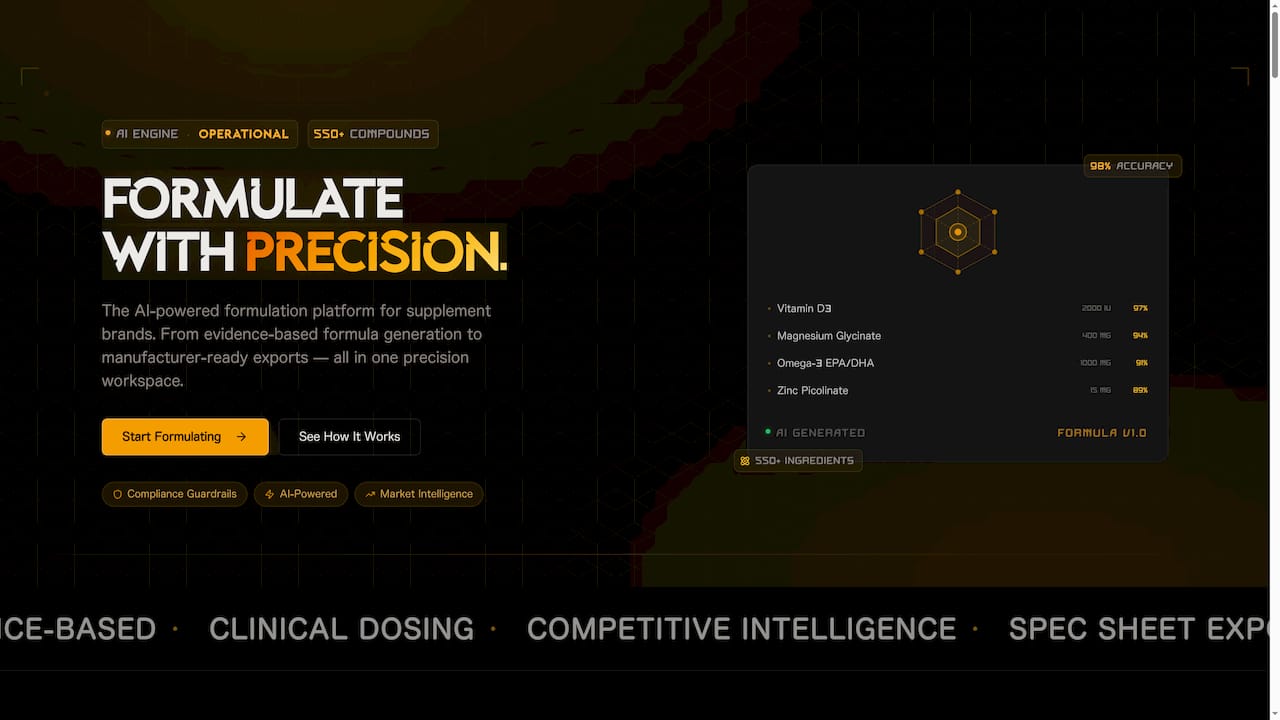
FormlyPro is built specifically for brands and manufacturers who need to move from market intelligence to finished, compliant product faster. The platform's eight-phase product development system takes you from initial ideation through market research, competitive analysis, formulation, prototyping, compliance review, and production planning in a single integrated environment. You get real-time competitor analysis showing which products are selling and what's inside them, built-in compliance guidance for your specific category, and an AI-powered packaging mockup designer that turns your research insights into shelf-ready brand positioning. Everything is connected so your market research directly feeds your formulation decisions, and your compliance workflow runs in parallel rather than after the fact.
Frequently asked questions
How do manufacturers segment their target sample in market research?
Manufacturers segment samples by firmographics, application type such as OEM versus aftermarket, and decision-making unit roles rather than consumer demographic profiles. Industrial segmentation reflects technical fit and procurement structure, not lifestyle or preference categories.
What is the difference between primary and secondary market research for manufacturers?
Primary research uses direct methods like surveys, interviews, and focus groups to answer business-specific questions. Secondary research relies on existing published sources for general market context. Direct research methods are often required in manufacturing because published data rarely captures the technical and procurement specifics a brand needs.
How do manufacturers operationalize market intelligence for ongoing improvement?
Manufacturers build repeatable decision workflows with dedicated team accountability, governance protocols, and defined time-to-insight targets that embed research outputs into ongoing product and commercial decisions rather than treating them as periodic reports.
Can workflow improvements be directly linked to manufacturing outcomes?
Workflow improvements are often associated with better outcomes, but causality cannot be assumed without controlled analysis. Always document your measurement basis before reporting performance gains to avoid overstating the impact of workflow changes.
What are the main mistakes manufacturers make in market research workflows?
Treating industrial procurement committees like consumer panels and neglecting technical segmentation are the most common errors. Industrial buyers require research designs built around DMU needs, technical criteria, and reachable primary sources rather than mass panel recruitment approaches.