

TL;DR:
- Up to 80% of new consumer packaged goods products fail due to poor market timing and misalignment, not lack of creativity.
- AI and real-time consumer intelligence are transforming product development from slow cycles into rapid, data-driven processes that better meet market demands.
Up to 80% of new CPG products fail due to poor market timing and misalignment — a sobering number that hasn't shifted much despite decades of frameworks and process improvements. The real culprit isn't lack of creativity. It's that most brand owners and product developers are navigating today's fast-moving consumer goods market with yesterday's tools and processes. This guide breaks down the most important industry trends in product development for 2026, so you can move faster, make smarter bets, and build products that actually reach shelves and stay there.
Table of Contents
- Current landscape and key challenges in product development
- How AI and real-time consumer intelligence accelerate innovation
- Consumer-driven trends reshaping product development focus
- From stage-gate to agile portfolio governance for faster success
- Applying industry trends to your product development strategy
- Fresh perspective: why traditional product development wisdom needs rethinking
- Leverage FormlyPro to accelerate your product innovation
- Frequently asked questions
Key Takeaways
| Point | Details |
|---|---|
| Fast innovation adoption | AI and real-time consumer data are drastically reducing development times from months to weeks or days. |
| Consumer-driven formulations | Health, wellness, and sustainability demands are reshaping product innovation priorities across categories. |
| Governance matters | Agile, portfolio-level governance integrating live market signals improves decision speed and reduces failures. |
| Align and integrate | Product-centric operating models preventing siloed decisions protect margins and accelerate launches. |
| Leverage technology | Tools like FormlyPro help brands implement these trends efficiently and gain competitive advantage. |
Current landscape and key challenges in product development
The 2026 consumer goods environment is neither a boom nor a bust. It's a pressure cooker. Economic uncertainty hasn't paralyzed the industry, but it has forced product leaders to be much more deliberate about where they focus. The days of launching a dozen SKUs and seeing what sticks are over for most brands.
Here's what's driving the current environment:
- Revenue growth is still the priority, but the path is narrower. Nearly all product development leaders expect revenue growth in 2026, with 42% focused on increasing revenue and 44% on improving profitability. That means every new product needs to justify its place in the portfolio before it gets resourced.
- SKU rationalization is accelerating. Two-thirds of organizations plan to grow through partnerships, and about half intend to cut SKU complexity rather than add to it. Fewer products, better executed.
- Supply chain pressure hasn't fully eased, and ingredient sourcing complexity continues to push teams toward formulation discipline. Getting reducing formulation risks right early is no longer optional — it's how you protect timelines.
By the numbers: In 2026, profitability and growth are equally weighted priorities for product development leaders — the era of growth at any cost has given way to sustainable, margin-conscious innovation.
Understanding this landscape matters because the trends shaping product development in 2026 don't exist in a vacuum. They're responses to real market conditions. The brands winning right now are the ones who've aligned their development pipelines with both economic reality and consumer demand simultaneously.
How AI and real-time consumer intelligence accelerate innovation
Traditional innovation cycles in consumer goods have always been slow by design. Stage reviews, committee approvals, consumer research waves that take months to process — the system was built for a world where markets moved at a different pace. That world is gone.
AI-powered methods now reduce traditional 6-to-18-month development cycles to days or weeks. That's not a marginal improvement. That's a structural change in how product innovation gets done. Here's how it works in practice:
- Rapid concept generation. AI tools can generate and screen hundreds of product concepts against real consumer language patterns in hours. What used to require weeks of qual research now takes a morning.
- Consumer signal mining. Platforms that pull from social, search, retail, and review data give you a live picture of what consumers are asking for before a trend peaks. You're not reacting — you're anticipating.
- Automated prototype feedback. AI-assisted consumer feedback loops let you test formulation concepts with target audiences faster than traditional focus groups, reducing costly late-stage surprises.
- Competitive landscape mapping. Real-time competitor data tells you what's actually selling, what formulations competitors are using, and where the white space is in your category.
The proof is already in the market. Hershey's reduced innovation pipeline development time by three months using AI for faster concepting, prototyping, and consumer feedback. For a company of that size, three months is enormous — for a smaller consumer goods brand, that same efficiency gain could mean the difference between catching a trend and missing it entirely.
Pro Tip: Don't start your AI integration with the most complex use case. Start with consumer signal mining to inform your next quarterly portfolio review. That single change typically surfaces 2 to 3 concept opportunities your team wasn't tracking.
| Method | Timeline | Consumer alignment | Cost profile |
|---|---|---|---|
| Traditional stage-gate research | 6-18 months | Snapshot in time | High |
| AI-powered concept validation | Days to weeks | Continuous and live | Moderate |
| Real-time consumer intelligence | Ongoing | Always current | Subscription-based |
Looking at the 2026 formulation trends alongside AI tools makes clear that technology isn't just speeding things up — it's changing which products get developed in the first place.

Consumer-driven trends reshaping product development focus
Technology accelerates the process. Consumer demand determines the direction. And right now, consumer demand is pushing hard in a few very specific directions that every brand owner needs to have on their radar.
68% of global consumers actively seek healthier versions of FMCG products, driving reformulation with cleaner ingredients across categories from food and beverage to personal care. That number has been climbing for years, but what's changed in 2026 is that "cleaner" now means something specific to consumers — not just fewer ingredients, but traceable, understandable ingredients.
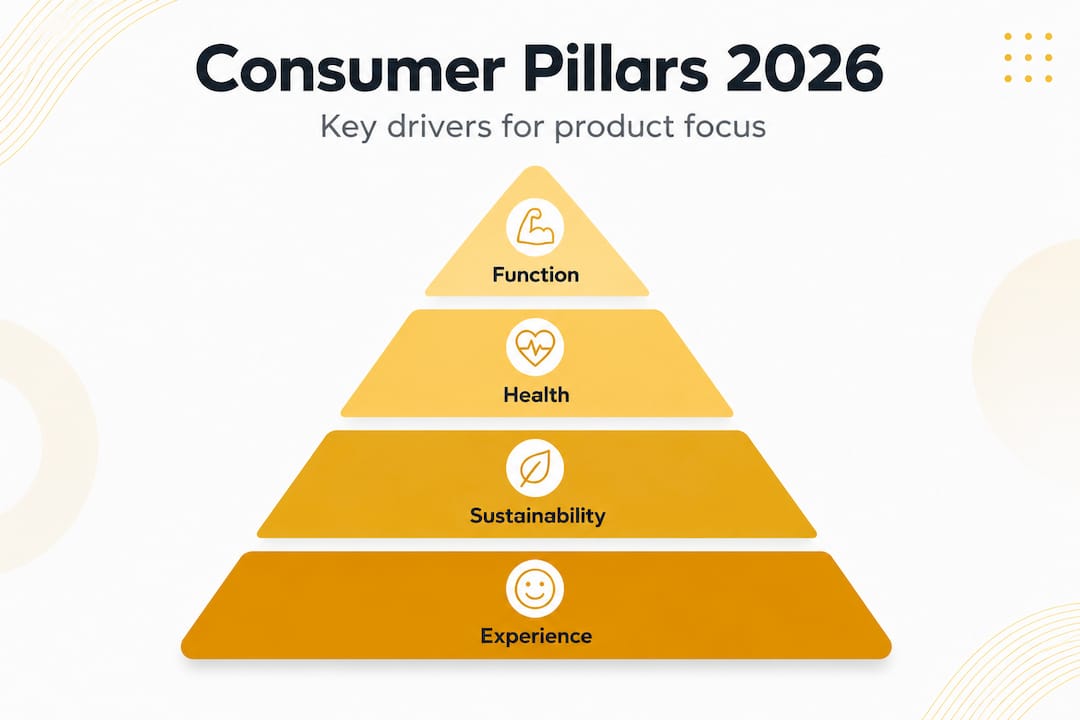
The key demand shifts to build your pipeline around:
- Functional benefits over generic claims. Consumers want products that do something specific: support sleep, reduce inflammation, improve energy. Broad wellness claims are losing credibility. Targeted functional positioning is gaining shelf space.
- Ingredient transparency as table stakes. QR codes linking to sourcing information, clear labeling of what's not in the formula, and honest communication about processing methods have moved from brand differentiators to base expectations.
- Sustainability as a commercial requirement. Sustainability is now a core product development requirement, with packaging innovation and ingredient transparency functioning as commercial imperatives rather than marketing add-ons. If your packaging strategy hasn't been updated in the last 18 months, you're likely already behind your category.
- Premiumization in accessible price points. Premium is no longer synonymous with luxury price. Consumers are trading up on specific attributes — ingredient quality, sustainability credentials, efficacy proof — while remaining price-sensitive overall.
Pro Tip: Run your current portfolio against these four consumer pillars. Any product that can't answer "what functional benefit does this deliver and how does the ingredient story support it?" is a candidate for reformulation or discontinuation before the market forces your hand.
If you're working in food, beverage, or personal care, the depth of reformulation pressure in those categories is worth understanding at the category level. Detailed analysis of food and beverage formulation trends and resources on building healthy brand formulations can help you translate these demand signals into actual formulation decisions.
From stage-gate to agile portfolio governance for faster success
Most brands know their development process is too slow. Fewer know exactly what to replace it with. The answer isn't to throw out governance entirely — it's to redesign governance so that decisions happen faster and are grounded in live data rather than month-old reports.
| Governance model | Decision speed | Data freshness | Failure detection |
|---|---|---|---|
| Traditional stage-gate | Quarterly gates | Historical | Late-stage (expensive) |
| Agile portfolio governance | Monthly reviews | Live consumer signals | Early-stage (correctable) |
Up to 80% of new CPG products fail partly because 18-to-24-month development cycles mean products arrive in a market that has moved on. The concept was right when you started. By launch, the window closed.
Leading firms now use monthly portfolio-level governance that integrates live consumer signals to accelerate product decisions. The key mechanics that make this work:
- Treat every product concept as a market hypothesis, not a commitment. A concept survives its monthly review only if consumer signal data supports continuing it.
- Establish clear kill criteria upfront. If consumer pull for a concept drops below a defined threshold, the team kills or pivots immediately — before significant development investment is sunk.
- Align marketing and development on the same data. One of the biggest sources of late-stage failure is marketing building campaigns around product positioning that development has already moved away from. Monthly shared reviews eliminate that gap.
- Reserve 20% of your development pipeline for fast-response concepts — ideas that can go from signal to prototype in under 60 days when a trend spike is detected.
Pro Tip: If your portfolio reviews happen quarterly, you're already working with data that's up to 90 days stale. Shift to monthly reviews with a standing consumer signal report and you'll catch problems — and opportunities — three times faster.
The governance shift is also where formulation risk strategies pay off most directly. When portfolio decisions are made monthly with live data, early-stage formulation risk identification becomes part of the review cadence rather than a one-time gate.
Applying industry trends to your product development strategy
Knowing the trends is only half the work. The other half is building processes that let you act on them faster than your competitors do. Here's how to translate the trends above into concrete actions starting now.
- Establish a consumer intelligence rhythm. Set up a monthly pull of consumer data across social, search, retail trends, and review platforms for your top three categories. This is the input that feeds your portfolio governance reviews. Products with declining demand can be replaced with concepts showing stronger consumer pull and higher projected shelf velocity using live consumer signals — but only if you're actually looking at that data regularly.
- Audit your current portfolio against 2026 consumer values. Score each product across functional benefit clarity, ingredient transparency, sustainability credential, and health positioning. Flag anything that scores below your category benchmark for urgent reformulation review.
- Shift your governance calendar. Convert at least one quarterly portfolio review to a monthly cadence, and build in a standing agenda item for consumer signal review alongside financial performance.
- Invest in formulation agility. Your ability to move fast on reformulation directly determines how quickly you can respond to consumer trend shifts. Understanding custom health formulations and staying current on product compliance standards before you need them saves weeks when a reformulation is triggered.
Pro Tip: Don't try to transform your entire development process at once. Pick one product in active development and run it through agile governance for two cycles. The learnings from that single experiment will inform how you redesign the broader process far more effectively than any framework document.
Fresh perspective: why traditional product development wisdom needs rethinking
Here's the uncomfortable truth most product development consultants won't say directly: the frameworks most brands are running were designed to prevent bad launches, not to enable fast ones. Stage-gate, toll gates, sequential approvals — every checkpoint was built to reduce risk by slowing the process down. That logic made sense when markets were stable and consumer preferences shifted slowly. It doesn't make sense now.
Kearney consultants recommend product-centric operating models specifically to prevent siloed optimizations that delay launches and erode margins. The silo problem is real and chronic in consumer goods. Marketing optimizes for the product they want to sell. Procurement optimizes for ingredient cost. Regulatory optimizes for approval ease. Each function does its job well, and the result is a product that clears every internal hurdle but doesn't fit the market it was designed for.
Product-centric models fix this by organizing teams around the product and its consumer rather than around functional specialties. Everyone has the same north star: does this product create value for the target consumer at a margin that works for the business?
The failure-fast principle is real, but it requires AI-powered feedback loops to work at commercial speed. Failing fast on paper — meaning pivoting when data suggests a concept isn't working — only happens in practice when you have fast data. Without live consumer intelligence integrated into your review process, "fail fast" becomes "fail eventually when it's too late to recover the investment."
The deeper issue is cultural. Technology changes can be bought. Governance changes can be mandated. But the shift from treating product development as a linear production process to treating it as a continuous, market-synced learning cycle requires teams to genuinely internalize that killing a concept early is a success, not a failure. That mindset shift is where most organizations stall, and it's what separates brands that consistently launch successfully from those that keep repeating the same expensive mistakes. Building this starts with the right formulation risk management approach — where early-stage learning is designed into the process, not bolted on after problems appear.
Leverage FormlyPro to accelerate your product innovation
Knowing the trends shaping product development in 2026 is valuable. Having a system that helps you act on them from day one is the real advantage.
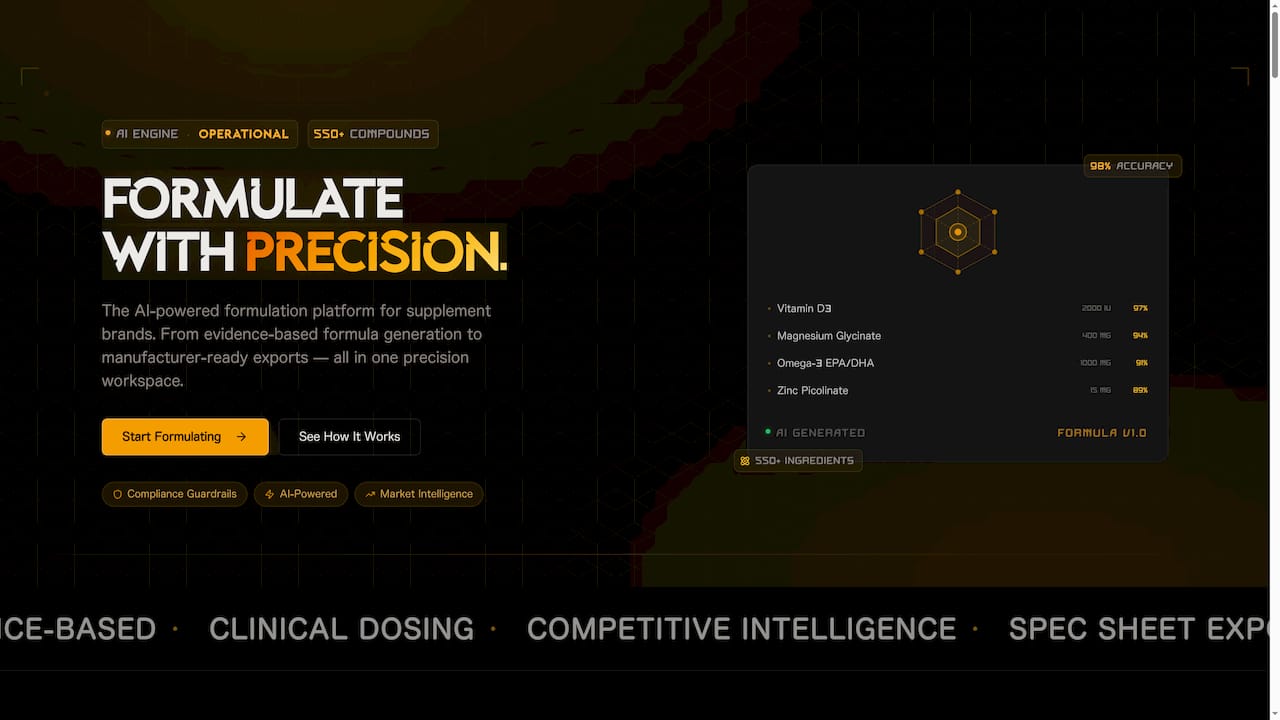
The FormlyPro platform is built specifically for brand owners and product developers who want to move from idea to launch with structure, speed, and confidence. FormlyPro's 8-phase development plan walks you through every stage — from ideation and market research to formulation, prototyping, compliance, and production — with built-in competitor analysis and live market analytics at every step. The AI-powered packaging mockup designer, compliance guidance, and research-backed formulation tools mean you're not just following trends. You're building products designed to win in the markets those trends are shaping. If you're serious about cutting your development timeline and improving your launch success rate, FormlyPro is where that work starts.
Frequently asked questions
What are the biggest challenges in product development for consumer goods in 2026?
The main challenges include development cycles that are too slow for fast-moving consumer trends, high failure rates from poor market timing, and the growing complexity of SKU management and cost pressure. Up to 80% of new CPG products fail specifically because of market misalignment — a problem that better governance and consumer intelligence can directly address.
How does AI improve product development success?
AI accelerates consumer insight gathering, automates concept validation, and shortens development cycles from months to weeks or days, enabling companies to respond quickly to market changes and reduce failed launches. AI-powered methods compress what used to take 6 to 18 months into a fraction of that time.
Why is sustainability important in product innovation today?
Sustainability has shifted from a marketing message to a commercial necessity, influencing formulation, packaging, and ingredient choices as consumers increasingly prioritize responsible products. Packaging innovation and ingredient transparency are now baseline requirements in most consumer categories, not differentiators.
What governance changes reduce product failure rates?
Moving from rigid stage-gate processes to agile portfolio-level governance with monthly reviews that incorporate live consumer signals helps companies make faster kill or pivot decisions. Monthly portfolio-level governance with live consumer data integration is now the approach leading consumer goods firms use to keep their pipelines market-relevant.