

TL;DR:
- Transparency 2.0 entails sharing ingredient functions, concentrations, and sourcing details.
- Consumers increasingly prefer and pay more for brands that are fully transparent.
- Regulatory changes and consumer demand make transparency a key competitive advantage.
Brands still clinging to ingredient secrecy as a competitive moat may be surprised to learn that openness is the stronger strategy. 87% of consumers pay more for brands they trust, and in beauty and wellness, trust is built through what you reveal, not what you hide. Formulation transparency has moved from a niche marketing tactic to a core brand expectation. This guide breaks down what modern transparency actually requires, why regulatory and consumer forces are accelerating the shift, and how your brand can turn disclosure into a measurable competitive advantage.
Table of Contents
- What is formulation transparency?
- Key drivers behind formulation transparency
- Benefits of transparency: Trust, efficacy, and market advantage
- Challenges and nuances: Proprietary blends, greenwashing, and edge cases
- A new paradigm: Radical transparency as the next market disruptor
- Build trust with FormlyPro's integrated transparency solutions
- Frequently asked questions
Key Takeaways
| Point | Details |
|---|---|
| Transparency drives trust | Detailed ingredient disclosure boosts consumer confidence and loyalty. |
| Compliance is evolving | New regulations demand deeper transparency, including fragrance allergens, starting in 2026. |
| Competitive advantage | Full disclosure not only meets requirements but also builds market leadership. |
| Balanced disclosure | Brands can earn trust without revealing every proprietary detail by focusing on functions and valid concentrations. |
What is formulation transparency?
For decades, ingredient transparency meant one thing: the INCI (International Nomenclature of Cosmetic Ingredients) list on the back of a package. Brands listed what was in the formula because the law required it. Consumers rarely understood those lists anyway, so the bar stayed low.
That era is over.
What's now called Transparency 2.0 means not just ingredient lists but also functions, concentrations, and sourcing. Consumers are no longer satisfied knowing that hyaluronic acid is in a serum. They want to know what percentage, where it was sourced, and whether that concentration is clinically meaningful. This is a fundamentally different standard, and it's reshaping formulation strategy across every beauty and wellness category.
For brand owners, this shift creates both opportunity and pressure. Brands that adopt deeper disclosure are building more loyal, better-informed customer bases. Those that don't are increasingly seen as evasive, a perception that is hard to reverse.
Here is what Transparency 2.0 looks like in practice:
- Ingredient identity: Full INCI names with common name equivalents for consumer clarity
- Functional role: Why each ingredient is in the formula (humectant, preservative, active, etc.)
- Relative concentration or range: Whether an ingredient is present at a meaningful or trace level
- Sourcing origin: Whether botanical ingredients are organic, wild-harvested, or synthetically derived
- Clinical backing: Whether concentrations align with published research or clinical studies
Investing in formulation analytics early in your product development cycle makes it easier to build disclosable, defensible formulas from the start, rather than reverse-engineering transparency after launch.
| Transparency level | What is disclosed | Consumer impact |
|---|---|---|
| Basic (INCI only) | Ingredient names | Low trust uplift |
| Intermediate | Names + functions | Moderate trust uplift |
| Transparency 2.0 | Names, functions, %, sourcing | High trust and loyalty |
Strong brand formulation development now starts with the transparency layer built in, not bolted on at the end.
Key drivers behind formulation transparency
So what's pushing this shift with such urgency? Three forces are converging at once: regulation, consumer behavior, and competitive pressure. Understanding each one helps you prioritize where to act first.
Regulatory evolution
In the US, the Modernization of Cosmetics Regulation Act (MoCRA) is the biggest regulatory shift in decades. MoCRA requires facility registration, product listing, safety substantiation, and will mandate fragrance allergen disclosure. This aligns US standards significantly closer to EU frameworks, which have long required deeper disclosure. Brands that have relied on vague "fragrance" labeling to hide proprietary blends are going to face real compliance risk. Your formulation compliance for cosmetics process needs to account for these requirements now, not at the last minute.
Consumer behavior
The numbers are hard to ignore. 85% demand exact ingredients; 72% check labels for irritants; 87% pay more for trusted brands. These aren't niche consumer segments. They represent the mainstream shopper who has become far more ingredient-literate, partly through social media, partly through personal experience with reactions or ineffective products.
"87% of shoppers will pay more for brands they trust because of transparency."
Competitive differentiation
Transparent brands consistently outperform opaque competitors on reputation scores and repeat purchase rates. When two products occupy the same shelf space at a similar price point, the one with a clear, honest formula breakdown wins more first purchases and more repeat buys. Look at formulation examples from category leaders and you will see a pattern: the winners disclose more, not less.
The top four drivers, in order of urgency:
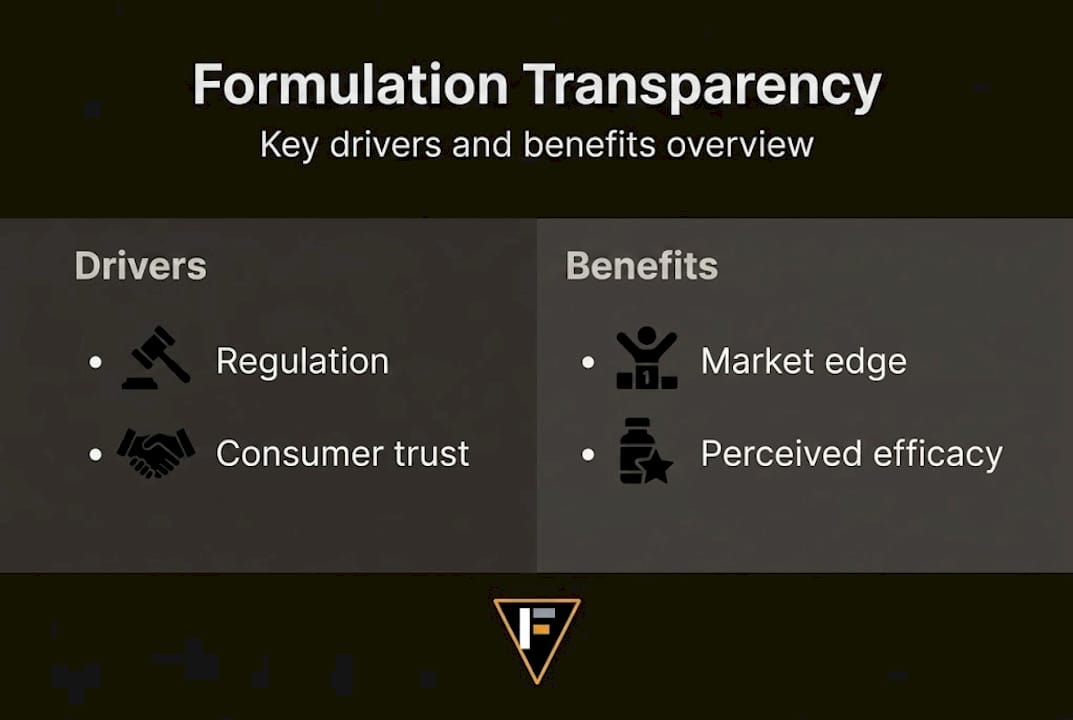
- Regulatory compliance: MoCRA and EU-aligned standards are raising the floor for all brands
- Consumer trust: Shoppers reward brands that show their work with loyalty and premium pricing
- Efficacy validation: Disclosed concentrations let consumers verify that actives are at meaningful levels
- Brand differentiation: Transparency is a positioning tool that competitors cannot easily copy if your formula is genuinely strong
A solid regulatory compliance checklist is the foundation, but the brands winning right now are treating transparency as a brand asset, not just a legal box to check.
Benefits of transparency: Trust, efficacy, and market advantage
Transparency's benefits go well beyond avoiding regulatory trouble. For brands that do it well, it creates measurable commercial advantages.
Trust and repeat purchase
When consumers can read and understand your formula, they self-select in. They aren't just buying a product. They are buying a promise they can verify. This is qualitatively different from marketing language like "clinically proven" with no supporting data. Transparency enables consumer verification of clinical dosing, reducing label dressing, which is the practice of including an active ingredient at a cosmetically useless concentration just to list it on the label.

| Factor | Transparent brand | Non-transparent brand |
|---|---|---|
| Consumer trust score | High | Low to moderate |
| Repeat purchase rate | Higher | Lower |
| Allergy incident rate | Lower | Higher |
| Susceptibility to greenwashing accusations | Lower | Higher |
| Premium pricing ability | Yes | Limited |
Efficacy perception
Transparency enhances product efficacy perception, especially for sensitive skin consumers. When a consumer with rosacea or eczema can see that your formula contains no known irritants at meaningful concentrations, they are far more likely to try and stick with your product. That's not marketing spin. That's rational consumer behavior enabled by honest disclosure.
Building market-ready formulations means incorporating this kind of consumer psychology into your development process from day one.
Here is what transparency directly improves:
- Trust: Consumers feel respected when they understand what they are applying to their bodies
- Perceived efficacy: Visible concentrations signal that actives are at working levels
- Market position: Brands with verifiable formulas attract the growing segment of ingredient-literate shoppers
- Reduced returns: Consumers who buy with full information are less surprised and more satisfied
Pro Tip: You do not need to publish exact proprietary ratios to be transparent. Disclosing functional ranges (for example, "niacinamide at 5%" or "retinol at 0.3%") builds consumer confidence while keeping your specific blend protected. Pair this with sourcing notes and your formula story becomes a genuine competitive asset. Detailed tracking of your product performance improvements over time also gives you real data to support your transparency claims.
Challenges and nuances: Proprietary blends, greenwashing, and edge cases
Transparency is not a simple switch you flip. There are real risks and strategic complexities that brand owners need to navigate carefully.
Proprietary blends and IP protection
Proprietary blends can protect trade secrets but risk greenwashing accusations when consumers feel information is being withheld without good reason. The tension is real. Your unique formulation is likely your most valuable IP. But if your only reason for opacity is cost protection on a formula that isn't actually innovative, consumers and regulators will eventually notice.
The greenwashing trap
Vague claims like "natural," "clean," or "non-toxic" without specific disclosure are increasingly scrutinized. Transparency cons include formula protection for IP, copycat risk, added costs, and regulatory complexity, but the reputational cost of a greenwashing accusation can dwarf all of these. Brands that overclaim and underdisclose are the primary targets.
Sensitive skin and allergy edge cases
For consumers managing allergies or sensitivities, partial transparency genuinely isn't enough. If your fragrance blend contains a known allergen hidden behind a proprietary label, you're not just risking trust. You're risking a reaction, a complaint, and potentially a regulatory issue.
Understanding custom formulation strategy helps you design formulas that are genuinely disclosable, not ones that require opacity to look clean.
Common pitfalls and how to avoid them:
- Vague botanical claims: Always specify extraction method and plant part used
- Hidden fragrance allergens: Prepare now for MoCRA allergen disclosure requirements
- Label dressing: Include actives at clinically relevant concentrations or don't feature them on the front panel
- Sourcing generalities: "Sustainably sourced" without specifics is a greenwashing flag
- Inconsistency across markets: Your EU formula disclosures and US disclosures should tell the same story
Pro Tip: Consider creating a dedicated "formula transparency page" on your website that goes beyond the legal label. Include ingredient sourcing maps, third-party test results, and functional breakdowns. This kind of above-and-beyond disclosure is almost impossible to fake, which makes it a powerful trust signal.
A new paradigm: Radical transparency as the next market disruptor
Most brands treat transparency as a compliance activity, something you do because you have to. That framing is a strategic mistake.
The brands that will define category leadership over the next three years are those that move to radical transparency before their competitors do. Full formula breakdowns are evolving beyond INCI lists to include ingredients' functions, percentages, and origins. This isn't a niche expectation anymore. It's becoming the mainstream standard, especially in DTC channels where consumers have more time to research before buying.
Waiting for the regulatory minimum is a lagging strategy. Within two to three years, brands that cannot show function, concentration, and sourcing will struggle to earn shelf space at forward-thinking retailers and will lose DTC conversions to brands that can.
The brands we've seen leverage using formulation analytics to build evidence-backed, fully disclosable formulas are already ahead. They're not worried about MoCRA. They're positioned to profit from it.
Actionable steps: Audit every formula for disclosability. Identify ingredients that exist only as label claims. Document sourcing and function for every active. Then tell that story, publicly and consistently. Transparency isn't vulnerability. It's the new moat.
Build trust with FormlyPro's integrated transparency solutions
If formulation transparency feels operationally overwhelming, that's exactly the problem FormlyPro was built to solve.
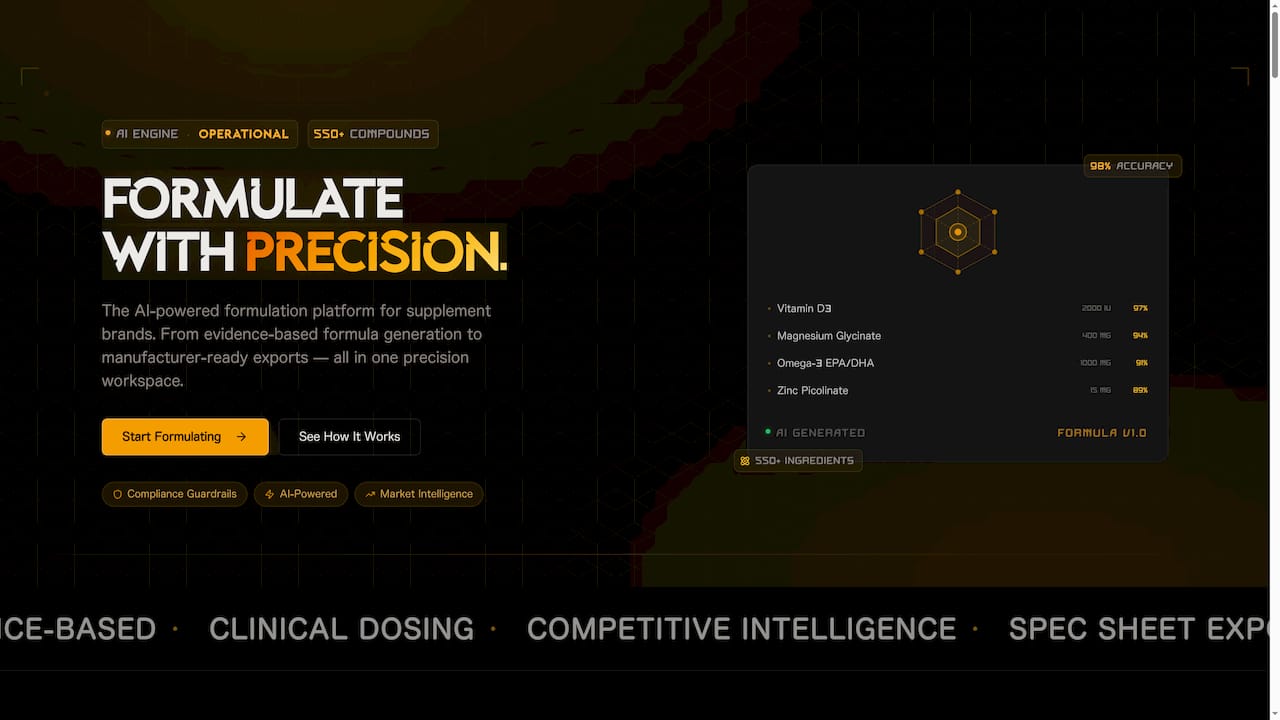
FormlyPro's transparency platform gives beauty and wellness brand owners the tools to build fully disclosable, research-backed formulas from the ground up. The platform's 8-phase product development system guides you from ideation through compliance, formulation, and production, with competitor analytics and market research built in at every stage. You get ingredient function breakdowns, compliance tracking, sourcing documentation, and even an AI-powered packaging mockup designer to bring your transparent brand story to life visually. If you're ready to turn transparency into a market advantage, FormlyPro gives you the infrastructure to do it.
Frequently asked questions
What is formulation transparency in beauty and wellness?
Formulation transparency means openly sharing all ingredients, their functions, and occasionally concentrations and sources, so consumers can make informed choices. Transparency 2.0 includes functional and sourcing details that go well beyond a standard INCI list.
How does transparency impact consumer trust?
Clear disclosure increases trust significantly, with 87% of consumers preferring transparent brands and actively paying more for them over less forthcoming competitors.
Will regulatory changes require more disclosure in 2026?
Yes. MoCRA's new ingredient disclosure requirements are pushing US standards closer to EU frameworks, including mandatory fragrance allergen disclosure that affects brands using proprietary scent blends.
How can brands stay competitive while protecting trade secrets?
Brands can disclose ingredient functions and general concentration ranges while retaining exact proprietary ratios. Proprietary blends balance trade secret protection with consumer trust when communicated strategically.
What are the risks of not adopting full transparency?
Brands risk consumer distrust, regulatory penalties, and greenwashing accusations. Greenwashing accusations rise with vague ingredient claims, making opaque formulas a growing liability in both DTC and retail channels.