

Product concept visualization, in the supplement and nutraceutical world, means building the full set of tangible artifacts that describe your product before you spend money on a pilot run: a formulation blueprint, a compliance/spec map, sensory acceptance criteria, and a packaging mockup. The output is a supplier-ready concept package that lets a contract manufacturer quote accurately, lets QC sign off on specs, and lets your label designer work from real data instead of guesses.
Done right, it produces three things immediately:
- Formulation prototype notes: target dose, active ingredients, excipients, and assay targets
- Spec sheet and compliance map: component and in-process specs aligned to 21 CFR Part 111
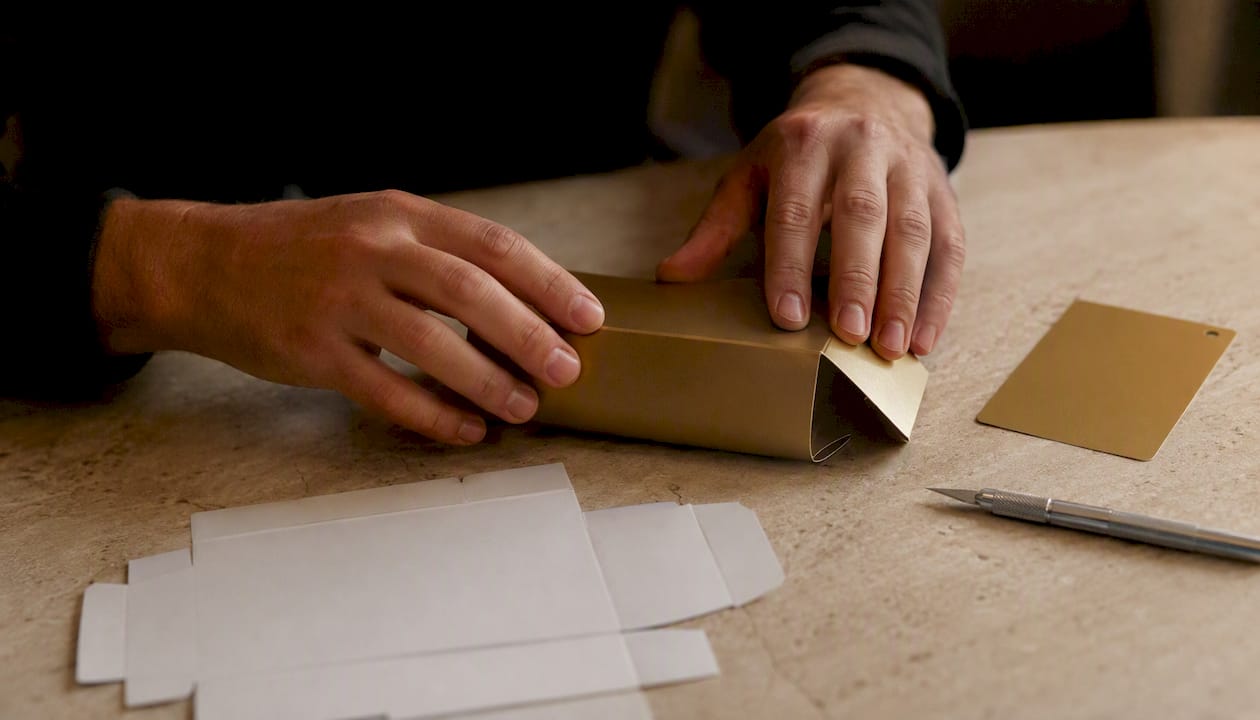
- Packaging mockup and label draft: Supplement Facts panel, claims language, tamper-evidence callouts
Key Takeaways
Product concept visualization is the structured process of building formulation prototypes, compliance maps, sensory criteria, and packaging mockups before a pilot run, and it is the single most reliable way to reduce rework and regulatory risk in supplement development.
| Point | Details |
|---|---|
| Define artifacts early | Build a formulation blueprint, spec sheet, and packaging mockup before briefing any supplier or manufacturer. |
| Map every spec to Part 111 | Align component specs (§111.70), identity testing (§111.75), in-process specs (§111.77), and label specs (§111.87) to your visualization deliverables. |
| Run quick-win tests first | A 30-day bench stability screen and a 10-person sensory panel catch most deal-breakers before you spend on a full pilot run. |
| Freeze formulation before label design | Finalizing the formulation spec before briefing the label designer prevents the most common and costly rework loop in supplement launches. |
| Use Formlypro to centralize the workflow | Formlypro's 8-phase workflow, compliance templates, and AI Mockup designer produce manufacturer-ready outputs at every stage of the visualization process. |
Table of Contents
- What does a supplement product concept visualization include?
- Why product concept visualization matters for supplement brands
- How to run the iterative visualization workflow
- 21 CFR Part 111 checklist for your concept visualization
- Which prototype tests should you run during concept visualization?
- What deliverables must your visualization produce?
- How Formlypro supports the visualization workflow
- Time and cost expectations for a minimal visualization
- The mistake that costs brands the most
- Formlypro makes the visualization workflow faster
- Sources
What does a supplement product concept visualization include?
The custom supplement formulation process runs from product brief through scale-up, and each stage generates a distinct artifact. A complete visualization covers all of them:
- Formulation blueprint: active ingredient list, target potency per serving, excipients, dosage form (capsule, softgel, powder, tablet), and batch notes from bench-scale runs
- Sensory map: taste, texture, mouthfeel, color, and odor acceptance criteria with pass/fail thresholds
- Stability and compatibility plan: storage conditions (temperature, humidity), predicted shelf life, and known incompatibilities between actives and excipients
- Compliance/spec map: component specs, in-process specs, and label spec tied to 21 CFR Part 111 subpart E requirements for identity, purity, strength, and composition
- Packaging mockup and label draft: Supplement Facts panel per 21 CFR 101.36, allergen declarations, FNSKU placement, and tamper-evidence design
Why product concept visualization matters for supplement brands
Visualization reduces expensive rework, production delays, and regulatory risk by making every requirement explicit before a single gram of ingredient is ordered. Ambiguity at handoff is the most common reason a pilot run fails or a label gets flagged.
Labeling violations accounted for 41% of the 247 FDA warning letters issued to supplement brands in 2023. Most of those errors could have been prevented at the concept stage with a reviewed label draft and a Supplement Facts panel built from real formulation data.
The regulatory case is direct: 21 CFR Part 111 requires documented component specifications, in-process specifications, identity testing for dietary ingredients, and written QC approvals. Each of those requirements maps to a visualization artifact. If you build the artifact during concept development, QC review becomes a check rather than a discovery.
Commercially, a complete visualization package lets suppliers quote from real specs instead of ballpark estimates, compresses pilot-run timelines, and gives your sensory panel a defined target to evaluate. Formulation teams consistently find that iterative prototyping and sensory evaluation before scale-up is the most reliable way to balance ingredient stability, dosage-form performance, and consumer acceptance.
How to run the iterative visualization workflow
A clear product brief and structured prototype iteration schedule are what separate brands that hit pilot on the first attempt from those that cycle through three reformulations. Here is the sequence:
- Ideation and brief (PM owns): define the health claim, target consumer, dosage form, and competitive positioning. Deliverable: one-page product brief.
- Formulation blueprint (formulator owns): select actives, set target potencies, choose excipients, flag known stability risks. Deliverable: ingredient list with assay targets.
- Bench prototype (formulator owns): produce a small bench batch, document batch notes, capture sensory observations. Deliverable: prototype batch record.
- Sensory and lab tests (QC/analytical lab): run identity and potency checks, a small sensory panel (n=10 minimum), and a 30-day bench stability screen. Deliverable: test results summary.
- Compliance map and label draft (regulatory/PM): map specs to Part 111 clauses, draft Supplement Facts panel, write claims language. Deliverable: compliance map + label draft.
- Pilot run (contract manufacturer): produce a pilot batch against the approved spec. Deliverable: pilot batch record and in-process data.
- QC approval (QC manager): review pilot data against in-process specs, approve or flag deviations. Deliverable: signed QC approval.
- Supplier handoff (PM): package spec sheet, label draft, packaging dieline, and batch record for the manufacturer. Deliverable: complete handoff package.
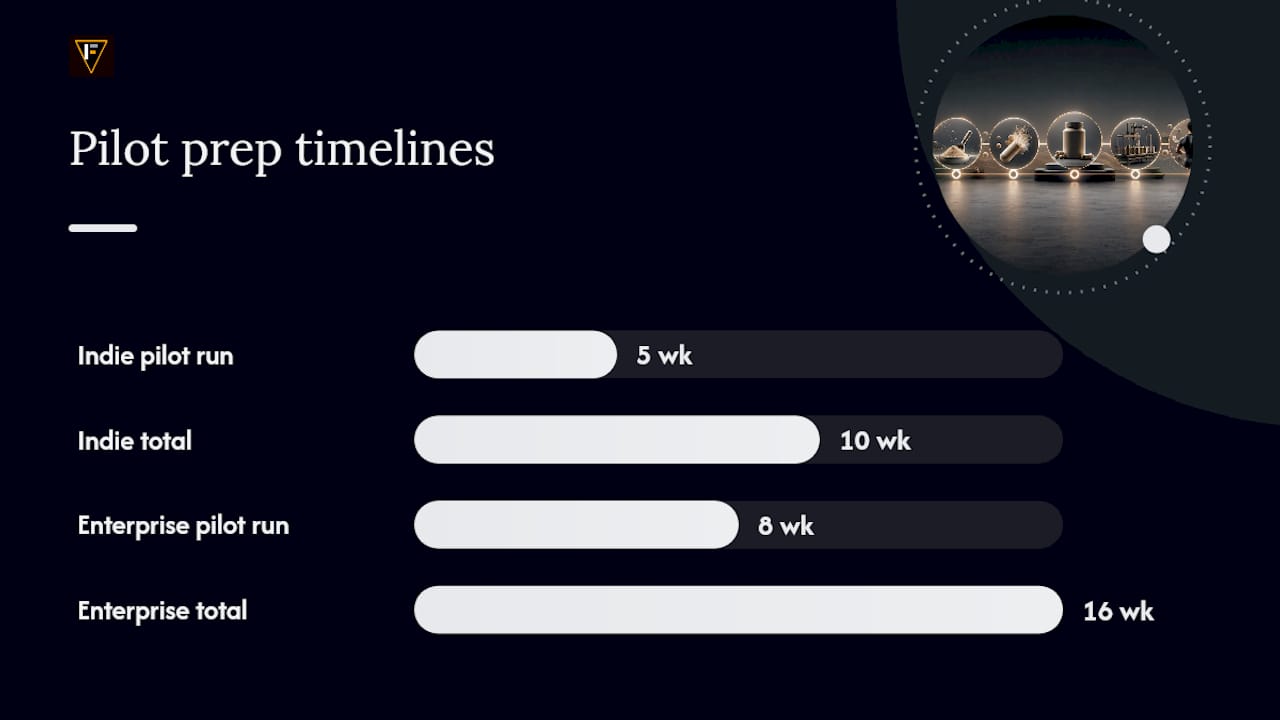
| Task | Indie brand (low MOQ) | Enterprise (retail-ready) |
|---|---|---|
| Ideation to blueprint | 1–2 weeks | 2–4 weeks |
| Bench prototype + sensory | 2–4 weeks | 4–6 weeks |
| Compliance map + label draft | 1–2 weeks | 2–3 weeks |
| Pilot run | 4–6 weeks | 6–10 weeks |
| Total (parallelized) | 8–12 weeks | 12–20 weeks |
Stability testing and packaging die lead times are the most common bottlenecks. Both can run in parallel with the pilot prep if you start them at step 4.
Pro Tip: Set in-process spec gates before the pilot run, not after. Pre-agreed pass/fail thresholds for blend uniformity, disintegration time, and moisture content prevent the most common rework loop: discovering an out-of-spec result mid-run with no agreed remediation path.
21 CFR Part 111 checklist for your concept visualization
Include these elements so QC and regulatory sign-off are straightforward from day one. The compliance requirements for health and wellness brands map directly to Part 111 clauses:
- §111.70 (component and product specs): component identity spec, assay limits, supplier lot acceptance criteria
- §111.75 (identity testing): identity testing plan for each dietary ingredient, method reference (HPTLC, FTIR, or equivalent)
- §111.77 (in-process specs): blend uniformity, fill weight, disintegration/dissolution targets, moisture content
- §111.87 (label and packaging specs): Supplement Facts panel draft, allergen declarations, tamper-evidence spec, FNSKU placement
- Written QC procedures: documented approval signatures for each spec and each production control
The role of in-process quality control for supplement brands is to catch deviations before they become batch failures. Embedding these checkpoints in your visualization means the QC team reviews a document, not a surprise.
Which prototype tests should you run during concept visualization?
Prioritize identity/potency and sensory checks early. Run accelerated stability and pilot-scale compatibility before committing to a pilot run.
- Identity and potency testing (required, Part 111): confirm each dietary ingredient is what the label says and at the stated potency. Use an accredited analytical lab. Minimum: one test per ingredient per lot.
- 30-day bench stability screen (quick win): store samples at 40°C/75% RH for 30 days and check for potency loss, color change, and caking. Cheap and fast; flags obvious incompatibilities before you invest in a full accelerated study.
- Sensory panel, n=10 (quick win): recruit 10 target consumers or internal evaluators. Score taste, texture, and aftertaste on a structured scale. Results are directional, not statistically definitive, but they catch deal-breakers early.
- Accelerated stability (ICH Q1A-aligned): 6 months at 40°C/75% RH with testing at 0, 3, and 6 months. Required before you can claim a shelf life on the label.
- Dissolution/disintegration (tablets and capsules): run per USP <2040> or <701>. Confirms the dosage form releases actives as intended. Hire a contract lab or ask your contract manufacturer's QC team to run it on pilot samples.
See formulation risk-reduction strategies for a deeper look at how to sequence these tests to avoid redundant spend.
Pro Tip: For small sensory panels, give evaluators a reference product alongside your prototype. Comparative scoring ("better than, same as, worse than reference") produces more consistent data than absolute scales when n is under 20.
What deliverables must your visualization produce?
A spec sheet that a manufacturer cannot act on is not a spec sheet. Every deliverable in your visualization package should answer one question: "Can a QC manager or contract manufacturer make a decision from this document alone?"
Minimum deliverables for every concept visualization:
- Ingredient spec sheet: identity, assay limits, supplier lot acceptance criteria, and storage conditions for each component
- Master manufacturing record (MMR) inputs: batch size, bill of materials, process steps, in-process checkpoints, and equipment notes
- Analytical test plan: methods, acceptance criteria, and lab assignments for identity, potency, and stability tests
- Label draft: Supplement Facts panel, serving size, directions, claims, allergen statement, and net quantity
- Packaging dieline + pre-press spec: FNSKU placement, tamper-evidence location, barcode spec, and print-ready dimensions per the supplement packaging compliance guide
The PM typically owns the label draft and packaging dieline. The formulator owns the ingredient spec sheet and MMR inputs. QC owns the analytical test plan and signs off on all of them before handoff.
How Formlypro supports the visualization workflow
Formlypro centralizes formulation blueprinting, compliance mapping, packaging mockups, and manufacturer-ready exports so teams can run the iterative workflow faster with fewer handoff errors. Working with an integrated formulation and compliance platform shortens the feedback loop between prototype testing and QC documentation.
- Ideation to blueprint: Formlypro's 8-phase product development workflow guides you from concept brief through formulation, with ingredient intelligence and competitor analysis built in
- Compliance mapping: the platform's compliance guidance covers FDA and DSHEA requirements, generating spec templates aligned to Part 111 clauses
- Packaging mockups: the AI Mockup designer produces packaging visuals and dieline-ready files for pre-press review, so your label draft and packaging spec are built together
- Manufacturer-ready exports: Formlypro generates spec sheets and Supplement Facts drafts that a contract manufacturer or QC team can act on directly
- Pipeline planner: tracks each phase from ideation through pilot, so nothing falls through between the formulation and packaging stages
Time and cost expectations for a minimal visualization
An indie brand running a DTC-only SKU can complete a minimal visualization for less than a retail-ready product, but the core lab costs are fixed regardless of scale.
Packaging die and carton lead times (typically 4–8 weeks) and long-term stability data (12+ months) are the two tasks that cannot be compressed. Start both as early as possible. Analytical testing and label design can run in parallel with bench prototyping to shorten the overall schedule.
- Parallelizing sensory testing with bench stability saves 2–3 weeks on most indie timelines
- Retail-ready SKUs need long-term stability data before a major retailer will list them; plan for 12–18 months of real-time data alongside accelerated results
- Packaging format choice (bottle-with-sleeve vs. folding carton) affects both cost and labeling footprint; indie supplement packaging formats vary significantly in MOQ and regulatory surface area
The mistake that costs brands the most
The single most common failure mode in supplement launches is a mismatch between the packaging dieline and the Supplement Facts panel. The label is designed before the formulation is finalized, so the serving size, ingredient amounts, or allergen statement changes after artwork is approved. The result: reprinted artwork, delayed launch, and sometimes an FDA labeling violation.
The habit that prevents it is simple: freeze the formulation spec before you brief the label designer. That means completing steps 1–4 of the workflow above (ideation through lab tests) before the packaging mockup moves past a rough draft. Visualization forces that sequence by making the formulation blueprint a prerequisite for the label draft.
Formlypro makes the visualization workflow faster
Formlypro is built for exactly this process. Instead of managing a formulation spreadsheet, a separate compliance checklist, and a packaging brief across three different tools, you run the entire concept visualization inside one platform. The 8-phase workflow keeps your team on sequence, the AI Mockup designer produces packaging visuals tied to your actual label data, and the manufacturer-ready export gives your contract manufacturer a spec package they can quote from on day one.
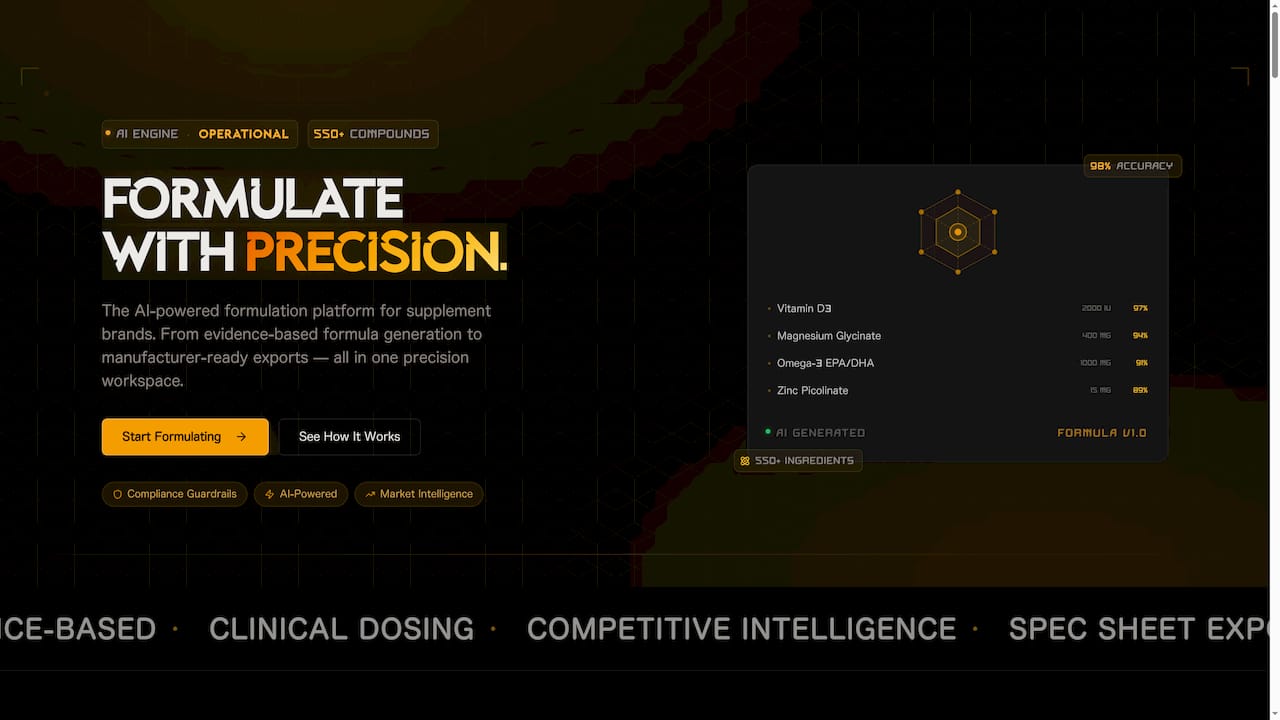
Product managers and founders at supplement brands use Formlypro to move from a product idea to a supplier-ready concept faster, with compliance built in from the start rather than bolted on at the end. Start your visualization project at Formlypro and see how far you can get before your next supplier call.
Sources
These references back the regulatory and technical claims in this guide and are worth bookmarking for your own QC and compliance documentation:
- CFR-2023-title21-vol2-part111-subpartE.pdf
- Supplement FDA + FBA Compliance 2026: 21 CFR 101.36 + FNSKU + 9 Allergens | PackOasis Blog
- Custom Supplement Formulation Guide | Atrium Scientific
- Dietary Supplement Formulation Development | Catalent
- How Custom Supplement Formulation Works | Enhanced Labs
This article is general information, not a substitute for advice from a qualified doctor. Consult a qualified healthcare professional about your own circumstances before acting on anything here.