

TL;DR:
- Clean label formulation involves creating food products with minimal, recognizable ingredients rooted in consumer perception. It requires full system redesign, validation, and supply chain transparency to meet consumer trust and safety standards. Brands that treat clean label as a science discipline gain a competitive advantage through authenticity and digital verification.
Clean label formulation is the process of developing food and beverage products using minimal, recognizable ingredients that consumers can understand and trust. The concept carries no formal regulatory definition; instead, it is shaped entirely by consumer perception and market expectations. For product developers and brands, that distinction matters enormously. You are not chasing a compliance checkbox. You are engineering a product that earns trust at the shelf, on the ingredient list, and increasingly, through a smartphone scan.
What is clean label formulation and why does it matter now?
Clean label formulation is defined by three core principles: ingredient simplicity, source transparency, and the absence of artificial additives. A product qualifies when its ingredient list reads like a recipe a home cook would recognize, not a chemistry textbook. 31% of new food and beverage products launched in 2022–2023 carried a clean label claim. That share reflects a structural shift in how brands compete, not a passing trend.

The clean label food definition differs from "natural" or "organic," which carry legal thresholds. Clean label sits in the space between regulatory compliance and consumer expectation. A product can be fully compliant with FDA labeling rules and still fail a clean label standard in the eyes of a consumer who rejects xanthan gum because it sounds synthetic. That gap between legal and perceived is where formulation decisions get complicated.
Nearly 3 in 4 consumers reconsider purchases based on ingredient lists, with 58% citing ingredient and sourcing clarity as critical. That statistic tells you the ingredient list is now a sales tool, not just a regulatory requirement. Brands that treat it as the latter are leaving revenue on the table.
What drives the demand for clean label products?
Consumer demand for clean label products is rooted in three converging forces: health awareness, distrust of synthetic additives, and access to digital verification tools.
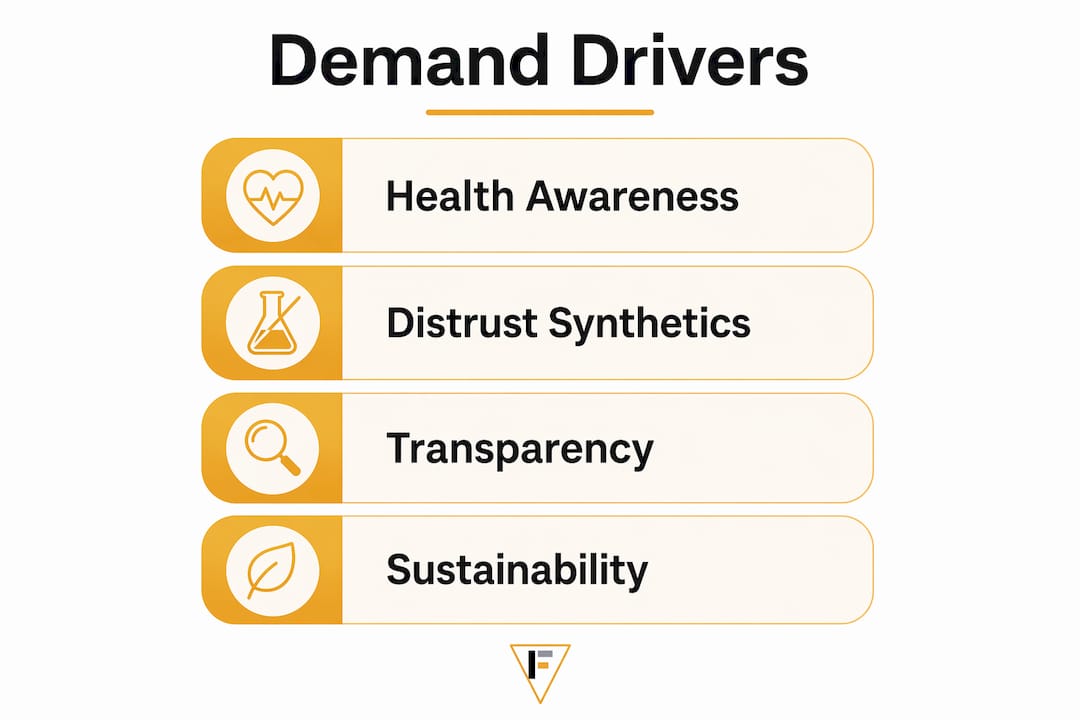
About 50% of consumers are willing to pay a premium for clean label products. That willingness signals a real financial opportunity for brands that reformulate with intention. The demand has grown steadily since the 1990s, but the pace accelerated sharply as smartphone apps gave shoppers the ability to scan barcodes and pull up full ingredient breakdowns in seconds.
The shift is no longer just about avoiding artificial colors or preservatives. Consumers now expect:
- Recognizable ingredient names with clear sourcing
- Shorter ingredient lists with multifunctional components
- Evidence of ethical and sustainable production practices
- Honest communication about processing methods
"Clean label is evolving from a marketing differentiator into a strategic corporate pillar. Brands that treat it as a packaging claim rather than a formulation commitment will face growing consumer rejection as digital verification tools become standard."
The brands gaining ground are those that treat clean label as a formulation discipline, not a marketing overlay. Ingredient transparency builds the kind of consumer trust that survives a product recall or a viral social media post. Brands that lack it are one bad scan away from a credibility crisis.
What ingredients and techniques define clean label products?
Clean label ingredients fall into categories that prioritize function, familiarity, and source clarity. The most common include native starches, plant proteins, citrus fibers, fruit and vegetable concentrates, and natural emulsifiers like sunflower lecithin. These ingredients do real technical work while keeping the ingredient list readable.
The critical insight most brands miss is this: clean label formulation requires re-engineering the entire ingredient system, not swapping one additive for a natural equivalent. Replacing a synthetic emulsifier with sunflower lecithin alone rarely replicates the same stability. You typically need a combination of native starch, plant protein, and adjusted processing parameters to get there.
The table below compares common synthetic additives with their clean label counterparts and the functional trade-offs involved.
| Synthetic additive | Clean label alternative | Key consideration |
|---|---|---|
| Sodium benzoate (preservative) | Rosemary extract, vinegar | Shorter shelf life; requires pH adjustment |
| Carboxymethylcellulose (thickener) | Native starch, citrus fiber | Texture variance; process re-validation needed |
| Artificial colors | Fruit and vegetable concentrates | Heat sensitivity; color stability varies |
| Synthetic emulsifiers | Sunflower lecithin, plant protein | May require multiple ingredients to match function |
| TBHQ (antioxidant) | Mixed tocopherols, green tea extract | Higher cost; efficacy depends on fat system |
Consumers often reject ingredients that sound chemical even when they are naturally derived. Ascorbic acid is vitamin C, but the name alone triggers suspicion in label-conscious shoppers. Successful clean label products use ingredient names that communicate origin, not chemistry. "Lemon juice concentrate" lands better than "citric acid" even when the functional difference is minimal.
Pro Tip: Use multifunctional ingredients like citrus fiber or pea protein to simultaneously reduce your ingredient count and maintain texture. One ingredient doing two jobs shortens the list and strengthens your clean label positioning.
How does clean label formulation affect stability, safety, and shelf life?
Switching to clean label ingredients introduces real technical risk. Replacing synthetic ingredients often requires multiple natural components combined with adjusted processing to maintain safety and shelf life. The failure point most brands hit is treating reformulation as a substitution exercise rather than a full system redesign.
Every reformulated product needs fresh validation across these parameters:
- pH stability: Natural preservatives perform within narrower pH windows than synthetic ones.
- Water activity: Removing certain humectants changes moisture dynamics and microbial risk.
- Microbial stability: Natural antimicrobials like rosemary extract or vinegar require challenge testing to confirm efficacy.
- Texture and mouthfeel: Native starches behave differently under heat and shear than modified starches.
- Shelf life: Brands must validate safety and shelf life anew for every reformulated product to avoid failure in market.
The regulatory side does not disappear because you are going clean label. Compliance requirements for health and wellness brands still govern labeling claims, allergen declarations, and safety testing. A clean label product that skips proper validation is a liability, not an asset.
Pro Tip: Run accelerated shelf life testing on your reformulated product before committing to production runs. Natural ingredient systems can behave unpredictably at elevated temperatures, and catching failures in the lab is far cheaper than a recall.
The clean label vs traditional formulation comparison is not just about ingredient lists. Traditional formulations use synthetic additives precisely because they are reliable, cost-effective, and well-characterized. Clean label alternatives require more formulation work, more testing, and often higher ingredient costs. The payoff is a product that commands a price premium and builds lasting consumer loyalty.
What roles do transparency, supply chain integrity, and sustainability play?
Clean label in 2026 extends well beyond the ingredient list. Transparency now includes demonstrating sustainability and ethical sourcing, with consumers using digital tools to verify claims that brands make on packaging. A product can carry every clean label marker and still lose consumer trust if its supply chain cannot withstand scrutiny.
The tools consumers use to verify claims include:
- QR codes linking to farm-level sourcing data
- Third-party certification databases (Non-GMO Project, Rainforest Alliance)
- Ingredient traceability platforms that document origin and processing
- Social media, where supply chain failures surface faster than any PR response can contain them
"Brands failing transparent sourcing risk consumer backlash despite clean label packaging claims. The label is the promise. The supply chain is the proof."
Greenwashing is the most damaging risk in this space. A brand that claims "sustainably sourced" without documentation invites the kind of investigative journalism and social media scrutiny that erases years of brand equity. Clean label transparency must extend throughout the supply chain to meet modern consumer expectations. That means knowing your ingredient suppliers, their suppliers, and the environmental practices at each stage.
Ingredient sourcing decisions made early in formulation determine how defensible your clean label claims will be later. Choosing a supplier because they offer the lowest cost per kilogram, without verifying their sourcing practices, is a risk that compounds over time. The brands building durable clean label positions are the ones treating supply chain integrity as a formulation input, not an afterthought.
Key Takeaways
Clean label formulation succeeds when brands treat ingredient simplicity, supply chain transparency, and full system re-engineering as inseparable disciplines rather than separate marketing decisions.
| Point | Details |
|---|---|
| No regulatory definition exists | Clean label is defined by consumer perception, not law, making formulation intent and transparency critical. |
| System redesign is required | Replacing synthetic additives demands re-engineering the full ingredient system, not one-for-one swaps. |
| Validation cannot be skipped | Every reformulated product needs fresh safety, shelf life, and microbial stability testing before launch. |
| Supply chain is part of the label | Consumers verify sourcing claims digitally; brands without supply chain documentation face credibility risk. |
| Multifunctional ingredients win | Ingredients like citrus fiber and native starch reduce list length while maintaining texture and stability. |
Clean label is a formulation science problem, not a marketing one
I have watched brands approach clean label reformulation as a label design exercise. They swap "artificial flavor" for "natural flavor," update the packaging, and call it done. That approach fails within one product cycle because consumers and retailers now look past the front of pack.
The brands that get clean label right treat it as a formulation science challenge from day one. They ask: can we maintain the same mouthfeel, shelf life, and safety profile using only ingredients a consumer would recognize? That question forces a systems-level answer. It means working backward from consumer perception to ingredient selection to processing parameters. It is harder than substitution, but the products that come out of that process are genuinely defensible.
The future direction I see clearly is digital traceability becoming a baseline expectation, not a premium feature. Digital transparency tools that let consumers verify ingredient origin and production methods are already standard in forward-thinking brands. Within two to three years, the absence of that capability will read as a red flag, not a neutral omission.
My advice to product developers: start with the consumer rejection list. Know which ingredient names your target buyer will flag before you finalize your formula. Then build your system around what passes that test while still delivering the product performance you need. That sequence, perception first and then function, is the one that produces clean label products that actually sell.
— Ben
How Formlypro supports clean label product development
Developing a clean label product that meets both consumer expectations and regulatory requirements is a multi-stage process. Formlypro is built to support brands through every phase of that process, from initial ingredient selection to compliance documentation and packaging.
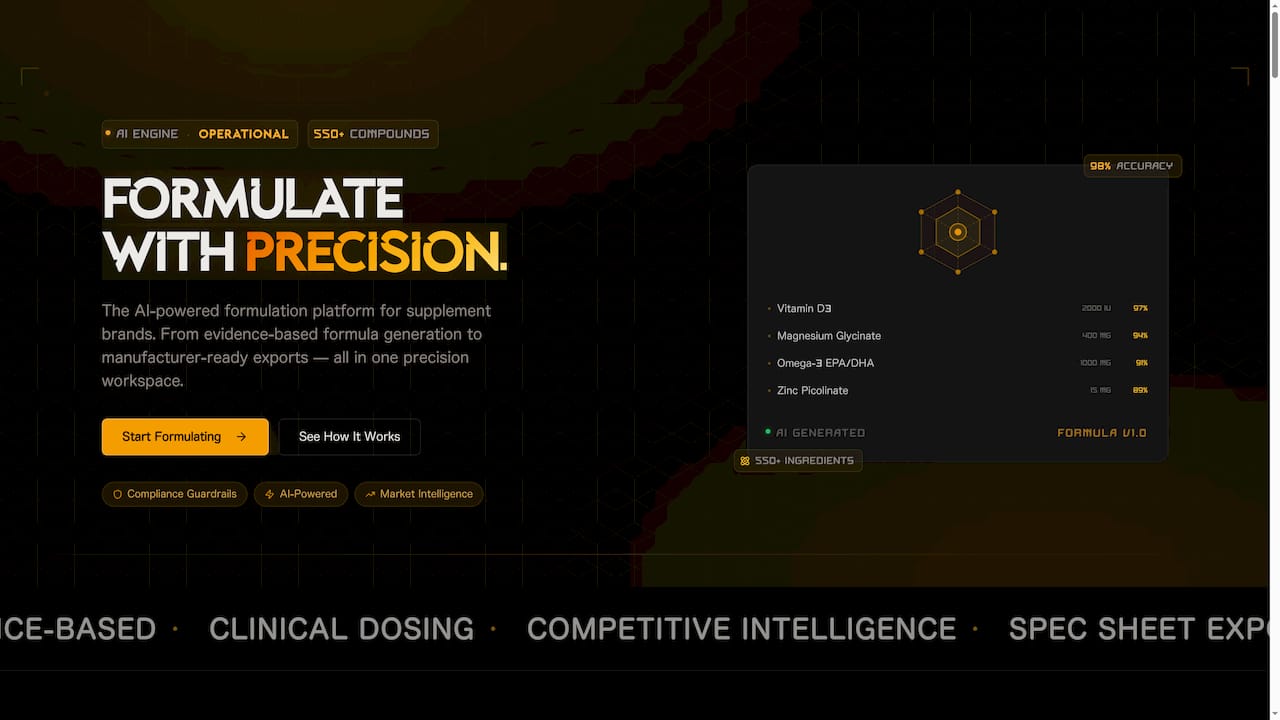
The Formlypro platform gives product developers access to research-backed formulation guidance, market analytics, and a full compliance tracking system. The 8-phase development plan takes a product from ideation through prototyping, stability testing, and production, with clean label goals embedded at each stage. The AI-powered packaging mockup tool lets you visualize how your ingredient list and claims will appear on shelf before you commit to production. For brands serious about building a clean label position that holds up to consumer scrutiny, Formlypro provides the structure to do it right.
FAQ
What is the clean label food definition?
Clean label food is defined by consumer perception rather than regulation. It refers to products made with minimal, recognizable, and naturally sourced ingredients, free from artificial additives, colors, and preservatives.
How does clean label formulation differ from traditional formulation?
Traditional formulation relies on synthetic additives for stability, shelf life, and texture. Clean label formulation replaces those additives with natural alternatives, which requires re-engineering the full ingredient system and revalidating safety and shelf life.
What are the most common clean label ingredients?
Native starches, citrus fibers, plant proteins, sunflower lecithin, fruit and vegetable concentrates, and natural antimicrobials like rosemary extract are the most widely used clean label ingredients across food and beverage categories.
How do I create a clean label product without sacrificing shelf life?
Replacing synthetic preservatives requires adjusting pH, water activity, and processing parameters alongside natural antimicrobials. Every reformulated product must undergo fresh microbial challenge testing and accelerated shelf life validation before launch.
Do clean label products need to meet specific regulatory standards?
No single regulatory standard defines clean label, but all food products must still comply with FDA labeling rules, allergen declarations, and food safety requirements. Clean label is a consumer-facing commitment that sits on top of, not instead of, legal compliance.