

How molecular interactions in ingredients determine what your formulation actually does
The role of molecular interactions in ingredients is not a background consideration. It is the mechanism behind every functional outcome you care about: stability, texture, bioavailability, and shelf life. Whether you are working with proteins, polysaccharides, polyphenols, or lipids, the bonds they form with each other determine whether your product performs as designed or falls apart under processing conditions.
Four interaction types govern most of what happens in a formulation:
- Hydrogen bonds (4–40 kJ mol⁻¹): directional and specific, these create geometric patterns in protein assemblies and drive viscosity changes in polysaccharide networks. Xanthan gum and mucin, for instance, form hydrogen bonds that increase complex viscosity by factors of 45–70× under acidic conditions.
- Van der Waals forces (0.4–4 kJ mol⁻¹): weak individually, but collectively powerful across multiple contact points. In macadamia nut protein-lipid systems, van der Waals forces contribute approximately 60% of total binding energy when interacting with palmitoleic acid.
- Ionic interactions (20–40 kJ mol⁻¹): charge-based forces that drive phase separation, coacervation, and gel formation. Casein micelles are a textbook example, held together by calcium-mediated ionic bridges.
- Hydrophobic interactions: entropy-driven associations that fold proteins, stabilize emulsion interfaces, and trigger self-assembly into micelles and bilayers.
Noncovalent interactions are reversible, which makes them responsive. Small shifts in pH or temperature can switch a stable emulsion into an aggregated mess, or turn a soluble protein into a gel. Covalent bonds, by contrast, are irreversible and produce more stable structures. The Maillard reaction between proteins and polysaccharides, and enzymatic oxidation linking proteins to polyphenols, both create covalent conjugates that resist environmental disruption far better than their physical counterparts.
Table of Contents
- Why predicting ingredient interactions during formulation is genuinely hard
- How your formulation environment controls what interactions actually occur
- What molecular interactions do to nutritional value and bioavailability
- Expert formulation frameworks that put molecular interactions to work
- Take your formulation further with Formlypro
- Key Takeaways
Why predicting ingredient interactions during formulation is genuinely hard
Knowing the interaction types does not mean you can predict outcomes. The binding sites in complex biomolecules like proteins and polysaccharides are structurally flexible, and that flexibility makes accurate prediction difficult.
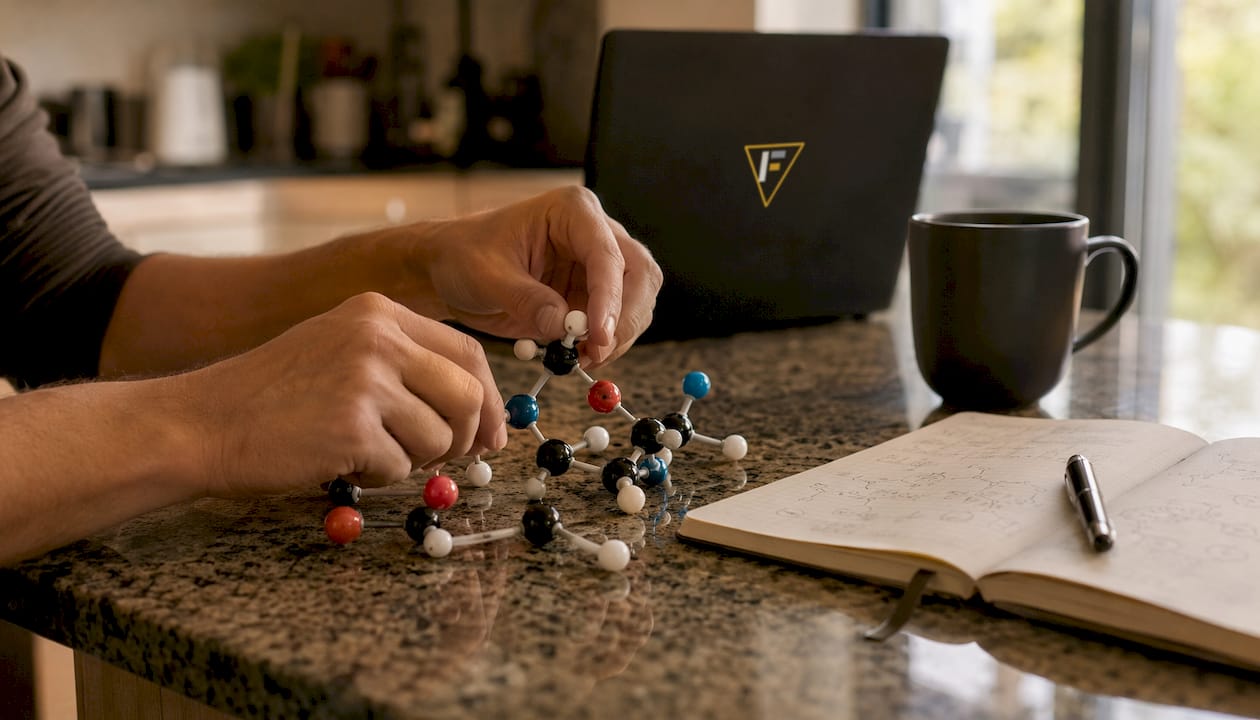
Traditional trial-and-error formulation runs directly into this wall. You can test dozens of combinations and still not understand why one works and another fails. That is exactly where advanced analytical methods like small-angle X-ray scattering (SAXS) change the equation. SAXS reveals nanoscale structural organization in real time, showing how calcium-mediated ionic bridges in casein micelles contribute binding energies of 15–25 kJ mol⁻¹ per interaction. Isothermal titration calorimetry (ITC) and spectroscopy round out the toolkit, quantifying binding constants and enthalpy contributions that tell you whether an interaction is driven by hydrogen bonding, hydrophobic association, or both.
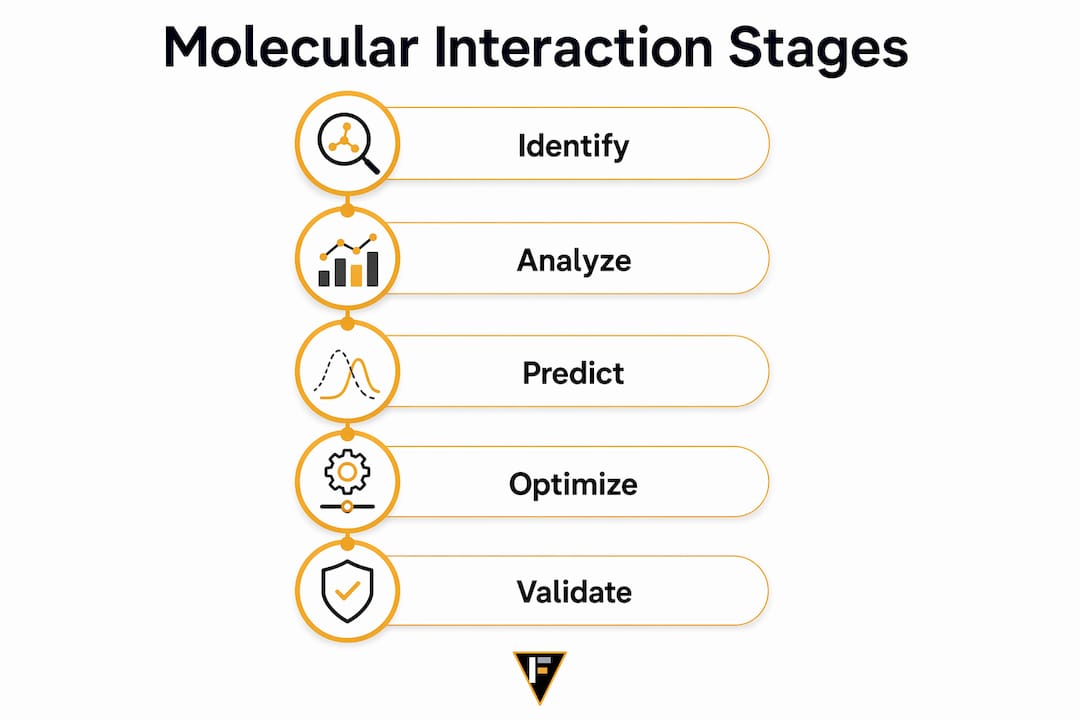
The shift from empirical to mechanistic formulation design is not optional for brands that want reproducible product quality. Binding site flexibility in biomolecules makes advanced instrumentation and modeling a practical necessity, not a luxury.
How your formulation environment controls what interactions actually occur
pH, temperature, and ionic strength do not just influence molecular interactions. They determine which interactions are even possible.
- pH shifts protein charge states, altering whether electrostatic attraction or repulsion dominates. Ferulic acid binds β-lactoglobulin far more strongly at pH 2.4 than at pH 7.3. At pH 2–4, hydrophobic forces drive wheat gliadin-quercetin complexes; at pH 5–9, hydrogen bonding and van der Waals forces take over.
- Temperature controls phase transitions, protein denaturation, and the formation of starch-lipid complexes. A two-step heating process (100°C for 10 minutes, then 90°C for 60 minutes) promotes type II starch-lipid complex formation and reduces starch digestibility.
- Ionic strength modulates electrostatic interactions. At intermediate ionic strengths, protein-polysaccharide coacervation is optimal. Too much salt screens charges entirely and collapses the interaction.
Managing these parameters is not just about hitting a target. It is about staying within the window where your desired interaction is stable and your undesired ones are suppressed. Molecular interactions can improve or reduce solubility and stability depending on how carefully the processing environment is controlled.
Pro Tip: Monitor free calcium ion concentration closely in protein-stabilized emulsions. Free Ca²⁺ levels beyond a critical threshold can trigger aggregation and functional loss. Keeping calcium activity below that threshold is one of the most practical levers you have for maintaining emulsion integrity.
What molecular interactions do to nutritional value and bioavailability
Ingredient interactions reshape nutritional outcomes in ways that single-ingredient analysis cannot predict. When ingredients combine in a formulation matrix, their bioavailability often differs substantially from what you would expect based on each component in isolation.
The effects run in both directions:
- Enhancing interactions: lycopene bioavailability increases when tomatoes are consumed with dietary fat, because lipid presence drives micellar solubilization of the carotenoid. Anthocyanin and gingerol combinations show synergistic antioxidant and cytoprotective effects beyond what either compound achieves alone.
- Inhibitory interactions: phytates in legumes and whole grains bind minerals like iron, calcium, and zinc, forming complexes the body cannot readily absorb. Tannins and oxalates operate similarly.
- Structural effects on digestibility: the β-lactoglobulin-chlorogenic acid complex retains 89% antioxidant capacity after heating at 80°C for 30 minutes, compared to 45% for the unconjugated protein. That gap is a direct consequence of how noncovalent interactions stabilize the bioactive compound against thermal degradation.
Formulation professionals who think only in terms of ingredient inclusion rates miss this entirely. The nutritional impact of interactions requires thinking about the whole system, not the sum of its parts. Functional mushroom bioactives, for example, depend heavily on how their polysaccharide and polyphenol components interact within a matrix to deliver their documented health effects.
Expert formulation frameworks that put molecular interactions to work
Understanding interactions is one thing. Building a product development process around them is another. The most effective formulation frameworks treat molecular interaction control as a design input, not a quality check at the end.
Thermodynamic modeling of phase equilibria allows teams to predict how ingredient combinations will behave under processing and storage conditions, reducing the trial-and-error failures that inflate R&D timelines. Thermodynamic modeling helps predict formulation stability by recognizing subtle ingredient influences on structure before they become shelf-life problems.
Formlypro's 8-phase formulation workflow embeds this thinking from the start. The platform's formulation phase uses research-backed data to guide ingredient selection based on known interaction profiles, not guesswork. Subscription tiers give brands access to competitive ingredient benchmarking, so you can see what interaction strategies are working in products already on the market. The compliance layer ensures that any covalent conjugates formed through processes like the Maillard reaction meet regulatory standards before you reach production.
Key practices that expert formulators apply consistently:
- Select ingredients with known interaction profiles: protein-polysaccharide and protein-polyphenol complexes each have documented pH and ionic strength windows. Work within them.
- Use ITC and SAXS early: binding constants and enthalpy data from these techniques tell you whether an interaction is thermodynamically favorable before you scale.
- Build multifunctional complexes intentionally: ternary protein-polysaccharide-polyphenol complexes can combine surface activity, steric stabilization, and antioxidant function in a single ingredient. Sugar beet pectin-β-lactoglobulin conjugates, for instance, increase emulsion stability index by 270% compared to unconjugated protein.
- Track environmental parameters throughout processing: pH drift, temperature excursions, and salt concentration changes all shift the interaction landscape mid-process.
Formlypro's platform connects bioavailability optimization directly to formulation decisions, giving brands a structured path from molecular-level understanding to a market-ready product.
Take your formulation further with Formlypro
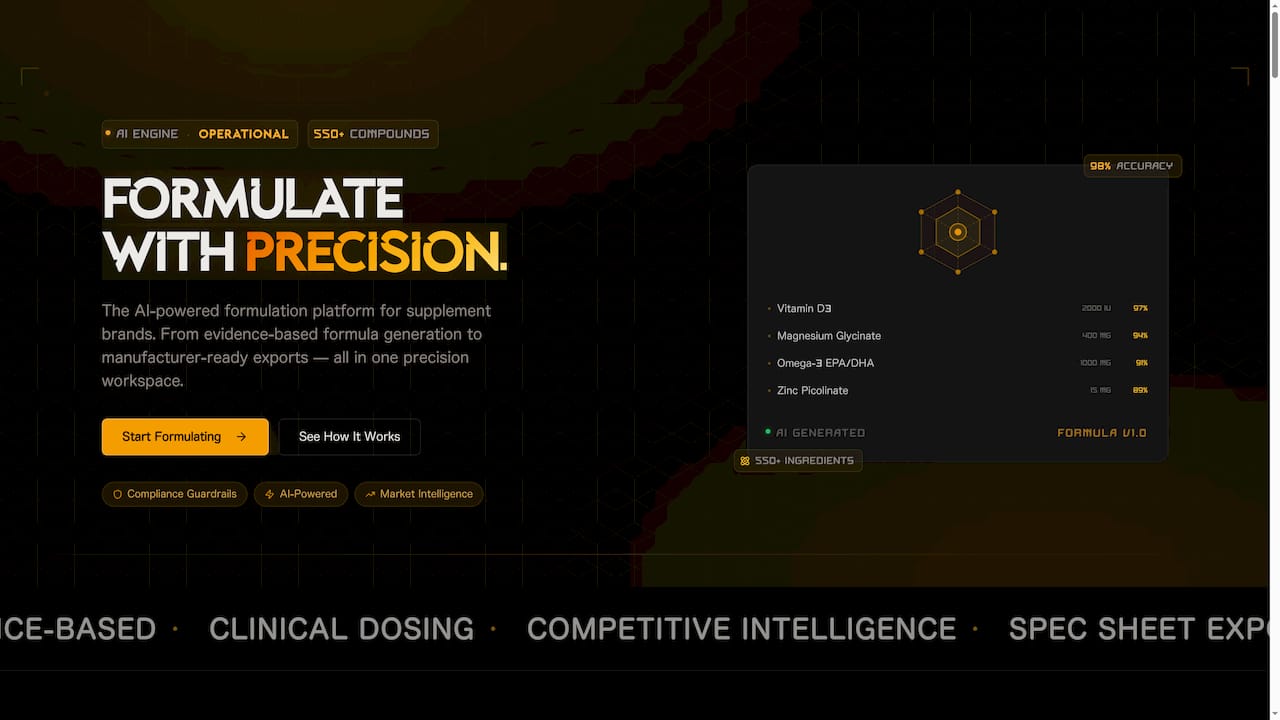
Formlypro gives brands and formulation professionals the tools to move from molecular insight to finished product without losing control at any stage. The platform covers formulation, prototyping, compliance, market research, competitive analysis, and custom packaging with an AI Mockup designer, all in one place. If you are building products where ingredient interactions determine outcomes, the 8-phase workflow gives you a structured process that accounts for those interactions from day one.
Start building smarter formulations with Formlypro.
Key Takeaways
Molecular interactions among ingredients are the primary determinant of formulation stability, bioavailability, and functional performance across every consumer product category.
| Point | Details |
|---|---|
| Noncovalent interactions are reversible | Hydrogen bonds, van der Waals forces, and ionic interactions respond to pH, temperature, and ionic strength shifts. |
| Van der Waals forces carry real weight | In macadamia nut protein-lipid systems, van der Waals forces contribute approximately 60% of total binding energy. |
| Bioavailability depends on the whole system | Ingredient interactions substantially alter nutrient absorption compared to isolated ingredients. |
| Antioxidant retention is interaction-dependent | The β-lactoglobulin-chlorogenic acid complex retains 89% antioxidant capacity after heating, versus 45% for unconjugated protein. |
| Thermodynamic modeling reduces failures | Predicting phase equilibria and interaction outcomes cuts empirical trial-and-error from the formulation process. |