
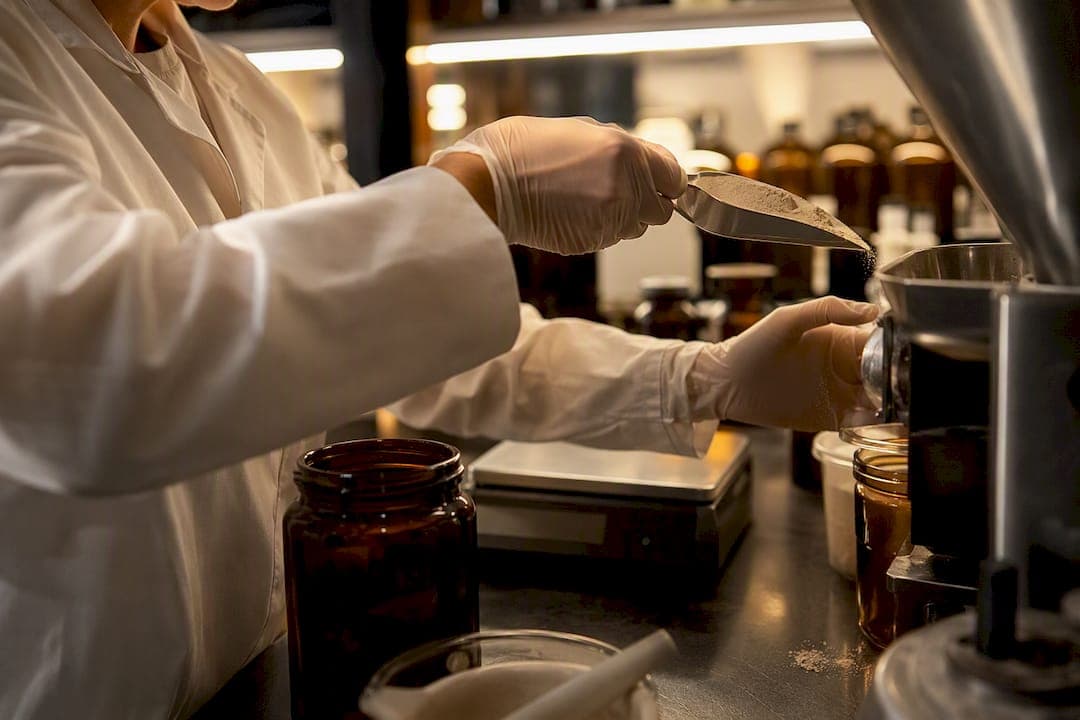
Run a pilot batch before your first commercial supplement run. It validates manufacturing parameters and catches the problems that only show up when a formula leaves the lab and hits real equipment. In supplement industry terms, a pilot run (sometimes called a trial batch) is a small-scale production run, typically 10 to 20 percent of a full commercial batch, built specifically to test whether your formulation survives scale-up.
The primary job of a pilot run is finding the failure points before they cost you a full production batch: blend uniformity, compression consistency, fill weight accuracy. Skipping this step risks a batch that fails release specifications entirely, which means costly rejects at full scale, not a minor fix.
Three numbers to know before you request a quote:
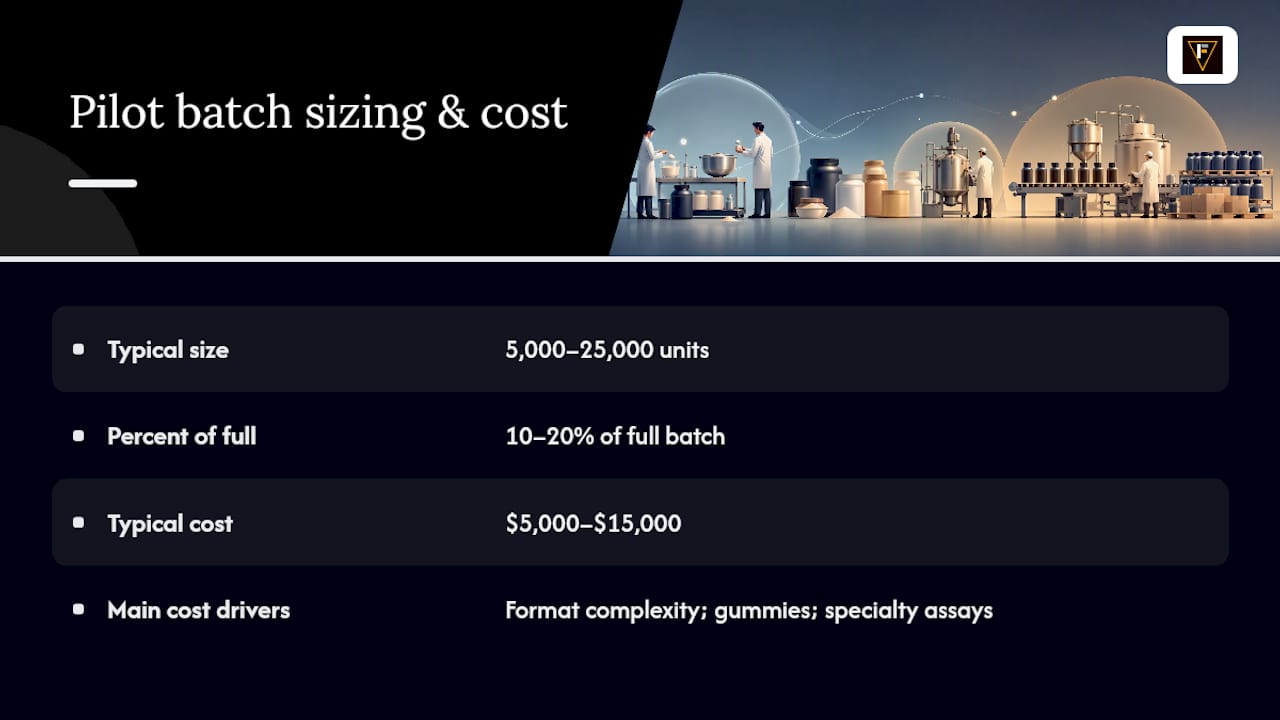
- Typical batch size: 5,000 to 25,000 units, depending on dosage form
- Typical cost: $5,000 to $15,000, format dependent
- Typical timeline: several weeks from brief approval to finished batch records
Key Takeaways
A pilot batch validates blend uniformity, compression, and fill weight at 10 to 20 percent of full scale before you commit to a commercial production run.
| Point | Details |
|---|---|
| Define the pilot's job | It exists to catch scale-up failures like segregation and fill-weight drift before full production. |
| Budget realistically | Expect $5,000 to $15,000 per pilot, plus $500 to $3,000 per prototype round. |
| Lock the brief first | Finalize dosage, excipient ratios, and release profile before requesting a quote. |
| Vet the CMO's pilot program | Confirm GMP status, standalone pilot services, and whether costs credit toward first production. |
| Build the acceptance matrix | Require blend uniformity, potency, microbial, and stability testing at minimum. |
| Use a structured workflow | Formlypro's 8-phase planner keeps formulation specs consistent from brief through manufacturer handoff. |
Table of Contents
- What Goes Into a Product Brief Before a Pilot Run
- How Big Should a Pilot Batch Be, and What Does It Cost?
- What to Ask a Contract Manufacturer Before a Pilot Run
- Which Failures Show Up in Pilot Runs, and How Do You Catch Them?
- From Pilot Batch to First Commercial Run: What to Expect
- Why an 8-Phase Workflow Beats a One-Off Pilot Request
- How Formlypro Prepares Your Brand for a Pilot Run
- Sources
What Goes Into a Product Brief Before a Pilot Run
A rushed brief is the single most common reason pilot runs go sideways. Manufacturers can only test what you specify, and vague specs produce vague results that tell you nothing useful about scale-up readiness.
Before you send anything to a manufacturer, finalize these in writing:
- Target dosage and dosage form. Capsule, tablet, gummy, powder, whatever it is, lock it before pilot, not during.
- Full ingredient spec, including excipients. Every filler, binder, flow agent, and coating needs a defined ratio. Experienced product managers finalize excipient ratios at pilot stage specifically to secure flowability and consistent fill weights, because swapping excipients after scale-up is one of the most common causes of missed specifications.
- Release profile. Immediate release and controlled release behave differently under compression and heat, and your manufacturer needs to know which one you're building for.
- Potency and stability targets. State the acceptable range, not just the label claim.
- Supporting documentation. Raw material COAs, analytical test methods, a master formula or batch sheet, packaging specs, and a target shelf life all need to be gathered before the pilot request goes out.
Get sign-off from R&D, quality, regulatory, procurement, and packaging before you submit the brief. Someone needs to own the go/no-go call once pilot results come back, and that person should be identified before the pilot starts, not after.
Pro Tip: Write your acceptance criteria into the brief itself, not into a separate email. If "pass" and "fail" aren't defined in the same document the manufacturer is quoting against, you'll argue about it later.
A detailed brief early in the process, along with a locked formula and dosage form, is what separates a pilot that actually answers your questions from one that just burns budget.
How Big Should a Pilot Batch Be, and What Does It Cost?
Pilot batches generally run 5,000 to 25,000 units, or roughly 10 to 20 percent of a full production batch. That proportion isn't arbitrary. Go too small and you won't generate enough data on blend uniformity or compression variance to trust the results at commercial scale. Go too large and you've basically paid for a second full production run.
The cost reality: Pilot runs commonly land between $5,000 and $15,000, depending on dosage form complexity and batch size. Gummies, organic-certified ingredients, and formulas requiring special assays push costs toward the top of that range.
Format complexity is the biggest cost driver. A basic capsule pilot costs less than a gummy pilot, which needs additional equipment calibration for pour temperature and gelling time. Specialty assays for novel ingredients or unusual potency claims add lab fees on top of the base production cost.
One negotiating point worth raising with every manufacturer: some contract manufacturers credit part of the pilot cost toward your first commercial production order. That's not universal, so confirm it in writing before you sign anything. It's a contract term, not an industry standard, and assuming it applies when it doesn't will throw off your launch budget.
What to Ask a Contract Manufacturer Before a Pilot Run
Not every CMO runs pilots as a distinct program. Some fold small runs into their standard production process without adjusting documentation or turnaround expectations, which can leave you with data that doesn't actually validate scale-up.
Confirm these basics first:
- Current GMP or cGMP certification and active FDA registration
- Equipment capability for your specific dosage form (tableting, encapsulation, powder blending, or gummy lines)
- Documented experience running pilot-compliant facilities with raw material COA testing and full batch records
Then get specific about the pilot itself:
- Do they offer a standalone pilot program, or is this just a small production run with a different label?
- What's the tooling setup cost, and is it separate from the per-unit pilot price?
- How fast do batch records and COAs turn around after the run completes?
- What's their in-process sampling frequency during the pilot?
- What triggers a hold-and-investigate decision, and who makes that call?
- What happens contractually if the run fails acceptance criteria? Who eats that cost?
Get acceptance criteria and change-control procedures into the contract itself, not a verbal agreement. If a pilot fails and you haven't defined in writing what "failure" means, you'll spend more time in a dispute than you would have spent just rerunning the batch.
Which Failures Show Up in Pilot Runs, and How Do You Catch Them?
Pilot runs exist to surface problems that never appear at lab scale: ingredient segregation, potency variance across the batch, tablet hardness that's inconsistent from unit to unit, fill-weight drift, and occasionally microbial or heavy metal failures that a small lab sample missed.
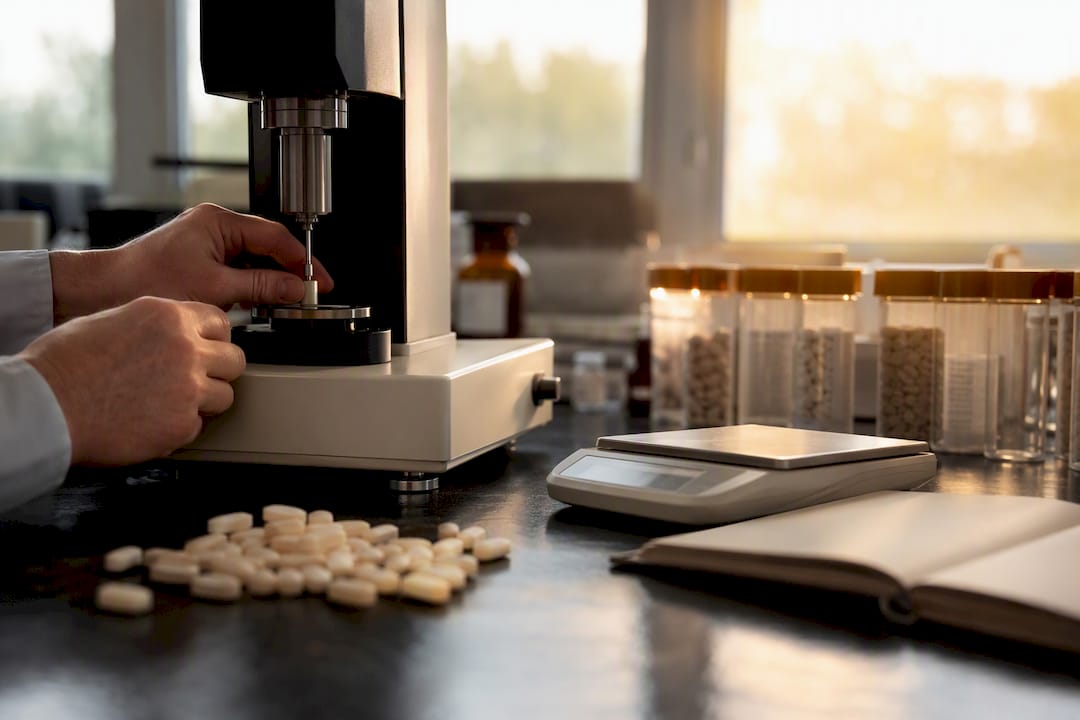
Segregation and stratification are the classic scale-up surprise. A formula that blends perfectly in a 5-liter lab mixer can separate by particle density in an industrial blender, and you won't see it until you're running thousands of units.
Build your acceptance matrix around a minimum test panel:
- Raw material COAs for every incoming ingredient lot
- Blend uniformity assay across multiple sample points
- Finished product potency testing
- Microbial screens and heavy metal testing
- Moisture content analysis
- Preliminary stability data
| Checkpoint | What it catches | When it's checked |
|---|---|---|
| Weight checks | Fill-weight variance, dosing consistency | Throughout the run, at set intervals |
| Compression force logs | Tablet hardness and crushing strength issues | Continuous during tableting |
| Visual inspection | Color variance, capsule defects, coating flaws | Periodic sampling |
| Blend uniformity assay | Segregation, potency variance | Post-blending, pre-encapsulation |
Every checkpoint result belongs in the batch record, not a side spreadsheet. A strong in-process QC system is what makes the difference between catching a fill-weight drift at pilot scale versus discovering it in a customer complaint six months after launch.
From Pilot Batch to First Commercial Run: What to Expect
Plan for a 6 to 12 month window from initial formulation through first commercial production, covering formulation development, prototype rounds, the pilot run itself, accelerated stability testing, regulatory review, and finally full production. Prototype rounds typically cost a moderate amount each, and accelerated stability testing adds another $3,000 to $8,000, both of which belong in your pilot-stage budget, not as surprise line items later.
Once pilot data comes back, you have three real options:
- Accept and scale. Results meet your acceptance criteria across every checkpoint, no reformulation needed.
- Reformulate and repeat the pilot. One or more specs missed, usually blend uniformity or fill weight, and the fix requires another validation round before you commit to full production.
- Pause. Results reveal a fundamental formulation or ingredient problem that needs R&D rework before another pilot makes sense.
Build in a buffer for your first full commercial run. Expect it to take 10 to 20 percent longer than a standard production run as equipment settings get fine-tuned at true commercial volume, even after a clean pilot.
Why an 8-Phase Workflow Beats a One-Off Pilot Request
Most pilot-stage failures trace back to a handoff problem: R&D finishes a formula, hands it to procurement, who hands it to a manufacturer who never saw the original brief. Each handoff loses context, and pilot data comes back answering questions nobody asked.
An 8-phase structure, ideation, formulation, prototyping, pilot, stability, regulatory, production, launch, keeps that context intact end to end. Formlypro built its workflow around exactly this sequence, pairing competitor analysis and compliance guidance for FDA and DSHEA requirements with manufacturer-ready exports, so the brief a manufacturer receives matches what R&D actually specified.
That consistency matters more at pilot stage than anywhere else in development. A pilot only validates what it's tested against, and a formula that drifts between phases gets validated against the wrong target.
— Ben
How Formlypro Prepares Your Brand for a Pilot Run
Formlypro turns the pre-pilot checklist into a working system instead of a scattered set of documents. The platform generates research-backed formulation specs, tracks compliance requirements against FDA and DSHEA rules, and exports manufacturer-ready files that carry your full formula, excipient ratios, and target specs into the CMO conversation without a translation gap.
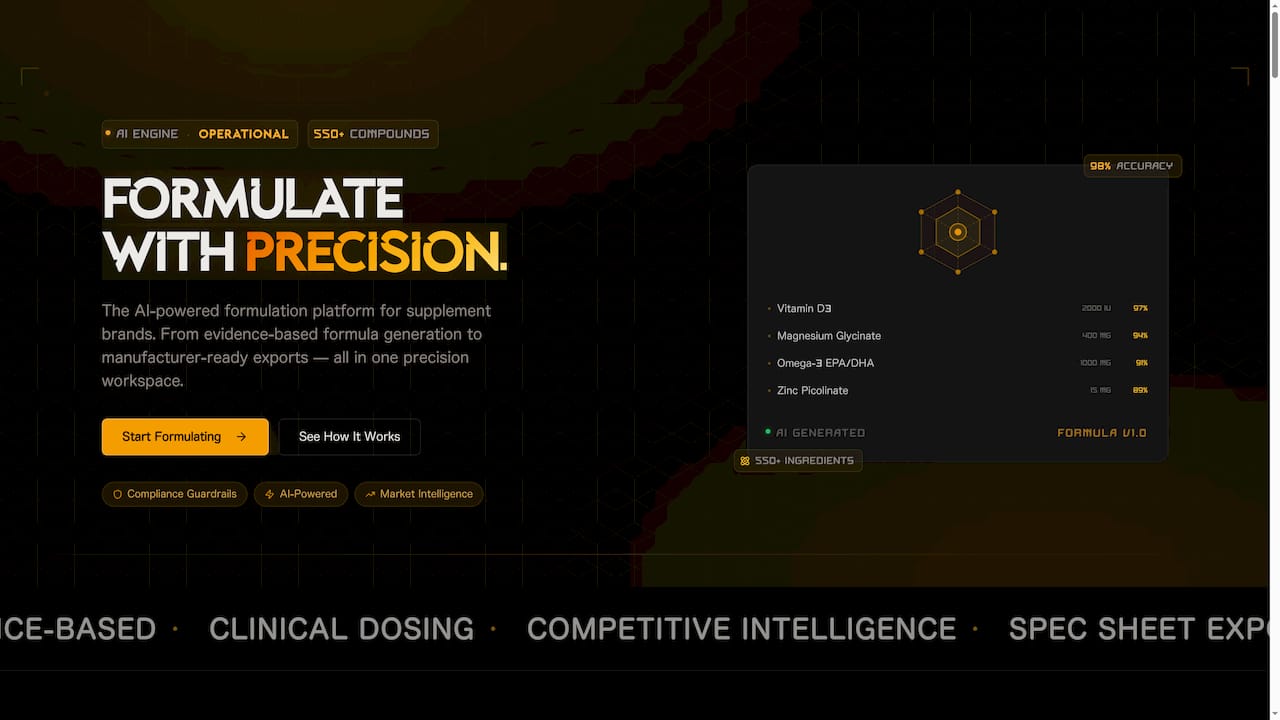
The features that cut pilot risk the most are the ones that prevent handoff errors: locked formulation specs that don't drift between R&D and procurement, a built-in compliance checklist so nothing gets flagged at the CMO stage instead of earlier, and an 8-phase planner that tracks where your product sits between formulation and first commercial run. The AI packaging mockup tool lets you finalize packaging specs in parallel with pilot testing, so you're not waiting on design after manufacturing clears.
If you're preparing a pilot batch right now, visit the Formlypro product page to see how the platform builds your brief, tracks your COAs, and exports pilot-ready documentation in one workflow.
Sources
The Inventory Ready glossary on pilot runs and its formulation process guide cover definitions, cost ranges, and scale-up timing in more depth. Advanced Supplements' concept-to-capsule breakdown explains GMP manufacturing requirements, and Ez-Life Pharmaceuticals' pilot batch service page illustrates what a dedicated pilot program looks like in practice.
For process guidance specific to your own formulation, Formlypro's blog covers scalability checklists and step-by-step formulation workflows in more detail.
- Pilot Run | Supplement Industry Glossary | Inventory Ready
- From Concept To Capsule: How Dietary Supplements Are Made?