

TL;DR:
- Sourcing a formulation partner is the most important hiring decision a product brand makes before launch. Choosing the right path based on project complexity and budget prevents delays and protects formula ownership. Clear communication, detailed briefs, and written IP agreements are essential for a successful long-term partnership.
Sourcing a formulation partner is the single most consequential hiring decision a product brand makes before launch. Knowing how to source formulators for clients separates brands that reach shelves from those stuck in endless prototype loops. The three main paths are independent consultants, contract development and manufacturing organizations (CDMOs), and dedicated R&D firms. Each carries distinct cost structures, IP implications, and timelines. Getting this choice wrong costs money, delays launches, and can strip you of formula ownership entirely.
How to source formulators for clients: understanding your options
Three primary formulation sourcing paths exist, and each one serves a different brand stage and budget. Knowing which path fits your project before you start outreach saves weeks of wasted conversations.

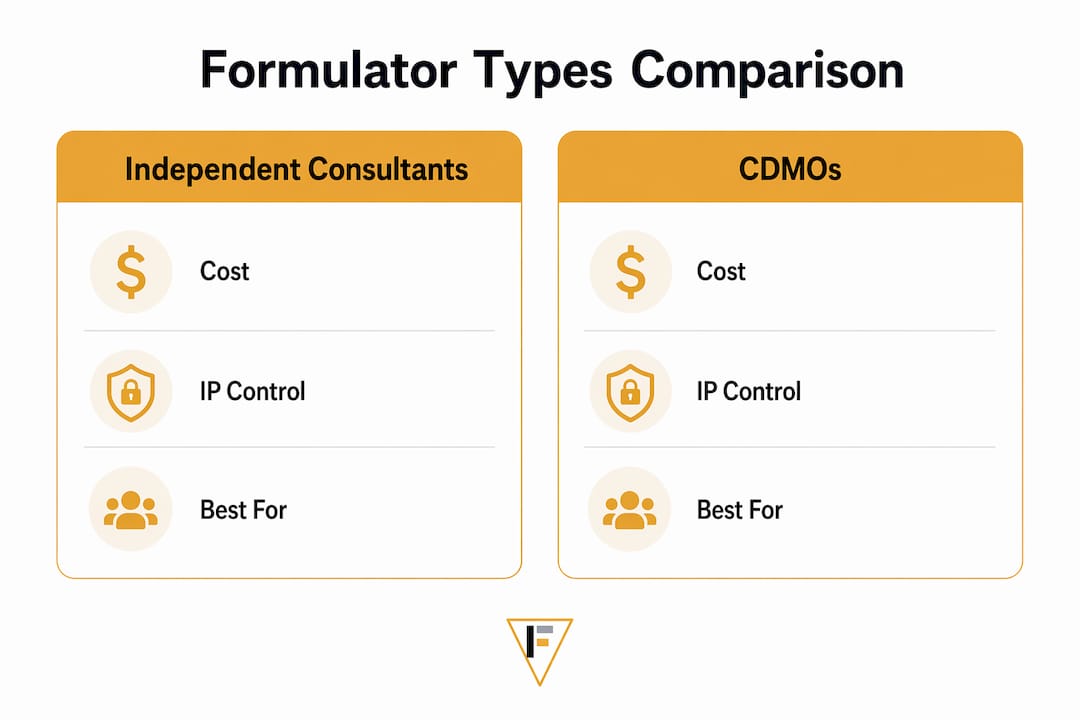
Independent consultants work directly with your brand on a project basis. They typically charge between $2,000 and $10,000 per formula, with turnaround times ranging from 5–14 business days. They offer the most flexibility on ingredient choices and are generally the most IP-friendly option, since you negotiate ownership terms directly with one person.
CDMOs bundle formulation and manufacturing under one roof. That efficiency is real, but CDMOs often require minimum order quantities of 500 or more units, which can be a barrier for early-stage brands. The bundled model also means less flexibility. CDMOs may default to ingredients they already stock, which might not be the best or most cost-effective choice for your specific product.
Dedicated R&D firms specialize in complex formulations, such as novel delivery systems, clinical-grade actives, or highly regulated categories. Their fees typically run $15,000 to $20,000 including prototyping. That cost is justified when your product genuinely requires deep scientific expertise, but it is overkill for a straightforward moisturizer or basic supplement.
| Partner Type | Cost Range | IP Control | Best For |
|---|---|---|---|
| Independent consultant | $2,000–$10,000 | High | Flexible, early-stage brands |
| CDMO | Varies by volume | Moderate | Brands ready to scale production |
| Dedicated R&D firm | $15,000–$20,000 | Varies | Complex or regulated formulations |
How do you define your project brief before reaching out?
A vague project brief is the fastest way to inflate your budget and extend your timeline. Detailed briefs enable formulators to give accurate cost estimates and assess whether your goals are technically feasible. Vague requests produce vague quotes, and those quotes almost always grow once the real scope becomes clear.
A strong brief answers these questions before you send a single email:
- Product category and format. Is this a water-based serum, an anhydrous balm, a powder supplement, or a leave-in conditioner? Format drives ingredient compatibility and regulatory requirements.
- Performance targets. Define measurable outcomes. "Long-lasting hydration" is not a target. "Maintains skin moisture levels for 8 hours in controlled testing" is.
- Shelf life requirements. Specify the expected shelf life and preservation system preferences, especially if you are targeting clean beauty claims.
- Packaging compatibility. Airless pumps, glass jars, and aluminum tubes each impose different formulation constraints. A production-ready specification must include packaging compatibility details to enable accurate manufacturing quotes.
- Regulatory scope. List every market you plan to sell in. EU, US, and Canadian regulations differ significantly on permitted ingredients and labeling.
- Cost ceiling. Give a target cost per unit. Formulators who know your budget can make ingredient trade-offs early rather than delivering a formula you cannot afford to manufacture.
Pro Tip: Spend two hours writing a one-page brief before contacting any formulator. Brands that do this consistently report fewer revision rounds and faster final approval.
What criteria should you use to vet a formulator?
Vetting a formulator goes beyond checking credentials. Brands should interview 2–3 candidates with relevant category experience, review portfolio quality, and confirm transparent fee structures before signing anything.
Category expertise matters more than general chemistry credentials. A formulator who specializes in color cosmetics may struggle with ingestible supplements, and vice versa. Ask for case studies that show commercially launched products, not just lab samples. A formula that never made it to a shelf tells you very little about a formulator's ability to navigate real-world manufacturing constraints.
Transparency about ingredient choices, fees, and IP is the strongest indicator of a reliable partnership. Any formulator who deflects direct questions about ownership rights or ingredient sourcing is a risk. Ask plainly: "Who owns the formula after I pay for development?" If the answer is unclear, walk away.
Communication style also predicts project success. Effective collaboration depends heavily on the formulator's responsiveness and willingness to explain decisions in plain language. A technically brilliant chemist who communicates poorly will cost you more in delays and misunderstandings than a slightly less decorated one who keeps you informed at every step. One practical tactic: watch any podcast appearances or webinars the formulator has done. How they explain their work publicly tells you a lot about how they will explain it to you.
Pro Tip: Ask each candidate how they handle a failed prototype. Their answer reveals more about their process and professionalism than any portfolio piece.
Here is a quick vetting checklist to run through before committing:
- Relevant category experience with commercial launches
- Clear, written fee structure with no hidden revision costs
- Explicit IP assignment terms in the contract
- Willingness to disclose ingredient suppliers on request
- Responsive communication within 48 hours during initial outreach
- References from brands at a similar stage to yours
What are the most common pitfalls when working with formulators?
IP ownership is the most expensive mistake brands make, and it is almost always avoidable. Without clear IP assignment contracts signed before development begins, brands risk losing formula rights entirely or paying release fees to use their own formulas with a different manufacturer. This is not a hypothetical risk. It happens regularly, especially when brands work with CDMOs that treat the formula as part of their proprietary process.
Scope creep is the second most common problem. It almost always starts with a vague brief. When the formulator does not have clear constraints, every new request becomes a billable revision. Brands end up paying for three or four rounds of changes that a detailed upfront brief would have prevented.
"The biggest mistake brands make is assuming formulators will optimize costs without oversight. Independent consultants can offer more objective ingredient choices, but only if you ask the right questions."
A subtler risk involves ingredient sourcing incentives. CDMOs may default to ingredients they already stock, which may not be the most effective or cost-efficient option for your formula. This is not always deliberate, but it is a structural conflict of interest. Ask your formulator directly whether they receive any incentives from ingredient suppliers. Understanding ingredient sourcing practices before you sign a contract protects both your formula quality and your margins.
The mitigation strategy for all three risks is the same: put everything in writing before work begins. IP assignment, revision limits, ingredient disclosure, and payment milestones should all be in the contract, not in an email thread.
How do you maintain a productive long-term partnership?
A good formulator relationship compounds over time. The brands that get the most value from their formulation partners treat the relationship as ongoing, not transactional. Here is what that looks like in practice:
- Set milestone check-ins. Schedule formal review points at brief sign-off, first prototype delivery, stability testing, and scale-up. Do not wait for problems to surface.
- Give structured prototype feedback. "This doesn't feel right" is not useful feedback. "The texture is too heavy for daytime wear and the fragrance fades within two hours" gives the formulator something to work with.
- Plan for scale-up from day one. A formula that works at 10-kilogram lab batches may behave differently at 500-kilogram production scale. Ask your formulator to flag any ingredients or processes that may not scale cleanly.
- Keep documentation current. Every formula revision should generate an updated specification sheet. Brands that let documentation lag behind development create serious problems when they switch manufacturers or seek regulatory approval.
- Update IP agreements with each major revision. If a formula changes significantly, the original IP assignment may not cover the new version. A short addendum is far cheaper than a dispute later.
Formulation transparency is not just a consumer-facing value. It is the operating standard that keeps your internal team, your formulator, and your manufacturer aligned throughout the product lifecycle.
Key takeaways
Sourcing the right formulator requires matching partner type to project complexity, securing IP rights in writing before work begins, and maintaining clear communication throughout development.
| Point | Details |
|---|---|
| Match partner type to project | Use independent consultants for flexibility, CDMOs for scale, and R&D firms for complex formulations. |
| Write a detailed brief first | Specific briefs with measurable goals and cost targets reduce revision rounds and prevent scope creep. |
| Vet for transparency, not just credentials | Ask directly about IP ownership, ingredient sourcing, and fee structures before signing any contract. |
| Secure IP in writing upfront | Without a signed IP assignment contract, brands risk losing formula rights or paying costly release fees. |
| Treat the relationship as ongoing | Regular milestone check-ins and updated documentation protect your formula and your partnership long-term. |
What I've learned about finding the right formulator fit
The credential check is the easy part. Most formulators you will encounter have the technical background to do the job. What separates a productive partnership from a frustrating one is almost always communication and alignment on expectations, not chemistry degrees.
I have seen brands spend months in revision cycles because they hired a highly credentialed formulator who communicated poorly and treated every client question as an interruption. The formula was technically sound. The relationship was not. The product launched late, over budget, and with a brief that had drifted so far from the original vision that the brand had to reposition it.
The brands that get this right share one habit: they treat the formulator selection process like a hire, not a purchase. They check references. They ask hard questions about IP and ingredient sourcing. They pay attention to how the formulator explains things, not just what they say. A formulator who can walk you through a stability test result in plain language is one who will keep you informed when something goes wrong, and something always goes wrong at least once.
My honest advice: do not skip the communication test. Send a detailed brief and see how the formulator responds. Do they ask clarifying questions? Do they flag potential issues? Do they explain trade-offs? That first response tells you more about the partnership than any portfolio. Finding the right chemist formulator is as much about working style as it is about technical skill.
— Ben
Formlypro makes formulation sourcing clearer and faster
Sourcing a formulator is complex enough without also managing compliance, market research, and packaging decisions in separate tools.
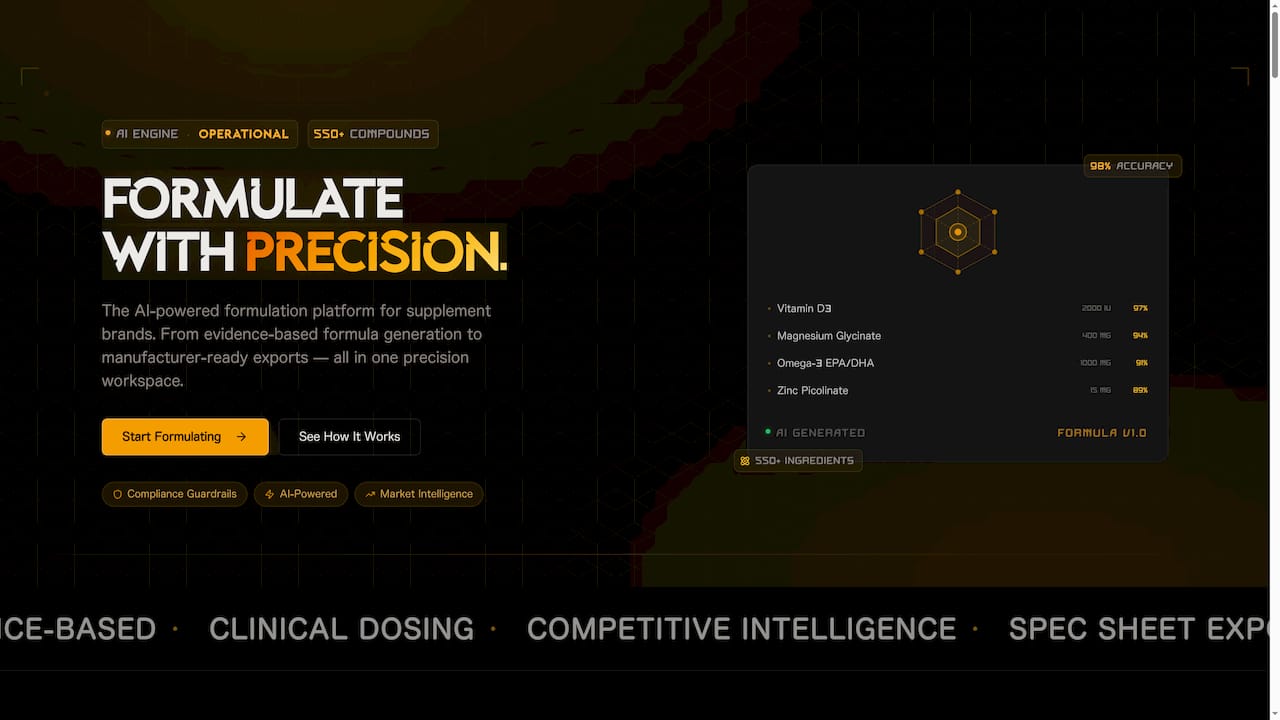
Formlypro brings the entire product development process into one platform. Its 8-phase plan takes your product from ideation through formulation, prototyping, compliance, and production, with market and competitive analytics built into every stage. The platform includes an AI Mockup designer for custom packaging and guides you on regulatory compliance for every market you plan to enter. If you are ready to move from sourcing questions to a market-ready formulation, Formlypro gives you the structure to get there. Start building your product with a platform built for brands that take formulation seriously.
FAQ
What is the difference between a CDMO and an independent formulator?
A CDMO bundles formulation and manufacturing, which adds efficiency but often requires high minimum order quantities and may limit ingredient flexibility. An independent formulator works on a project basis, giving you more control over ingredients and IP terms.
How much does it cost to hire a formulator?
Independent consultants typically charge $2,000 to $10,000 per formula, while dedicated R&D firms charge $15,000 to $20,000 including prototyping. CDMOs price by production volume rather than a flat development fee.
Who owns the formula after development?
Ownership depends entirely on the contract. Without a signed IP assignment agreement, the formulator may retain rights to the formula. Always secure explicit IP assignment in writing before development begins.
How do I know if a formulator is the right fit for my product category?
Ask for case studies showing commercially launched products in your specific category, such as skincare, supplements, or color cosmetics. Category experience with real launches is a stronger signal than general chemistry credentials.
How long does formulation development take?
Turnaround times typically range from 5–14 business days for initial prototypes, but full development including stability testing and revisions can take several months depending on product complexity and the number of revision rounds required.