

TL;DR:
- Outsourcing formulation work speeds product development and enhances quality by leveraging external expertise. Choosing the right provider, protecting intellectual property, and clearly defining project success are essential for a successful partnership. Proper planning, communication, and legal safeguards help founders avoid costly delays and ensure timely product launches.
Outsourcing formulation work is the process of delegating product formula design and development to specialized external experts, accelerating timelines and improving product quality. For entrepreneurs and product developers, this approach gives you access to laboratory infrastructure, regulatory knowledge, and ingredient expertise that would take years to build in-house. Costs range from $2,000 to $20,000 depending on provider type, and timelines can stretch from weeks to years when stability testing is required. Knowing how to outsource formulation work correctly, from selecting the right partner to protecting your intellectual property, determines whether your product launches on schedule or stalls in revision cycles.
How to outsource formulation work: when it makes sense
Outsourcing formulation services is the right call in three clear situations: you lack in-house lab access, your product requires specialized chemistry, or your timeline cannot accommodate a learning curve. Founders building their first supplement, food product, or cosmetic line rarely have the equipment or expertise to develop a stable, compliant formula from scratch. Outsourcing closes that gap immediately.
The type of provider you choose matters as much as the decision to outsource. Three main categories exist:
- Independent consultants charge $2,000–$10,000 per formula and work without ties to specific ingredient suppliers. That independence means their recommendations reflect what performs best, not what their supply chain favors.
- Full-service R&D firms charge $15,000–$20,000 and offer broader resources, including in-house testing and regulatory support. They suit complex products with multi-phase development needs.
- Contract development and manufacturing organizations (CDMOs) bundle formulation with manufacturing. This is convenient but creates a conflict of interest: CDMOs may favor ingredients that fit their existing production lines over ingredients that best serve your formula.
Pro Tip: If competitive differentiation and IP ownership are your priorities, an independent formulator gives you cleaner control than a bundled CDMO arrangement.
Product complexity also drives the outsourcing decision. A peptide-based product or a multi-ingredient supplement with bioavailability requirements demands lab infrastructure most founders simply do not have. For health and beauty brands, the formulation process involves regulatory compliance layers that an experienced external partner handles far more efficiently.
How do you select the right formulation outsourcing partner?
Choosing the wrong partner costs more than money. It costs months of rework and, in the worst cases, your formula itself.
Start with these five evaluation criteria:
- Specialization match. A formulator who excels in nutraceuticals may not be the right fit for a topical cosmetic. Confirm their portfolio includes products in your category before any conversation about pricing.
- Lab access. Formulators without direct lab access struggle to resolve stability and degradation issues on time. Ask specifically whether they own or lease testing equipment, or whether they outsource testing themselves.
- IP ownership terms. Intellectual property rights must be secured in writing before you share any proprietary information. Without a clear agreement, a manufacturer can legally own your formula and charge a release fee before you can transfer production elsewhere.
- Communication style. Personality fit between founders and formulators is a genuine success factor, not a soft preference. Formulation troubleshooting requires frequent, candid back-and-forth. A partner who goes quiet under pressure will cost you weeks.
- Conflict of interest disclosure. Ask directly whether the formulator receives referral fees or has preferred supplier relationships. A formulator with no ingredient bias gives you a formula built for performance, not for their margin.
Pro Tip: Request a sample contract before signing anything. The IP clause and iteration limits tell you more about a partner's professionalism than any sales call.
One red flag that founders consistently overlook: a CDMO that offers formulation as a free add-on to manufacturing. Free formulation almost always means the formula is designed around their existing ingredient inventory, not your product goals. For complex healthcare or biotech products, specialized providers like those offering peptide-based product development understand the specific constraints of that category far better than a generalist firm.

Preparing and managing your formulation project
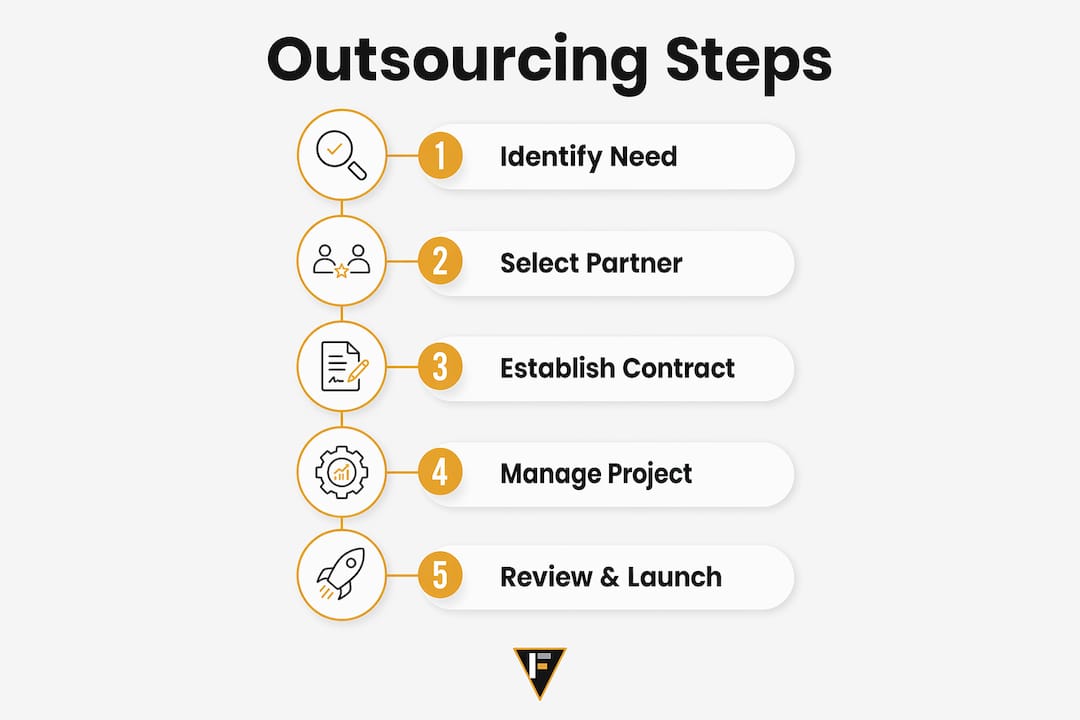
A well-prepared project brief is the single biggest factor in whether your outsourced formulation stays on time and on budget. Most delays trace back to a vague starting point.
Your brief should answer these questions before you send it to any provider:
- What specific problem are you solving? A brief that says "improve the texture" gives a formulator nothing to work with. A brief that says "the emulsion separates after 48 hours at 40°C" gives them a testable problem.
- What are your non-negotiable constraints? List your target cost per unit, any restricted ingredients (allergens, banned substances by market), and your desired shelf life.
- What does success look like? Define measurable outcomes: viscosity range, pH target, stability at specific temperatures, or sensory benchmarks like scent profile or color.
- How many iterations are included? Specifying iteration limits in your contract prevents scope creep. Three rounds of revision is a common standard; anything beyond that should trigger a change order.
Timeline management requires understanding what drives delays. Real-time stability studies take 2–3 years, though accelerated testing protocols allow earlier progress on clinical or regulatory milestones. Build that reality into your launch plan from day one. Founders who assume a formula is "done" at delivery, before stability data is complete, often face reformulation costs later.
Communication cadence matters throughout the project. Set a weekly check-in schedule at the start. Require written summaries of each testing round. If your formulator cannot explain a test result in plain language, that is a warning sign, not a knowledge gap on your part.
For founders who need to submit their formula for external testing, the formulation testing submission process has specific documentation requirements that are worth understanding before you reach that stage.
What are the most common mistakes in formulation outsourcing?
The mistakes that derail formulation projects follow a predictable pattern. Knowing them in advance is the only reliable way to avoid them.
A vague project brief is the most common starting error. When the brief lacks specific technical problems, the formulator fills in the gaps with assumptions. Those assumptions rarely match your vision, and correcting them burns time and budget.
IP ownership confusion is the most expensive mistake. Founders who share formula details before signing an IP agreement risk losing control of their own product. Without clear written agreements, a manufacturer can own your formulation and block you from moving production to a lower-cost facility. This is not a hypothetical risk. It happens regularly in the supplement and cosmetic industries.
Skipping stability testing to save time is a false economy. A formula that passes initial testing but fails shelf-life requirements forces a full reformulation after launch. The cost-saving tactics that actually work involve front-loading testing, not cutting it.
Founders who define "done" only as formula delivery, without specifying stability benchmarks, iteration limits, and performance criteria, almost always face a second round of costs they did not budget for. The contract is where you prevent that problem, not the conversation.
Pro Tip: Before signing any formulation agreement, have a contract attorney review the IP clause and the definition of project completion. A one-hour legal review costs far less than a formula dispute.
Poor communication is the final common failure. Relationship management with your formulator affects project outcomes as directly as technical skill. A formulator who communicates proactively, flags problems early, and explains their reasoning is worth more than one with a longer credential list who goes silent between milestones. As your product scales, the formulation scalability checklist becomes a practical tool for maintaining quality through production increases.
Key Takeaways
Outsourcing formulation work succeeds when you choose the right provider type, protect your IP in writing, and define project completion with measurable criteria before work begins.
| Point | Details |
|---|---|
| Choose the right provider type | Independent consultants offer unbiased formulas; CDMOs add manufacturing convenience but may create ingredient conflicts. |
| Protect IP before sharing anything | Secure written IP ownership agreements before disclosing any proprietary formula details to any partner. |
| Write a specific project brief | Define the exact technical problem, success criteria, and iteration limits before engaging any formulator. |
| Build stability timelines into your plan | Real-time stability studies take 2–3 years; factor this into your launch schedule from the start. |
| Prioritize communication fit | A formulator who communicates clearly and proactively reduces rework more than technical credentials alone. |
What I've learned from watching founders outsource formulation
Most founders treat formulation outsourcing as a procurement decision. They compare prices, check credentials, and sign a contract. That approach works until the first round of testing fails, and then the relationship either holds or it falls apart.
The founders who get this right do one thing differently: they treat the formulator as a technical co-founder for the duration of the project. That means sharing business context, not just technical specs. A formulator who understands your target market, your cost constraints, and your regulatory requirements makes better decisions at every stage. One who only receives a brief and a deadline makes decisions in a vacuum.
The IP conversation is the one I see founders delay most often. They worry it will signal distrust. The opposite is true. A professional formulator expects the IP discussion upfront. If a potential partner resists it or tries to defer it, that tells you everything you need to know about how they will handle disputes later.
My honest recommendation: engage your testing lab before you finalize your formulator selection. Knowing what tests your product requires, and what they cost, gives you leverage in contract negotiations and prevents the most common timeline surprises. Formulation and testing are not sequential steps. They run in parallel, and the best outsourcing arrangements treat them that way.
— Ben
Formlypro makes formulation outsourcing clearer from day one
Formulation outsourcing has a lot of moving parts. Formlypro is built to give product developers a structured path through all of them.
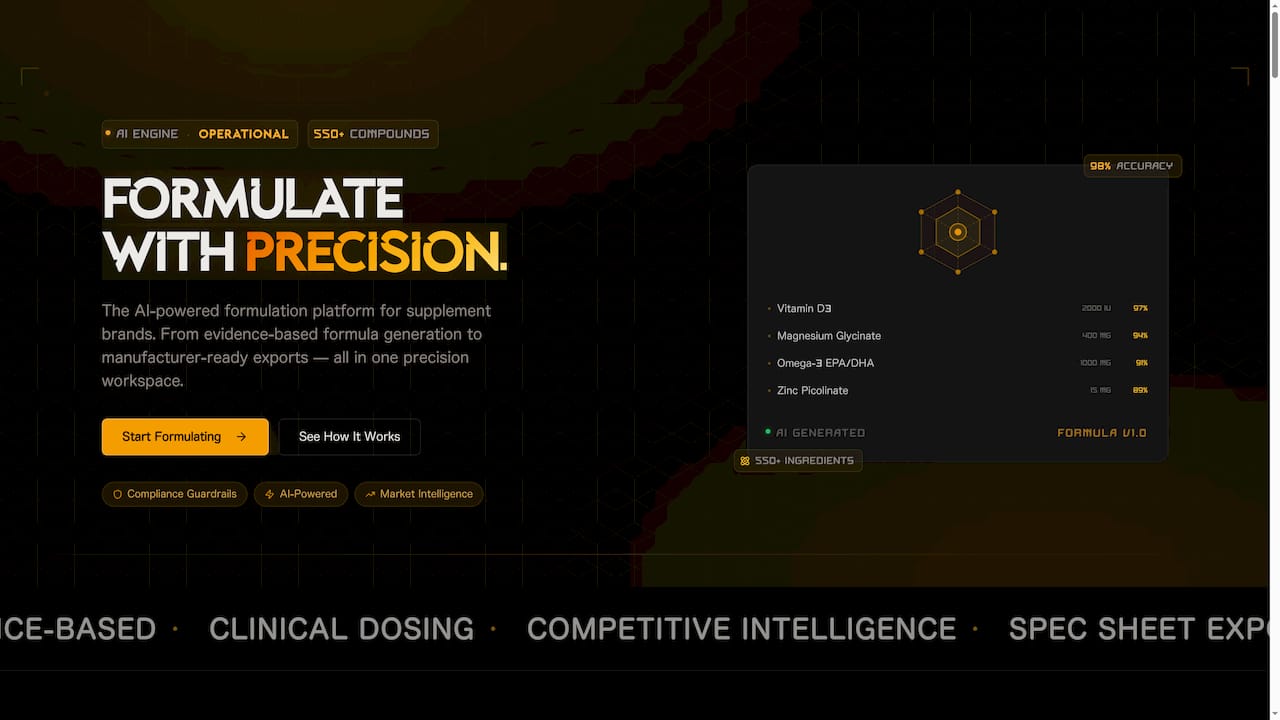
The Formlypro platform guides brands through an 8-phase product development process covering formulation, prototyping, compliance, market research, and production. It includes competitive analytics to show what formulas are selling and what ingredients those products contain. The built-in compliance guidance removes the guesswork from regulatory requirements, and the AI-powered packaging mockup designer lets you visualize your product before committing to production. For founders who want to move from idea to shelf with fewer surprises, Formlypro puts the right tools and context in one place.
FAQ
What does it cost to outsource formulation work?
Independent consultants typically charge $2,000–$10,000 per formula, while full-service R&D firms charge $15,000–$20,000. The right budget depends on product complexity and how much testing is required.
How do I protect my formula when working with an outside formulator?
Secure a written IP ownership agreement before sharing any proprietary details. Without it, a manufacturer may legally own your formula and charge fees to release it.
How long does outsourced formulation development take?
Development timelines vary by product complexity. Real-time stability studies take 2–3 years, though accelerated testing protocols support earlier regulatory and clinical progress.
What should a formulation project brief include?
A strong brief defines the specific technical problem, measurable success criteria, ingredient constraints, target cost per unit, and the number of revision rounds included in the contract.
When should I choose an independent formulator over a CDMO?
Choose an independent formulator when IP ownership and competitive differentiation matter most. CDMOs bundle formulation with manufacturing, which adds convenience but can create ingredient bias toward their existing supply chain.