

TL;DR:
- Proper submission of formulations involves complete documentation, accurate weight-based ingredient lists, and region-specific forms. Skipping steps, such as digital forms or proper sample labeling, leads to delays and rejections. Preparing thoroughly with stability tests and following regional requirements ensures a smooth approval process.
Submitting a formulation for testing is the process of preparing and delivering detailed documentation and physical samples to a laboratory or regulatory body to obtain approval or analysis results. Product developers who skip steps in the formulation testing process face delays, rejections, and costly reformulations. This guide covers every requirement, from documentation to post-shipment follow-up, so you can move through the submission process with confidence and meet the standards regulators actually enforce.
How to submit formulation for testing: what you need to prepare
Preparation is where most submissions succeed or fail. Labs and regulators need complete, accurate documentation before they can process anything you send.

Documentation requirements by region
Regulatory compliance varies by region and requires different notification timelines and portals. In the US, cosmetic product listings use Form FDA 5067 submitted through Cosmetics Direct or ESG NextGen. The EU requires CPNP notifications before market entry. Canada mandates Cosmetic Notification Forms within 10 days of first sale. Knowing which portal and timeline applies to your market is the first decision you make.
| Region | Required Form | Portal | Timeline |
|---|---|---|---|
| United States | Form FDA 5067 | Cosmetics Direct / ESG NextGen | Before or at market entry |
| European Union | CPNP Notification | CPNP Portal | Before market entry |
| Canada | Cosmetic Notification Form | Health Canada | Within 10 days of first sale |
Sample and formula documentation
Labs require formulation percentages by weight, detailed manufacturing instructions, and at least 4 ounces of labeled sample for formula approval. Weight percentages are not interchangeable with volume measures. A formula listed in milliliters instead of grams will be returned or flagged immediately.
Your documentation package must include:
- Full ingredient list with exact percentages by weight, totaling 100%
- Manufacturing instructions with temperature ranges, mixing times, and order of addition
- Physical sample of at least 4 ounces, labeled with the product name and bottling date
- Confidential Statement of Formula (CSF) signed and dated by an authorized party
- Batch records and signed confidentiality letters for full traceability
Documentation must include full traceability, including batch records and signed confidentiality letters, to satisfy both labs and regulators. This is not optional paperwork. Missing any of these items stops processing immediately.
Pro Tip: Always provide examples of what you want and do not want when submitting samples. This aligns lab expectations and prevents costly reformulations before testing even begins.
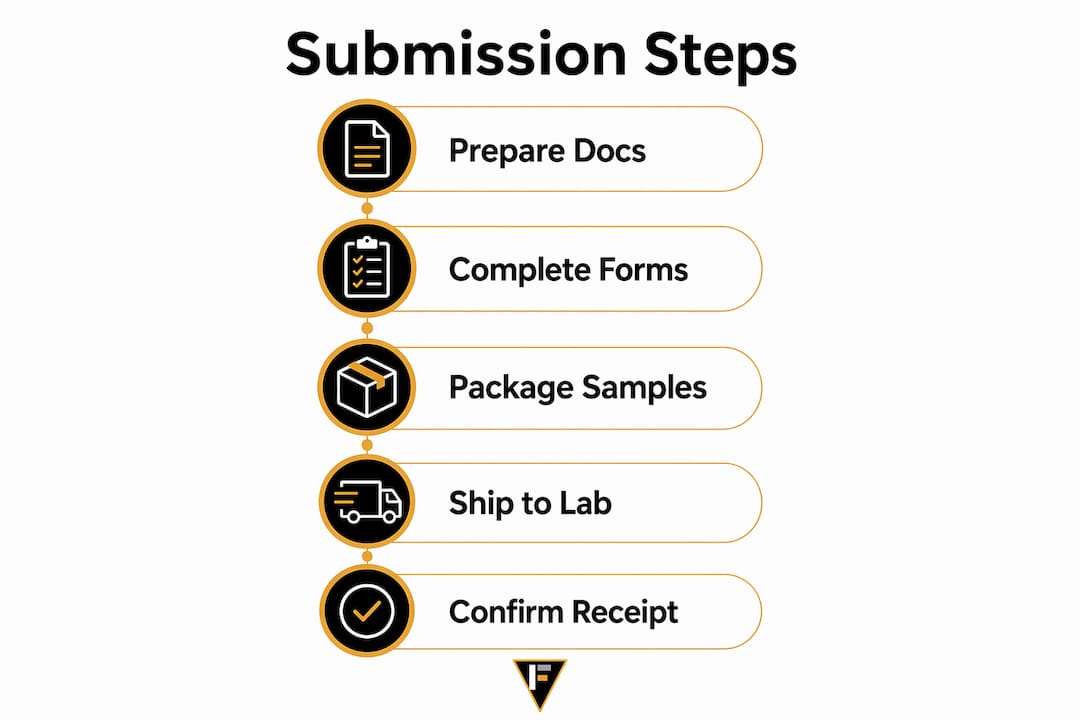
What are the steps to submit your formulation for testing?
The formulation testing process follows a defined sequence. Skipping or reordering steps causes delays that can set your launch back by weeks.
-
Confirm your authorized submitter. Only registrants or authorized agents may submit notifications, and submissions must include a signature and contact details. Verify who is legally permitted to submit on behalf of your brand before preparing any documents.
-
Prepare and package your physical sample. Use clean, sealed containers. Label each sample with the product name, formulation version, and bottling date. Pack samples to prevent breakage or contamination during shipping. Use temperature-controlled packaging if your formula is heat-sensitive.
-
Complete your documentation package. Compile your CSF, ingredient list with weight percentages, manufacturing instructions, batch records, and any region-specific regulatory forms. Review every field for accuracy before printing or uploading.
-
Ship your sample to the lab. Use a tracked shipping method and retain the tracking number. Ship to the address specified by the lab or regulatory body. Do not ship without confirming the receiving address is current.
-
Submit your digital forms immediately after shipping. Labs require digital submission forms after physical sample shipment, including valid tracking numbers. Completing these forms is mandatory. Failing to submit them after shipping is one of the most common causes of processing delays.
-
Notify the lab with your tracking number. After shipping, labs require immediate notification with tracking details. Failure to do so significantly delays sample processing and testing timelines. Send the tracking number by email or through the lab's submission portal the same day you ship.
-
Follow up at defined intervals. Ask the lab for an expected turnaround time at the point of submission. Follow up if you have not received confirmation within that window. Keep records of all communication.
Pro Tip: Create a submission checklist before you ship anything. Run through every item, including the digital form and tracking notification, before you leave the shipping facility.
Typical lab turnaround times vary by test type and lab workload. Stability studies take longer than basic safety or compatibility tests. Build this into your product development timeline from the start.
What mistakes cause formulation submissions to fail?
Most submission failures are preventable. The same errors appear repeatedly across labs and regulatory bodies.
-
Using volume instead of weight. Listing ingredients in milliliters or fluid ounces instead of grams or percentages by weight causes immediate rejection. Labs and regulators work in weight-based measurements only.
-
Missing or incomplete CSF. Missing CSF or inaccurate weight listings cause immediate processing delays. The CSF is the core document regulators use to evaluate your formula. An unsigned or undated CSF is treated the same as a missing one.
-
Insufficient or mislabeled samples. Sending less than the required sample volume, or omitting the bottling date and product name from the label, forces the lab to contact you for corrections. That contact adds days or weeks to your timeline.
-
Failing to complete digital forms after shipment. Physical samples arrive at labs without any digital record attached. Without the completed online form and tracking number, labs cannot begin processing. This step is separate from shipping and must be done the same day.
-
Ignoring regional regulatory differences. A submission that meets FDA requirements does not automatically meet EU or Health Canada requirements. Each region has its own portal, form, and timeline. Submitting the wrong form to the right portal, or the right form to the wrong portal, resets the clock.
-
Submitting without an authorized signature. Regulatory bodies reject submissions that lack a valid signature from a registrant or authorized agent. Verify signatory authority before finalizing any document.
The fix for all of these is the same: build a submission checklist specific to your target region and run through it before you ship. A formulation compliance checklist built around your product type and market will catch most errors before they cost you time.
Why do stability testing and pre-formulation studies matter before submission?
Stability testing is not a post-submission requirement. It is a pre-submission necessity that determines whether your formula will survive real-world conditions long enough to reach consumers.
Testing at 40°C for two weeks is recommended as a minimum accelerated stability screen. Failure to conduct this test can cost up to $180,000 in lost development time if a formula fails after submission. That figure reflects reformulation costs, repeat testing fees, and delayed market entry combined.
Pre-formulation studies cover the physical and chemical properties your formula must demonstrate before submission:
- Solubility across pH ranges to confirm active ingredients dissolve and remain stable
- Accelerated stability conditions to predict shelf life without waiting months for real-time data
- Excipient compatibility to confirm that inactive ingredients do not degrade or react with actives
- pH measurement to verify the formula falls within the safe and effective range for its category
Skipping pre-formulation studies often leads to failures such as crystallization or degradation, costing time and money. These failures show up during lab testing, not before, which means you have already paid for testing on a formula that cannot pass.
"Formulation is a strategic design process, not just mixing ingredients, requiring rigorous excipient selection and stability optimization before submission."
Quality by Design (QbD) and Design of Experiments (DoE) replace trial-and-error with systematic, statistical approaches to define critical parameters. Applying these methods before submission reduces the number of revisions you need after testing. Formulators who use QbD principles consistently report fewer rounds of reformulation and faster regulatory acceptance. For a deeper look at applying these methods, the guide on reducing formulation risks covers six proven strategies in detail.
Stability testing also supports your regulatory submission directly. Regulators in the US, EU, and Canada expect stability data as part of the product dossier for many categories. Submitting without it invites requests for additional information, which extends your review timeline.
Key Takeaways
A complete, accurate submission package is the single most important factor in getting your formulation approved without delays or rejections.
| Point | Details |
|---|---|
| Weight-based documentation | List all ingredients as exact percentages by weight, not volume, totaling 100%. |
| Regional compliance varies | Use the correct portal and form for each market: FDA, CPNP, or Health Canada. |
| CSF is non-negotiable | Submit a signed, dated Confidential Statement of Formula with every package. |
| Digital forms follow physical shipment | Complete the lab's online submission form and send your tracking number the same day you ship. |
| Stability testing before submission | Run accelerated stability studies at 40°C for at least two weeks before submitting to avoid costly failures. |
What I have learned from watching submissions go sideways
The submissions that fail are almost never missing a major document. They fail because of small, fixable errors that nobody caught before shipping. A missing bottling date on a sample label. A CSF signed by someone without authorization. A digital form submitted three days after the sample arrived.
The pattern I see most often is product developers treating the submission as the finish line. They spend months on the formula itself and then rush the paperwork in the final week. That is exactly backwards. The documentation is what regulators and labs actually evaluate. The physical sample confirms what the documentation claims.
Moving from trial-and-error to QbD principles is the single biggest shift that separates developers who submit once and get approved from those who go through three or four rounds of revision. QbD forces you to define your critical quality attributes before you finalize the formula. That means your submission documentation is built on a foundation of tested parameters, not assumptions.
The other thing I tell every product developer I work with: call the lab before you ship. Confirm the receiving address, ask what format they prefer for the digital form, and find out the current turnaround time. A five-minute call eliminates the most common sources of delay. Labs want to process your submission. Make it easy for them.
— Ben
Formlypro makes the formulation submission process manageable
Keeping track of CSFs, weight percentages, regional compliance forms, stability data, and digital submission deadlines across multiple products is genuinely difficult. Most product developers manage this in spreadsheets and email threads, which is where errors happen.
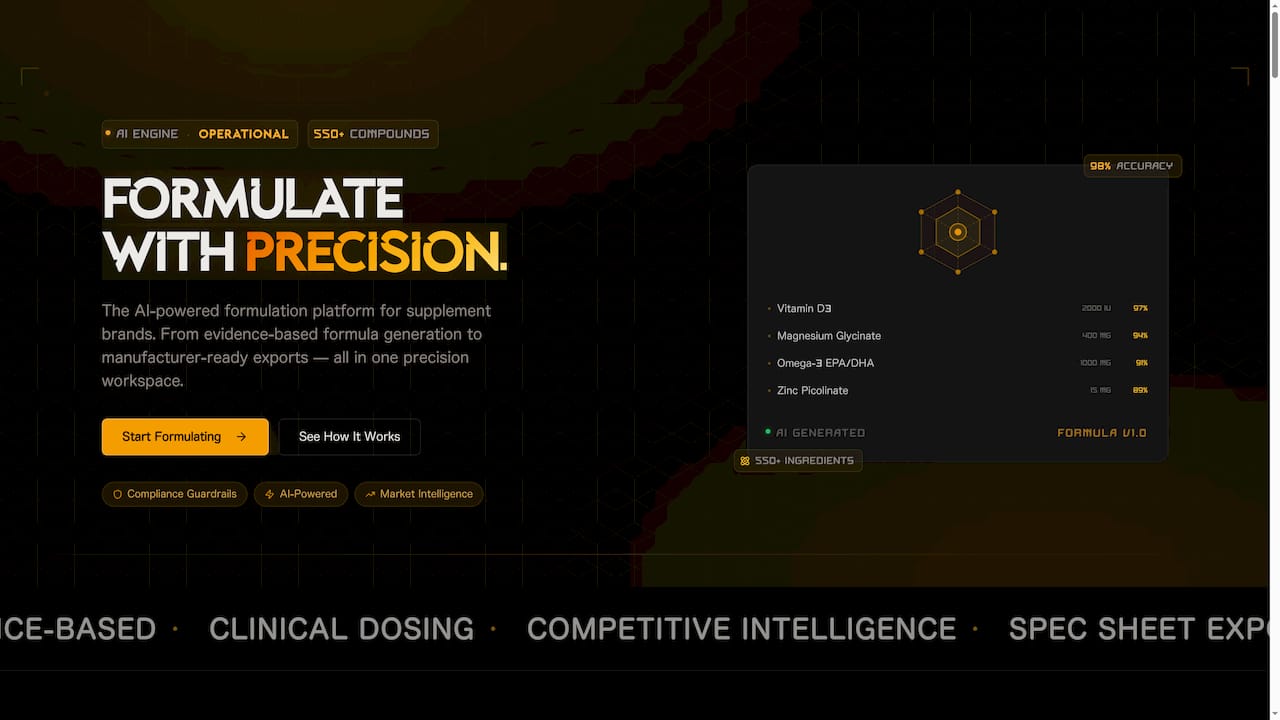
Formlypro is built specifically for this problem. The platform guides you through an 8-phase product development process, from ideation through production, with built-in compliance tracking for US, EU, and Canadian requirements. You can document your full formula with version control, track sample submissions, and manage regulatory forms in one place. The Formlypro platform also includes market research, competitive analysis, and an AI-powered packaging mockup designer, so your submission process connects directly to your broader product strategy.
FAQ
What is a Confidential Statement of Formula?
A Confidential Statement of Formula (CSF) is a signed document listing all ingredients and their exact weight percentages. Regulatory bodies including the EPA require it for every submission, and missing or incomplete CSFs cause immediate processing delays.
How much sample do I need to send for formulation testing?
Labs typically require at least 4 ounces of labeled sample. The label must include the product name and bottling date.
What happens if I skip the digital form after shipping?
Labs cannot begin processing your sample without the completed digital submission form and tracking number. Skipping this step after shipment is one of the most common causes of avoidable delays.
How long does stability testing take before submission?
Accelerated stability testing at 40°C for a minimum of two weeks is the standard screen. Longer real-time studies may be required depending on your product category and target market.
Do submission requirements differ between the US, EU, and Canada?
Yes. The US uses Form FDA 5067 through Cosmetics Direct or ESG NextGen. The EU requires CPNP notification before market entry. Canada requires a Cosmetic Notification Form within 10 days of first sale. Each region has its own portal, form, and timeline.