

TL;DR:
- Topical formulation design involves selecting and optimizing vehicles and excipients to deliver active ingredients effectively while minimizing systemic absorption.
- Proper vehicle choice affects drug release, skin permeation, safety, and patient adherence, making it a primary development focus.
Topical formulation design is the drug-product engineering process of selecting and optimizing a vehicle and excipients to deliver an active pharmaceutical ingredient (API) to a targeted skin or mucosal site while minimizing systemic absorption. The industry term for this discipline is topical pharmaceutical development, and it covers everything from cream and gel manufacturing to nano-enabled delivery systems. Researchers, formulators, and brand managers working on topical product development need to understand this process because vehicle and excipient selection directly controls drug release, skin permeation, stability, and patient acceptability. Getting the formulation wrong does not just reduce efficacy. It can create safety risks, regulatory failures, and products consumers refuse to use.
What is topical formulation design and why does it matter?
Topical formulation design is defined as the engineering process that balances viscosity, spreadability, and stability to match the therapeutic target and patient needs. The formulation vehicle is not a passive carrier. It actively determines how much API reaches the target tissue and how quickly.

The core scientific insight is a three-way interaction between the skin, the API, and the formulation components. These interactions control drug release and skin permeation. A one-size-fits-all excipient strategy fails because changing any one of the three variables shifts the entire system. A hydrophilic gel that works perfectly for a water-soluble API will underperform with a lipophilic molecule that needs an oil-based vehicle to partition into the stratum corneum.
Topical success depends on formulation vehicle design elements like dosing consistency, viscosity, and stability beyond API potency alone. A highly potent API in a poorly designed vehicle will not outperform a moderate API in a well-engineered one. That is why formulators treat vehicle design as a primary variable, not an afterthought.
What are the core principles of topical formulation design?
Four foundational principles govern every topical formulation decision.
- Skin physiology and barrier function. The stratum corneum is the primary barrier to drug penetration. Formulation design must account for its lipid-rich structure, which favors lipophilic molecules. Hydration of the stratum corneum, achieved by occlusive vehicles like petrolatum, increases permeability for many APIs.
- API physicochemical properties. Molecular weight, lipophilicity (log P), solubility, and ionization state determine how an API partitions between the formulation and skin. Low molecular weight and moderate lipophilicity generally favor passive diffusion through the stratum corneum.
- Vehicle and excipient roles. Excipient selection controls rheology, physical and chemical stability, microbiological preservation, and penetration behavior. The same API can produce varied therapeutic efficacy depending entirely on excipient choices.
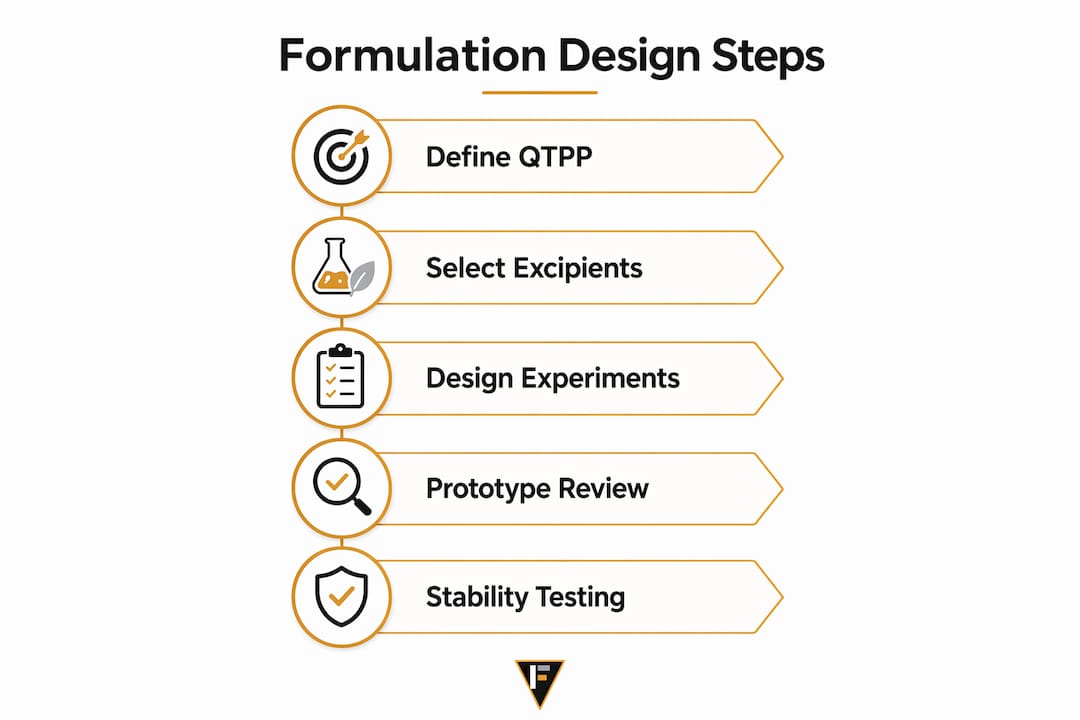
- Quality by Design (QbD). QbD principles involving the Quality Target Product Profile (QTPP), Critical Quality Attributes (CQAs), and design space are now central to modern topical drug product development. Quality cannot be tested into a product after development. It must be built in from the start through risk-based scientific understanding.
Pro Tip: Map your QTPP before selecting a single excipient. Defining what the product must achieve clinically, physically, and regulatorily first will prevent costly reformulation cycles later.
Formulators also use Design of Experiments (DoE) to optimize competing variables like stability, texture, and skin permeation simultaneously. Advanced DoE frameworks combine factorial, mixture, and response-surface designs with nonlinear optimization methods to map multiple quality attributes at once. This approach replaces trial-and-error with a structured, defensible development record.
What are common topical formulation types and how do they differ?
Semisolid vehicles are the most common format for topical products. Each type has distinct physical properties that affect API release, skin feel, and clinical performance.
| Vehicle type | Texture | Typical use case | Stability profile | Example APIs delivered |
|---|---|---|---|---|
| Cream (oil-in-water) | Light, non-greasy | Inflamed or weeping skin | Moderate; requires preservatives | Hydrocortisone, clotrimazole |
| Ointment (water-in-oil) | Heavy, occlusive | Dry, chronic skin conditions | High; minimal water activity | Tacrolimus, petrolatum-based steroids |
| Gel (polymer-based) | Clear, spreadable | Acne, hair-bearing areas | Moderate; pH-sensitive | Benzoyl peroxide, metronidazole |
| Lotion (emulsion) | Fluid, pourable | Large body surface areas | Lower; prone to phase separation | Calamine, urea |
| Foam | Lightweight, airy | Scalp and hair-bearing skin | Requires pressurized packaging | Betamethasone, minoxidil |
Vehicle type directly affects viscosity, spreadability, API release rate, and patient acceptability. An ointment creates an occlusive film that hydrates the stratum corneum and increases permeation. A gel dries quickly and suits acne-prone or oily skin where occlusion would worsen the condition. Choosing the wrong vehicle for a skin type or condition reduces both efficacy and adherence.
The performance triad for semisolid vehicle selection covers three criteria: rheology and usability, physicochemical stability, and in-vitro release and permeation compatibility. Evaluating all three before finalizing a vehicle prevents late-stage failures during stability studies or regulatory review.
Microstructure matters as much as composition. Microstructure and processing impact topical product performance significantly. Two creams with identical ingredient lists but different manufacturing processes can show different release profiles. This is why in-vitro release testing (IVRT) and in-vitro permeation testing (IVPT) are required to confirm equivalence, not just compositional similarity.
How is topical formulation development structured from pre-formulation to scale-up?
A structured development workflow ensures safety, quality, and consistent therapeutic performance across every batch. The standard process follows five stages.
- Pre-formulation studies. Assess API physicochemical properties including solubility, polymorphism, and photostability. Screen excipients for compatibility with the API under stress conditions. This stage defines the boundaries of what the formulation can and cannot contain.
- Prototype development. Build initial formulations based on pre-formulation data and QbD-defined CQAs. Test multiple vehicle types and excipient concentrations. Use DoE to generate data efficiently across a broad formulation space.
- Stability testing. Run accelerated and real-time stability studies aligned with ICH Q1A(R2) guidelines. Evaluate physical appearance, pH, viscosity, API assay, and degradation products at defined time points. Stability failures at this stage are far cheaper to resolve than post-submission changes.
- IVRT and IVPT evaluation. Confirm that the optimized formulation releases and delivers the API as intended. IVRT uses synthetic membranes to measure release rate. IVPT uses human skin or validated skin models to measure actual permeation. Both are required for regulatory submissions involving semisolid generics under FDA guidance.
- Scale-up and validation. Transfer the lab prototype to pilot and commercial manufacturing scales. Validate critical process parameters including mixing speed, temperature, and homogenization time. Submit a complete development report with the regulatory dossier.
Pro Tip: Run IVRT early in prototype selection, not just at the end. Early release data will help you eliminate underperforming vehicles before investing in full stability studies.
Brand managers working on market-ready formulations often underestimate the time required between prototype and validated batch. Scale-up is not linear. A formulation that mixes perfectly at 500 grams can fail at 50 kilograms if shear sensitivity or temperature gradients are not controlled.
What advanced technologies improve topical delivery?
Nano-enabled delivery systems represent the most significant advance in topical formulation methods over the past decade.
- Solid lipid nanoparticles (SLNs). SLNs encapsulate lipophilic APIs in a solid lipid matrix, improving skin penetration and providing controlled release. They reduce systemic absorption by concentrating the API in the upper skin layers.
- Liposomes. Phospholipid bilayer vesicles that mimic skin lipid structures. Liposomes enhance follicular delivery, making them particularly effective for scalp conditions and hair follicle-targeted therapies.
- Nanoemulsions. Droplet sizes below 200 nanometers increase surface area and improve API solubility at the skin surface. Nanoemulsions can be formulated as creams, gels, or sprays, giving formulators flexibility without sacrificing delivery performance.
- Nanostructured lipid carriers (NLCs). An evolution of SLNs that uses a blend of solid and liquid lipids to prevent drug expulsion during storage, improving long-term stability.
Nano-enabled topical systems like solid lipid nanoparticles and liposomes improve targeted delivery, skin barrier traversal, and safety profiles by minimizing systemic exposure. These systems enhance local deposition and therapeutic outcomes for skin diseases. The trade-off is manufacturing complexity and regulatory scrutiny. Regulatory agencies including the FDA and EMA require detailed characterization of particle size, zeta potential, encapsulation efficiency, and in-vivo safety data for nano-enabled products.
Formulators working on 2026 formulation trends are also exploring dissolving microneedle patches and transfersome vesicles for transdermal delivery of larger molecules that cannot cross the stratum corneum by passive diffusion. These platforms extend topical delivery beyond small molecules into peptides and biologics. Peptide-based actives require careful attention to peptide stability during formulation to preserve their activity at the skin surface.
Key Takeaways
Effective topical formulation design requires engineering the vehicle and excipients around the three-way interaction between skin physiology, API properties, and formulation components from the earliest development stage.
| Point | Details |
|---|---|
| Vehicle choice drives efficacy | The formulation vehicle controls API release, skin permeation, and patient adherence, not just the API itself. |
| QbD must start early | Define QTPP and CQAs before selecting excipients to avoid costly reformulation cycles. |
| IVRT/IVPT are non-negotiable | In-vitro release and permeation testing confirm delivery performance and are required for regulatory submissions. |
| Nano-enabled systems raise the bar | SLNs, liposomes, and nanoemulsions improve targeted delivery but require detailed regulatory characterization. |
| Scale-up is a formulation variable | Critical process parameters at manufacturing scale must be validated, not assumed from lab results. |
The part of topical formulation design most teams get wrong
The most common mistake I see in topical formulation projects is treating vehicle selection as a secondary decision. Teams spend months optimizing API concentration and then pick a cream base because it feels familiar. That sequence is backwards.
Vehicle selection determines whether the API reaches its target at all. A corticosteroid in an oil-in-water cream will behave completely differently than the same molecule in an ointment, even at identical concentrations. The formulation is not the packaging for the drug. The formulation is the drug delivery system.
The second mistake is deferring IVRT until the end of development. I have watched teams complete full stability studies on three prototype formulations, only to discover during IVRT that two of them release the API at half the target rate. Running IVRT at prototype selection cuts that waste entirely.
The third issue is underestimating QbD documentation requirements. Regulatory reviewers expect a clear, traceable link between your QTPP, your CQAs, your excipient rationale, and your design space. Teams that build this documentation from day one move through review faster. Teams that reconstruct it post-development spend months writing justifications for decisions they made intuitively.
The good news is that the tools to do this correctly are more accessible than ever. Structured DoE software, validated IVRT membrane systems, and formulation management platforms have removed most of the friction from rigorous development. The barrier is not resources. It is knowing the right sequence.
— Ben
How Formlypro supports topical product development
Formlypro is built for formulators and brand managers who need structure across the full development cycle, from first concept through production-ready prototype.
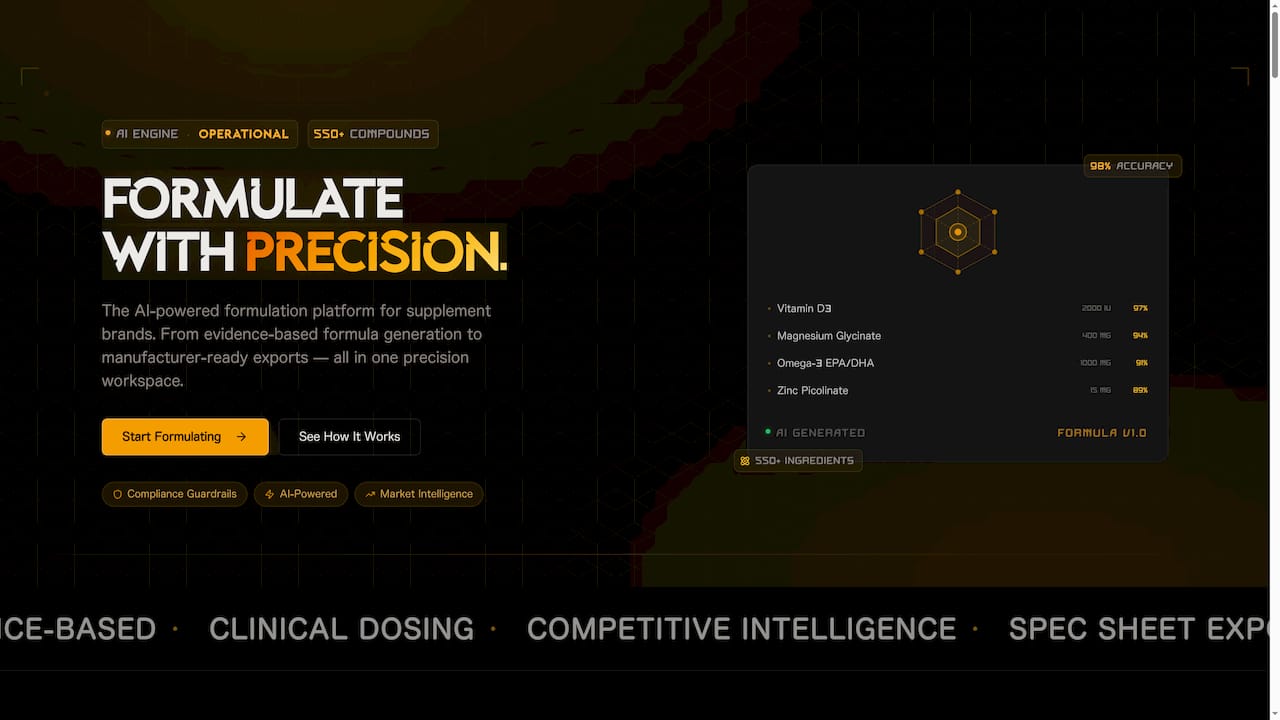
The platform guides teams through an 8-phase development plan covering formulation design, prototyping, market research, compliance, and production. It includes competitor analysis showing which topical products are selling and what those brands put in their formulations. Formlypro also handles formulation compliance requirements and includes an AI-powered packaging mockup designer for custom packaging. For formulators and brand managers who want to move from concept to market-ready product without missing a regulatory or development checkpoint, the Formlypro platform provides the workflow and data to do it right.
FAQ
What is topical formulation design in simple terms?
Topical formulation design is the process of engineering a product to deliver an active ingredient to a specific skin site effectively and safely. It involves selecting the right vehicle, excipients, and manufacturing process to control how the API releases and penetrates the skin.
What are the main types of topical formulations?
The main types are creams, ointments, gels, lotions, and foams. Each differs in texture, occlusion level, API release rate, and suitability for different skin conditions and body sites.
How does QbD apply to topical formulation development?
QbD requires defining a Quality Target Product Profile and Critical Quality Attributes before development begins. This risk-based approach links every formulation decision to a measurable quality outcome, which regulators expect to see documented in the submission dossier.
What is IVRT and why is it required?
IVRT stands for in-vitro release testing. It measures how quickly an API releases from a semisolid formulation through a synthetic membrane. The FDA requires IVRT data for generic semisolid submissions to confirm that the test product performs equivalently to the reference listed drug.
What makes nano-enabled topical systems different from conventional ones?
Nano-enabled systems like liposomes and solid lipid nanoparticles use particle sizes below 200 nanometers to improve skin penetration, target follicular delivery, and reduce systemic absorption. They require more extensive characterization and regulatory documentation than conventional semisolid vehicles.