

TL;DR:
- The safety margin in formulation measures the buffer between actual exposure and harmful dose. A value of 100 or higher is required for EU cosmetic safety approval, ensuring product safety compliance. Proper documentation and accurate data are essential to achieve and defend a credible safety margin.
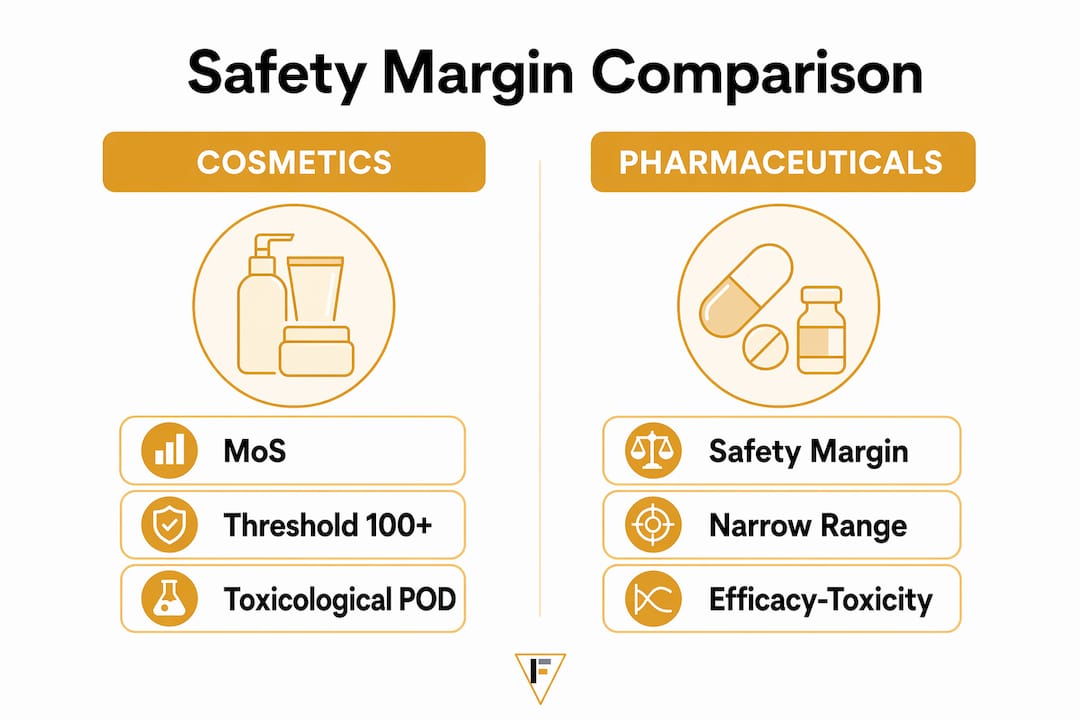
The safety margin in formulation is defined as the ratio of a toxicological point of departure to the estimated systemic exposure dose, and it is the primary metric regulators and formulators use to confirm a product is safe under normal use conditions. Known formally as the Margin of Safety (MoS), this number tells you how much buffer exists between what a consumer is actually exposed to and the dose at which harm begins. Across cosmetics, pharmaceuticals, and food, the MoS sits at the center of every credible safety assessment. Getting it right is not optional. It is the difference between a product that clears regulatory review and one that gets pulled before launch.
What is safety margin in formulation and how does it work?
The MoS is calculated as the ratio of a systemic toxicological Point of Departure (PODsys) to the Systemic Exposure Dose (SED). The formula is straightforward: MoS = PODsys ÷ SED. A higher MoS means more distance between safe exposure and harmful exposure. That distance is your safety buffer.
The POD is the toxicological threshold you anchor the calculation to. Common POD types include the No Observed Adverse Effect Level (NOAEL), the Benchmark Dose Lower Confidence Limit (BMDL), and the ED99, which represents the dose effective in 99% of a study population. Each POD type carries different assumptions, and selecting the wrong one skews the entire calculation. The SED represents the amount of an ingredient that reaches systemic circulation after product application, factoring in dermal absorption, product retention on skin, and frequency of use.
Here is a simplified example. Suppose a preservative has a NOAEL of 10 mg/kg body weight per day. After calculating dermal absorption and typical product use, the SED comes out to 0.05 mg/kg/day. The MoS equals 10 ÷ 0.05, which is 200. That result clears the standard threshold and supports safe use at the tested concentration.
Pro Tip: If your MoS lands between 100 and 150, do not treat it as a comfortable pass. Tighten your exposure assumptions and verify your absorption data before submitting to a safety assessor.
The Margin of Exposure (MOE) is a related but distinct concept. MOE compares estimated exposure to a toxicological threshold, with a higher MOE indicating lower risk. In exposure science, an MOE above 1,000 is often considered acceptable. The key difference is that MoS is used primarily in cosmetic safety assessments under EU regulation, while MOE appears more often in environmental and pharmaceutical risk contexts. Knowing which metric your regulatory framework requires prevents you from submitting the wrong calculation entirely.
How is the safety margin regulated in cosmetics?
The EU Cosmetics Regulation (EC) No 1223/2009 makes the MoS calculation a legal requirement for any cosmetic product placed on the European market. Every product must have a Cosmetic Product Safety Report (CPSR) completed by a qualified safety assessor before it can be sold. The CPSR must document the MoS for each ingredient with systemic exposure potential, along with the toxicological data and exposure assumptions used.
The accepted threshold is clear: an MoS of 100 or greater is required for a cosmetic ingredient to be considered safe under EU rules. That value of 100 is not arbitrary. It incorporates a 10x uncertainty factor for interspecies variability and another 10x factor for intraspecies variability among human consumers. If your MoS falls below 100, you have two options: reduce the ingredient concentration or provide additional data that justifies a lower safety factor.
Key compliance checkpoints within the CPSR include:
- Toxicological profile: NOAEL or BMDL values sourced from peer-reviewed studies or regulatory databases such as EFSA or ECHA
- Exposure assessment: Calculated SED based on product type, application area, frequency of use, and dermal absorption rate
- Ingredient concentration: The percentage used in the final formula, which directly drives the SED
- Risk characterization: A written conclusion that the MoS supports safe use, or a justification for why a lower MoS is still acceptable
- Uncertainty factors: Explicit documentation of any assumptions made, including default bioavailability values
Formulators who treat the CPSR as a post-formulation checkbox create problems for themselves. Building MoS calculations into the formulation compliance process from the start means fewer reformulations and faster regulatory clearance.
What factors affect the safety margin calculation?
Dermal absorption is the single largest source of uncertainty in MoS calculations for topical products. In the absence of measured data, regulators accept a conservative default bioavailability value of 50%. That default sounds protective, but it can dramatically underestimate or overestimate actual systemic exposure depending on the ingredient and vehicle. A lipophilic compound in an oil-rich emulsion will absorb very differently than the same compound in a water-based gel.
Several other variables shape the final MoS:
- Product type and rinse-off vs. leave-on status: A rinse-off shampoo has far lower systemic exposure than a leave-on serum applied to the same body surface area
- Application frequency and body surface area: Daily full-body application multiplies the SED significantly compared to weekly spot application
- Toxicological data quality: Animal study data converted to human equivalents introduces interspecies uncertainty that the 10x factor is meant to cover
- Route of exposure relevance: A NOAEL derived from an oral study must be converted to a systemic equivalent before it can be used in a dermal MoS calculation
- Data gaps: Missing absorption data, outdated toxicology studies, or ingredients with limited published literature all weaken the defensibility of the final MoS
MoS calculations are only as reliable as the accuracy of systemic exposure conversions and dermal absorption data. Defaulting to conservative assumptions without documenting why you chose them creates a calculation that looks safe on paper but cannot survive regulatory scrutiny.
Pro Tip: Always document the source and rationale for every input value in your MoS calculation. Regulators do not just check the final number. They audit the logic behind it.

Transparent and defensible assumptions are not a formality. They are what separates a safety dossier that gets approved from one that triggers a request for additional information.
How does safety margin apply across food, cosmetics, and pharmaceuticals?
The core concept of MoS is consistent across industries, but the thresholds, terminology, and data requirements differ significantly. The table below compares how safety margin thinking applies in each sector.
| Industry | Primary metric | Typical threshold | Key data input | Regulatory body |
|---|---|---|---|---|
| Cosmetics (EU) | MoS (PODsys ÷ SED) | MoS ≥ 100 | Dermal absorption, NOAEL | European Commission |
| Pharmaceuticals | Safety margin (ED99 to toxic dose) | Context-dependent | Clinical dose-response data | FDA, EMA |
| Food (EU/US) | MOE or ADI-based | MOE > 1,000 (genotoxic) | Dietary exposure, NOAEL | EFSA, FDA |
In pharmaceuticals, the safety margin links efficacy to toxicity by comparing the ED99 to the lowest toxic dose. A narrow gap between those two values means a drug has a tight therapeutic window. That is why drugs like warfarin require careful dosing while others like ibuprofen tolerate a wide range of doses safely.
In food safety, the MOE framework is used for substances that may have genotoxic potential, where an MOE above 1,000 is generally considered of low concern. For non-genotoxic food additives, regulators set an Acceptable Daily Intake (ADI) and compare it to estimated dietary exposure. The logic is the same as MoS: how much buffer exists between what people consume and what causes harm.
For formulators working across categories, the practical application is identical regardless of the metric name. You identify the toxicological threshold, estimate realistic exposure, calculate the ratio, and then adjust ingredient levels if the ratio is too low. Reducing concentration is the most direct lever. Switching to a less bioavailable ingredient form is another. Using ingredient selection criteria that account for MoS from the start prevents the need to reformulate late in development.
Integrating MoS into your product development workflow at the prototype stage, rather than at the compliance stage, saves time and reduces the risk of a failed safety assessment. Formulators who reduce formulation risks early by building safety margin checks into each development phase consistently produce cleaner regulatory submissions.
Key Takeaways
The safety margin in formulation is the ratio of a toxicological point of departure to the systemic exposure dose, and a result of 100 or greater is the accepted standard for EU cosmetic compliance.
| Point | Details |
|---|---|
| Core formula | MoS = PODsys ÷ SED; a higher ratio means a larger safety buffer between exposure and harm. |
| EU threshold | An MoS of 100 or greater is required under EU Cosmetics Regulation (EC) No 1223/2009 for market approval. |
| Dermal absorption risk | Missing or assumed absorption data is the most common source of error in MoS calculations. |
| MoS vs. MOE | MoS applies primarily to cosmetics; MOE is used in food and environmental risk contexts with different thresholds. |
| Documentation matters | Regulators audit the assumptions behind the MoS, not just the final number, so every input must be traceable. |
Why I think most formulators underestimate the MoS calculation
The number itself is not the hard part. Dividing POD by SED takes seconds. The hard part is trusting the inputs you are dividing. I have seen safety dossiers built on a 50% default dermal absorption value for an ingredient that had published in vitro data showing 8% absorption. Using the default made the MoS look worse than reality, which forced an unnecessary concentration reduction. The product launched weaker than it needed to be.
The other issue I see constantly is terminology confusion. Formulators trained in pharmaceutical contexts use "safety margin" to mean the gap between ED99 and the toxic dose. Cosmetic safety assessors use "MoS" to mean POD divided by SED. Food scientists reach for MOE. These are not interchangeable, and submitting a dossier that conflates them signals to a regulator that the assessor does not fully understand the framework they are working in.
My recommendation is to treat the CPSR as a living document, not a one-time filing. Ingredient suppliers update toxicological data. Exposure patterns shift when product formats change. A safety assessment that was accurate at launch may not reflect the product as it exists two years later. Continuous updates and clear version control in your documentation protect you when regulators ask questions.
The formulators who produce the most defensible safety assessments are not the ones chasing the highest MoS. They are the ones who can explain every assumption they made and show exactly where each input value came from.
— Ben
How Formlypro supports safety margin compliance
Calculating MoS accurately requires organized toxicological data, exposure modeling, and a clear audit trail. Formlypro is built to support that process across every phase of product development.
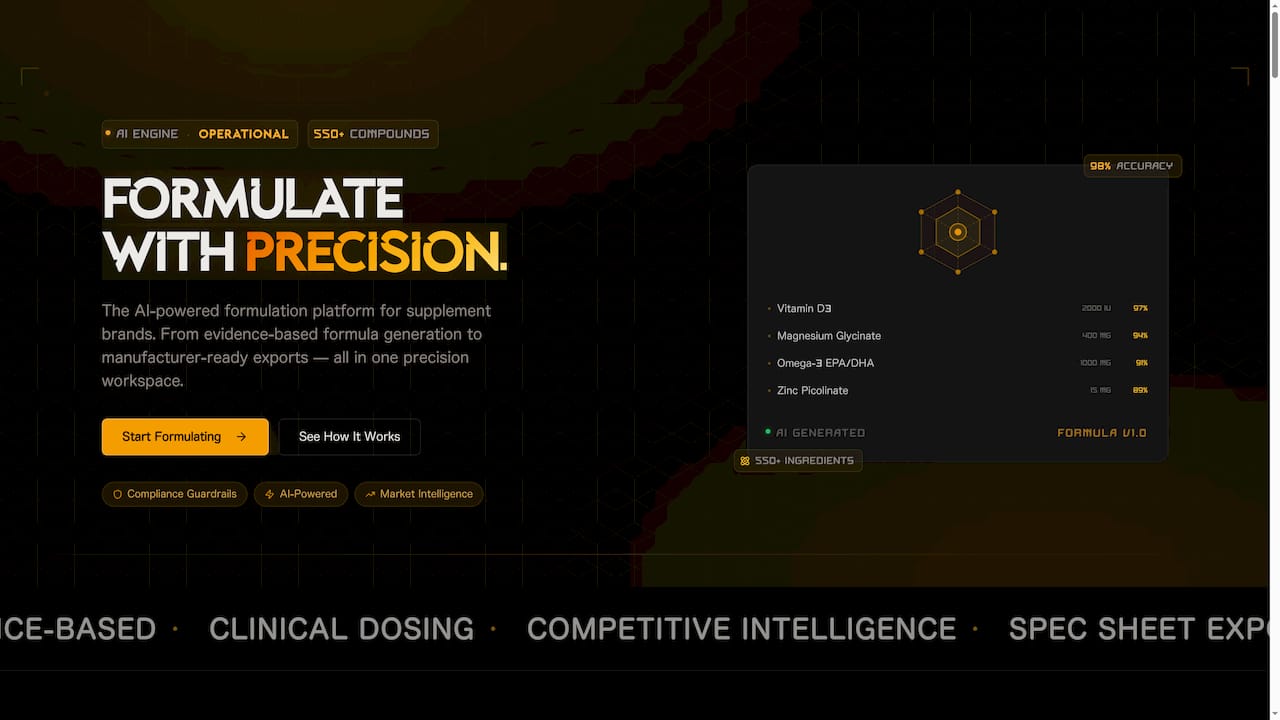
The Formlypro platform guides formulators through an 8-phase development workflow that integrates compliance documentation from the prototype stage forward. Safety margin calculations, ingredient concentration decisions, and CPSR-ready documentation all sit within the same system. Formlypro also includes competitor analysis and market research, so you can see what ingredient concentrations competing products use and benchmark your formulation decisions against what is actually selling. For formulators who need to move from ideation to a compliant, market-ready product without losing scientific rigor, Formlypro connects every step.
FAQ
What is the safety margin in formulation?
The safety margin in formulation is the ratio of a toxicological point of departure to the estimated systemic exposure dose (MoS = PODsys ÷ SED). It quantifies how much buffer exists between a consumer's actual exposure and the dose at which harm occurs.
What MoS value is required for EU cosmetic approval?
An MoS of 100 or greater is required under EU Cosmetics Regulation (EC) No 1223/2009. Values below 100 require either a concentration reduction or additional toxicological data to justify the lower margin.
How is dermal absorption used in MoS calculations?
Dermal absorption determines what fraction of an applied ingredient reaches systemic circulation, which directly sets the SED. When measured data is unavailable, a conservative default of 50% is applied, though this can significantly over or underestimate actual exposure.
What is the difference between MoS and MOE?
MoS (Margin of Safety) divides a toxicological POD by the systemic exposure dose and is standard in EU cosmetic safety assessments. MOE (Margin of Exposure) is used more broadly in food and environmental risk assessment, with thresholds that differ by context and substance type.
Can I use a pharmaceutical NOAEL for a cosmetic MoS calculation?
You can use a NOAEL from an oral study, but it must be converted to a systemic equivalent before it applies to a dermal exposure scenario. Failing to make that conversion is one of the most common errors in cosmetic safety dossiers.