

TL;DR:
- Compliance mistakes often result from delayed efforts, incomplete documentation, and unclear ownership. These lapses can lead to severe penalties, audit failures, and reputational damage, especially if organizations treat compliance as a one-time project.
Common compliance pitfalls are mistakes and oversights that expose brands and businesses to financial penalties, operational disruptions, and reputational harm. Regulatory compliance errors range from missing audit logs to fragmented ownership across departments, and the consequences are severe. GDPR fines alone reached $5.88 billion cumulatively by january 2026. That number reflects what happens when organizations treat compliance as a checkbox rather than an operational discipline. This guide breaks down the top compliance failures brands and entrepreneurs face today, and exactly how to fix them before regulators come knocking.

1. What are the most critical compliance mistakes to avoid?
Compliance failures rarely happen because of one catastrophic decision. They accumulate through small, repeated oversights across documentation, ownership, and process design. Understanding which errors carry the highest risk is the first step toward building a program that holds up under scrutiny.
Starting compliance too late. Audit failures are frequently linked to organizations that begin compliance preparation weeks before a deadline rather than months. Regulators and auditors look for evidence gathered over the full audit period, not a last-minute sprint. If you start in month eleven of a twelve-month cycle, you have already lost.
Skipping readiness assessments. Readiness assessments reveal compliance gaps early enough to fix them before a formal audit. Organizations that skip this step face reactive remediation under pressure, which increases the likelihood of missed controls and escalated scrutiny.
Poor documentation practices. Missing logs, incomplete records, and evidence stored on uncontrolled vendor systems are among the most common audit exceptions. Auditors need a continuous, verifiable trail. A single missing month of access reviews can disqualify an otherwise strong program.
Fragmented ownership. When compliance sits entirely with IT or Legal, other departments operate without accountability. Siloed teams create data and evidence gaps that auditors identify quickly. Compliance requires cross-functional ownership, not a single department carrying the entire burden.
Treating compliance as a periodic project. Continuous evidence chains outperform annual or sporadic compliance efforts in every measurable way. Organizations that run compliance programs year-round consistently produce cleaner audits and fewer findings.
Pro Tip: Set a recurring monthly calendar block for evidence collection reviews. Thirty minutes per month prevents the frantic, incomplete evidence gathering that causes audit failures.
2. How do documentation and evidence management errors lead to compliance failures?
Documentation is not a formality. It is the primary mechanism auditors use to verify that your controls actually work. Weak documentation practices are one of the most preventable and most common compliance issues organizations face.
The core requirement is a continuous evidence chain. Missing even a single month of logs or access reviews can cause audit failure despite overall strong compliance. This is the detail most brands underestimate. Auditors do not grade on a curve.
Common documentation errors include:
- Broken evidence trails. Gaps in log files, access reviews, or change records signal that controls were not operating consistently.
- Reliance on paper records or generic templates. Paper is difficult to verify, easy to lose, and impossible to audit at scale. Generic templates often miss organization-specific control requirements.
- Data stored on uncontrolled vendor systems. If a vendor holds your compliance evidence and you cannot retrieve it on demand, you have a critical gap.
- Point-in-time snapshots instead of continuous records. A screenshot taken the day before an audit does not prove a control was operating twelve months ago.
"Compliance failures often stem from policies that exist only on paper without system-level enforcement." Automation and centralized evidence repositories close this gap by capturing records continuously without relying on human memory or manual effort.
The fix is straightforward. Centralize your evidence in a single, auditor-accessible repository. Automate log collection wherever possible. Assign a specific person to verify completeness each month. These three steps eliminate the majority of documentation-related audit failures.
3. What role does organizational ownership play in avoiding compliance risks?
Compliance without clear ownership is compliance in name only. The most common organizational pitfall is assigning compliance responsibility to a single department, typically IT or Legal, while every other team operates without accountability.
Fragmented ownership creates accountability gaps that auditors identify immediately. HR controls onboarding and offboarding. Product teams control feature releases. Operations controls vendor relationships. When none of these teams feel responsible for compliance outcomes, evidence gaps appear across every one of those functions.
The solution is a designated compliance leader who coordinates across HR, Legal, IT, product, and operations. This person does not need to be a compliance attorney. They need authority, visibility into all relevant workflows, and a direct line to leadership. Without executive sponsorship, compliance programs stall at the department level.
Compliance platform user resistance is a real and underestimated problem. Employees who view compliance tools as surveillance rather than support will enter inaccurate data, skip required steps, and undermine the program's integrity. User adoption improves when compliance platforms are framed as reducing manual work rather than adding oversight.
Pro Tip: When rolling out a compliance tool, lead with the time-saving features first. Show your team how the platform eliminates the manual tasks they already dislike. Adoption follows value, not mandates.
Embedding compliance into daily workflows rather than treating it as a separate policing function is the cultural shift that separates organizations with clean audits from those with recurring findings.
4. Which compliance pitfalls affect product development and manufacturing?
Product-focused brands face a distinct set of regulatory compliance errors that go beyond data privacy and access controls. Manufacturing and formulation compliance failures carry their own consequences, including FDA warning letters, product recalls, and market withdrawal.
The table below compares the most common product development compliance pitfalls with their root causes and practical fixes.
| Pitfall | Root cause | Fix |
|---|---|---|
| Misunderstanding "current" in CGMP | Treating CGMP as a fixed standard rather than an evolving one | Review FDA guidance updates quarterly and update SOPs accordingly |
| Inadequate complaint and adverse event handling | No formal intake or escalation process | Build a documented complaint management workflow with defined response timelines |
| Backdating or insufficient record retention | Manual documentation under time pressure | Automate timestamped record creation at every production stage |
| Supply chain and ingredient control gaps | Relying on supplier self-certification without verification | Require certificates of analysis and conduct periodic supplier audits |
| Inaccurate labeling | Formulation changes not reflected in label updates | Link formulation records directly to label approval workflows |
Misunderstanding the term "current" in CGMP is one of the most cited causes of FDA warning letters. CGMP is not a static checklist. It reflects the current state of manufacturing science, and the FDA expects your procedures to keep pace. Brands that document their processes once and never revisit them are operating on outdated standards, even if those standards were accurate when first written.
Supply chain oversight is equally critical. Ingredient control failures often originate with suppliers, not internal teams. A regulatory compliance checklist that includes supplier verification steps closes this gap before it reaches your production floor.
For health and beauty brands specifically, labeling compliance is a recurring failure point. Formulation changes made during prototyping frequently do not trigger a label review. That disconnect between formulation records and label copy is a direct path to a regulatory action. Brands can learn more about formulation compliance for cosmetics to understand where these errors typically occur.
Most privacy and process incidents are unintentional and caused by process design flaws and training gaps, not deliberate misconduct. That means the majority of product compliance failures are preventable with the right systems in place.
5. How does a lack of GDPR awareness create compliance risks?
Data privacy compliance is a distinct category of regulatory risk that affects every brand collecting customer data, regardless of industry. 37% of organizations lack awareness of their GDPR compliance obligations. That figure represents a fundamental knowledge gap, not a resource gap. You cannot comply with a regulation you do not know applies to you.
GDPR applies to any organization that collects or processes data from European Union residents, regardless of where the organization is based. American brands selling to EU customers are subject to GDPR. Brands that assume GDPR is a European problem are taking on significant financial exposure without realizing it.
The most common GDPR compliance errors include failing to document lawful bases for data processing, missing data subject request procedures, and inadequate vendor data processing agreements. Each of these is a documentation failure at its core. A guide to data privacy regulations outlines the specific requirements that catch brands off guard most often.
The financial consequences are not theoretical. Cumulative GDPR fines have reached $5.88 billion, and regulators have shown no sign of reducing enforcement activity. Brands that treat data privacy as a legal formality rather than an operational requirement are the ones generating those numbers.
Key Takeaways
Avoiding regulatory compliance errors requires continuous programs, clear ownership, and documentation that holds up over the full audit period, not just at review time.
| Point | Details |
|---|---|
| Start compliance early | Begin evidence collection at the start of every audit cycle, not weeks before the deadline. |
| Maintain continuous documentation | A single missing month of logs can cause audit failure despite otherwise strong controls. |
| Assign cross-functional ownership | Designate one compliance leader who coordinates across HR, Legal, IT, product, and operations. |
| Update CGMP procedures regularly | Treat CGMP as an evolving standard and review FDA guidance updates at least quarterly. |
| Run readiness assessments | Mock audits reveal gaps early and prevent reactive, costly remediation during formal reviews. |
What I've learned about compliance programs that actually hold up
Most brands I've seen struggle with compliance share one trait: they built their program around the audit, not around the business. They gathered evidence when an auditor asked for it, assigned ownership when a regulator required it, and updated their procedures when a warning letter arrived. That is the most expensive way to run a compliance program.
The organizations with clean audit records do something different. They treat compliance as an operational function, the same way they treat finance or HR. Evidence collection is automated. Ownership is assigned before anyone asks. Procedures are reviewed on a schedule, not in response to a crisis.
The timeline underestimation problem is real and consistent. Brands routinely assume compliance preparation takes weeks. The reality is that building a defensible, continuous program takes months of organizational alignment, system configuration, and cultural change. The brands that budget six months for what takes twelve are the ones scrambling at audit time.
Technology helps, but it does not solve the ownership problem. A compliance platform with no internal champion produces inaccurate data and weak outcomes. The tool is only as good as the team using it. Pair any technology investment with a clear internal owner and executive sponsorship, or the investment will not deliver.
The shift away from checkbox mentality is the hardest part. It requires leadership to communicate that compliance is a business function, not a legal formality. When that message comes from the top, every department starts treating their piece of the evidence chain as their responsibility.
— Ben
How Formlypro helps brands stay ahead of compliance
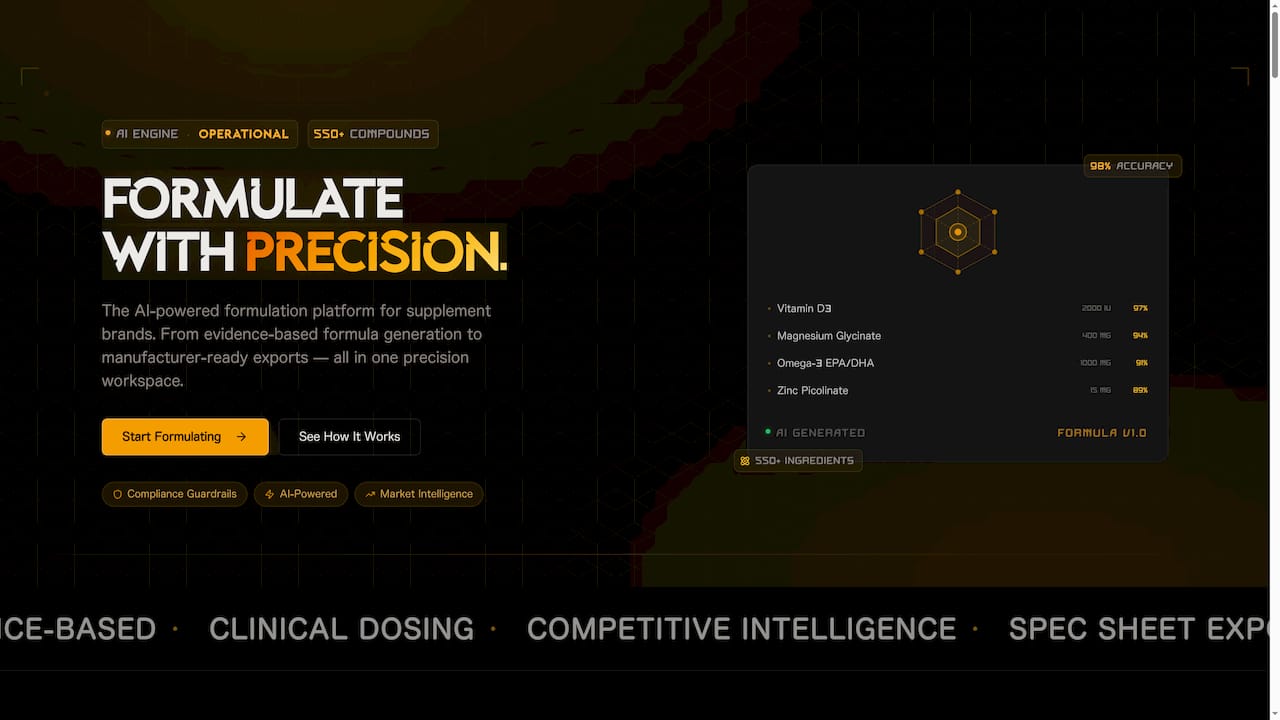
Formlypro is built for brands that cannot afford compliance surprises. The platform guides you through every phase of product development, from formulation through production, with compliance checkpoints embedded at each stage. Documentation is centralized, evidence is captured continuously, and labeling workflows are linked directly to formulation records so changes never slip through unreviewed. For brands navigating CGMP, FDA requirements, or ingredient control standards, Formlypro removes the guesswork. Explore the full formulation compliance platform and see how brands are building audit-ready programs from day one.
FAQ
What are the most common compliance pitfalls for brands?
The most common pitfalls are starting compliance efforts too late, maintaining incomplete documentation, and assigning compliance responsibility to a single department. Each of these errors creates audit exceptions that are difficult to remediate after the fact.
How do I avoid compliance failures in product manufacturing?
Update your CGMP procedures at least quarterly to reflect current FDA guidance, automate timestamped record creation at every production stage, and require certificates of analysis from all ingredient suppliers. These three steps address the majority of manufacturing compliance failures.
Why does fragmented ownership cause compliance failures?
When compliance sits with IT or Legal alone, other departments operate without accountability for their piece of the evidence chain. Auditors identify these gaps quickly because evidence from HR, operations, and product teams is missing or inconsistent.
What is a continuous evidence chain and why does it matter?
A continuous evidence chain is an unbroken record of compliance controls operating over the full audit period. Missing even one month of logs or access reviews can cause audit failure regardless of how strong the rest of the program is.
How does GDPR affect American brands?
GDPR applies to any organization that collects or processes data from EU residents, regardless of where the organization is headquartered. American brands selling to EU customers are subject to GDPR and face the same fines as European companies for non-compliance.