

TL;DR:
- Product quality improvement involves continuous, systemic efforts across every product life cycle stage to enhance performance, durability, and safety.
- Using frameworks like PDCA and DMAIC, alongside supplier audits, workforce training, and AI tools, helps sustain long-term quality gains.
Product quality improvement is defined as a continuous, systemic effort to raise performance, durability, reliability, and safety across every stage of a product's life cycle. The best ways to improve product quality combine structured methodologies, supplier discipline, workforce culture, and technology to deliver measurable gains. Regulatory frameworks now explicitly include cybersecurity and AI-related risks, raising the bar for what "quality" means. Platforms like Formlypro help brands manage compliance and formulation quality from ideation through production, making it easier to meet those rising standards without losing momentum.
1. What are the most effective continuous improvement frameworks?
The two frameworks that drive the most consistent results are PDCA and DMAIC. PDCA (Plan-Do-Check-Act) works best for daily quality operations, where teams need a repeatable loop to test small changes and lock in gains. DMAIC (Define, Measure, Analyze, Improve, Control) is built for complex problems that require data-driven root-cause analysis before any fix is attempted.

The key difference is scope. PDCA is fast and iterative. DMAIC is thorough and statistical. Choosing the wrong one wastes time: applying DMAIC to a simple packaging defect is overkill, while using PDCA on a systemic formulation failure will miss the root cause entirely.
Both frameworks share one non-negotiable rule: test changes on a small scale before full rollout. Pilot batch testing keeps errors low-cost and reversible. In 2026, AI-assisted analytics speed up the "Check" and "Analyze" phases by surfacing patterns in production data that human reviewers would miss.
Pro Tip: If your problem has a known cause, use PDCA. If you are still diagnosing the cause, start with DMAIC.
2. How can supply chain management boost product quality?
Around 70% of product quality issues trace back to supply chain weaknesses. That single statistic reframes where most quality investment should go. Supplier audits, traceability systems, and real-time monitoring are not optional extras; they are the foundation.
A structured supplier audit uses a 100-point weighted scorecard with the following breakdown: delivery (30%), defect rate (25%), responsiveness (20%), cost (15%), and sustainability (10%). A supplier whose defect rate exceeds 20% is a critical red flag requiring immediate corrective action or replacement. That threshold is not arbitrary. It reflects the point at which downstream rework costs exceed the cost of switching suppliers.
Multi-sourcing reduces single-supplier risk. Technology-enabled traceability, including blockchain-verified ingredient records and real-time shipment monitoring, gives quality teams visibility at every node. Collaboration with suppliers on root-cause analysis, rather than simply penalizing them, produces faster and more durable fixes.
Pro Tip: When a supplier's defect rate crosses 20%, do not wait for the next audit cycle. Trigger an immediate corrective action request and set a 30-day resolution deadline.
3. How workforce training reduces defects and variation
Employee training specifically focused on quality reduces defects and speeds up corrective actions. Training in defect recognition, root-cause analysis, and standard operating procedure (SOP) adherence lowers rework rates directly. The mechanism is straightforward: workers who can identify a defect at the source fix it before it compounds.
Cross-training across roles reduces variation caused by knowledge gaps. When only one operator knows a critical process step, any absence creates inconsistency. Cross-training distributes that knowledge and builds redundancy into the system.
Digital, version-controlled procedures replace paper-based instructions and eliminate the problem of operators working from outdated SOPs. When a procedure updates, every workstation sees the change immediately. That single shift from paper to digital cuts a common source of operator-to-operator variation.
Pro Tip: Use customer complaint data and return records as your training curriculum. Real defect examples are more memorable than hypothetical scenarios.
4. Building a quality-centered organizational culture
Quality improvement fails when organizations treat it as a project rather than a systemic strategy. Projects end. Strategies persist. The difference shows up in results: project-based quality pushes produce short-term gains that erode within months, while strategy-based approaches build compounding improvements year over year.
Leadership drives this distinction. When executives define quality as a core organizational purpose and build routines around it, such as weekly quality reviews, visual performance boards, and recognition programs for defect prevention, quality becomes part of how the business operates. When leadership treats quality as a department's problem, it stays one.
Cultural elements that sustain quality include:
- Weekly quality meetings with cross-functional attendance
- Visual boards displaying first-pass yield, return rates, and open corrective actions
- Recognition programs that reward defect prevention, not just defect detection
- Clear escalation paths so frontline workers can flag issues without fear
The embedding of quality as an organizational strategy requires leadership to define purpose, build systems, and model the behavior they expect. No amount of training or technology substitutes for that commitment.
5. How technology and data-driven tools accelerate quality gains
AI-enabled defect detection changes the economics of quality inspection. Vision AI and automated testing tools scan 100% of supplier goods and generate hourly statistical process control (SPC) charts, replacing sample-based inspection with full-coverage monitoring. The practical result is that defects caught in production cost a fraction of what they cost after delivery.
Integrating quality data with enterprise resource planning (ERP) systems gives teams real-time visibility across production lines. Predictive analytics flag process drift before it produces defects. Sentiment analysis on customer reviews surfaces quality signals that internal inspections miss entirely.
Poka-Yoke, the Japanese engineering principle of mistake-proofing, applies directly here. Automated error-proofing mechanisms, such as sensors that halt a line when a parameter goes out of range, prevent defects rather than catching them after the fact. Layered testing regimens combine incoming material checks, in-process inspections, and final audits to create overlapping quality gates.
Key metrics to track:
- First-pass yield (percentage of units passing inspection without rework)
- Return rate by SKU
- Mean time between failures (MTBF) for durable goods
- Supplier defect rate by scorecard period
Pro Tip: Pilot any new quality technology on one production line for 90 days before scaling. Measure first-pass yield before and after to confirm ROI before committing budget.
6. What regulatory and sustainability frameworks should businesses integrate?
Regulatory bodies now adopt risk-based product safety approaches that explicitly include cybersecurity and AI-related hazards. That shift means quality programs must account for software vulnerabilities and algorithmic risks, not just physical defects. Businesses that align quality planning with these frameworks avoid costly recalls and market delays.
The Safe and Sustainable by Design (SSbD) framework is a voluntary European approach that embeds safety and sustainability into chemical and materials innovation from the earliest design stage. SSbD accelerates market entry and reduces compliance costs by resolving safety and environmental concerns before they become regulatory barriers. Businesses that adopt SSbD principles early gain a measurable advantage over competitors who retrofit compliance at the end of development.
Practical steps for integrating regulatory and sustainability quality considerations include:
- Map your product against current and emerging regulatory requirements at the start of each development cycle
- Use a regulatory compliance checklist to track obligations across markets
- Embed sustainability metrics, such as carbon footprint and recyclability, into your product quality scorecard
- Review industry compliance standards annually, as frameworks are updating faster than most quality programs can track
- Treat compliance documentation as a living system, not a one-time submission
Sustainability is no longer separate from quality. Customers, retailers, and regulators increasingly treat environmental performance as a product quality attribute. Brands that build sustainability into their quality standards from day one avoid the cost and reputational risk of catching up later.
7. Using root cause analysis to fix quality problems permanently
Root cause analysis (RCA) is the practice of tracing a defect back to its origin rather than treating its symptoms. The two most widely used RCA tools are the 5 Whys and the fishbone (Ishikawa) diagram. The 5 Whys works by asking "why" repeatedly until the systemic cause surfaces. The fishbone diagram maps potential causes across categories such as materials, methods, machines, and people.
The critical discipline is documentation. Every corrective action must be recorded, assigned an owner, and given a deadline. Effectiveness checks, conducted after the fix is implemented, confirm that the root cause is resolved and has not migrated elsewhere in the process. Without that follow-through, the same defect reappears under a different name.
RCA integrates naturally with both PDCA and DMAIC. In PDCA, RCA happens in the "Plan" phase. In DMAIC, it is the entire "Analyze" phase. Healthcare organizations embedding system-wide quality commitment have found that RCA disciplines, when applied consistently, reduce recurring defects more reliably than any inspection technology alone.
8. Standardizing processes to reduce variation
Process variation is the enemy of consistent quality. Two operators running the same process with different techniques produce different outputs. Standardization eliminates that gap by defining the one best method and making it the only method.
Standard work documents capture the correct sequence, timing, and parameters for every critical process step. They are not bureaucratic paperwork. They are the institutional memory of your best performance. When a new operator joins, standard work transfers that knowledge without relying on informal mentorship.
Measurement system analysis (MSA) validates that your inspection tools and methods are actually measuring what you think they are. A gauge that reads inconsistently introduces variation into your quality data, making it impossible to distinguish real process drift from measurement noise. Calibrating measurement systems is a prerequisite for any data-driven quality program.
Key Takeaways
Consistent product quality requires coordinating people, processes, and technology through embedded organizational strategy rather than isolated fixes.
| Point | Details |
|---|---|
| Supply chain is the primary risk | Around 70% of quality issues originate in the supply chain; audit suppliers with a weighted scorecard. |
| Framework choice matters | Use PDCA for daily improvements and DMAIC for complex, data-driven root-cause problems. |
| Culture outlasts projects | Quality embedded as organizational strategy produces compounding gains; project-based pushes erode quickly. |
| Technology amplifies, not replaces | AI inspection and ERP integration accelerate quality gains only when processes and training are already sound. |
| Compliance is a quality input | Risk-based regulatory frameworks, including AI and cybersecurity requirements, must be built into quality planning from the start. |
What I have learned about making quality last
Quality programs fail in a predictable way. A business identifies a defect spike, launches a quality initiative, hits its targets, declares success, and then quietly dismantles the infrastructure that produced those results. Six months later, the defect rate climbs back to where it started.
The organizations I have seen sustain quality gains share one trait: they treat quality as the operating system of the business, not a feature. Leadership talks about first-pass yield the same way they talk about revenue. Quality metrics appear in board presentations. Frontline workers have a direct line to escalate issues without bureaucratic friction.
The technology piece is real but overrated as a starting point. Vision AI and predictive analytics are powerful. They are also expensive to implement and easy to misread without a trained team interpreting the data. The businesses that get the most from quality technology are the ones that already have strong process discipline and a culture that acts on data. The technology then multiplies what is already working.
My honest advice: before you buy any quality software or inspection system, spend 90 days documenting your current processes, training your team on defect recognition, and running weekly quality reviews. You will find that a significant portion of your defect rate disappears before you spend a dollar on technology. Then the technology investment lands on solid ground.
— Ben
Formlypro and the quality-compliance connection
Building quality into a product from the start is far less costly than correcting it after launch. Formlypro is built around that principle.
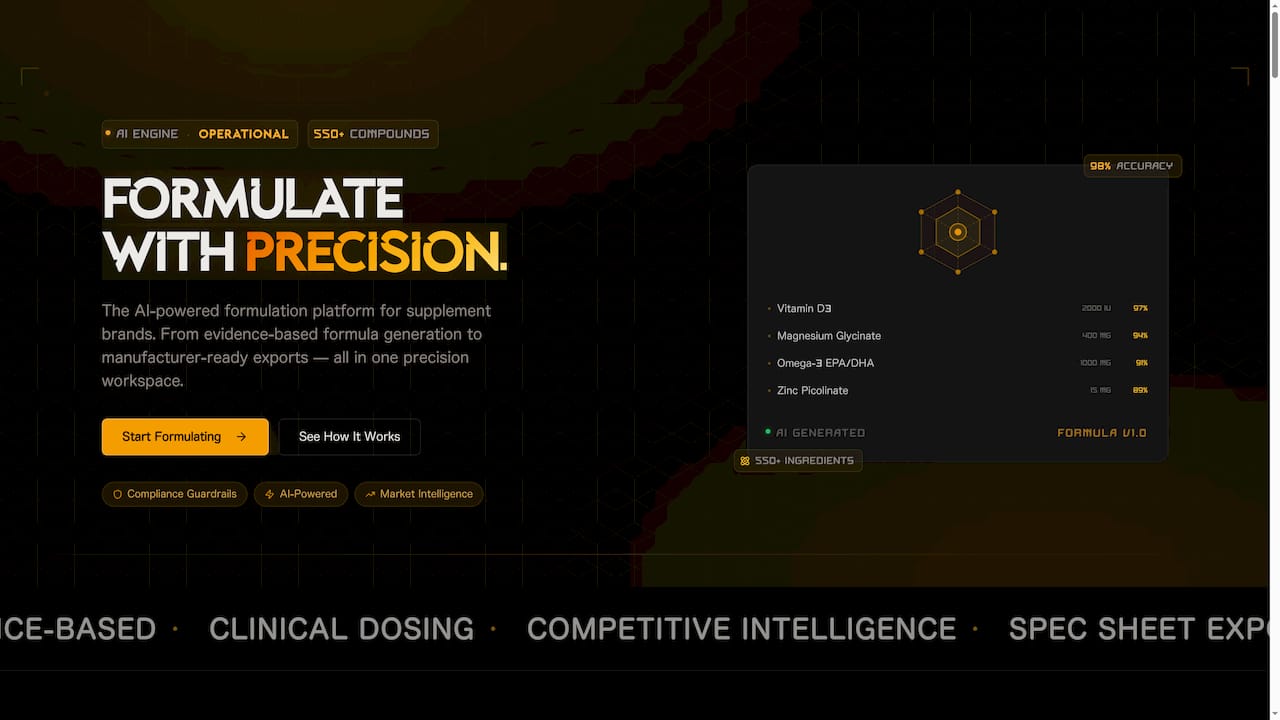
Formlypro's platform guides brands through an 8-phase product development process, from ideation and formulation through compliance, prototyping, and production. The compliance module tracks regulatory requirements across markets, flags gaps before they become recalls, and keeps documentation current as frameworks evolve. The formulation tools draw on market and competitive analytics so your product is built to a quality standard the market actually rewards. For brands that want packaging to match product quality, the integrated AI Mockup designer handles custom packaging without a separate agency. Visit Formlypro to see how the platform supports quality at every phase of development.
FAQ
What are the most effective ways to improve product quality?
The most effective methods combine continuous improvement frameworks like PDCA and DMAIC, rigorous supplier audits, employee training in defect recognition, and AI-enabled inspection tools. Quality embedded as an organizational strategy, rather than a one-off project, produces the most durable results.
Why do most quality improvement efforts fail?
Most quality programs fail because organizations treat quality as a project with a defined end date rather than a systemic strategy. Without leadership embedding quality into routines, metrics, and culture, gains erode within months of the initiative closing.
How does supply chain management affect product quality?
Around 70% of product quality issues trace back to supply chain weaknesses. Supplier audits using a weighted scorecard, real-time traceability, and multi-sourcing strategies are the primary controls for reducing supply-chain-driven defects.
What is the Safe and Sustainable by Design (SSbD) framework?
SSbD is a voluntary European framework that embeds safety and sustainability into product and materials design from the earliest development stage. It reduces compliance costs and accelerates market entry by resolving regulatory concerns before they become barriers.
How can small businesses start improving product quality without large budgets?
Start with process documentation, digital SOPs, and weekly quality reviews before investing in technology. Training staff on defect recognition and root-cause analysis using the 5 Whys method delivers measurable defect reduction at minimal cost.