

TL;DR:
- Product development in 2026 is an AI-augmented, iterative process focused on validation, agility, and structured discovery. Teams must prioritize discovery, choose appropriate MVP tiers, and implement dual-track agile to ensure rapid, quality outcomes. Success relies on disciplined process, clean codebases, and human oversight in leveraging AI's potential effectively.
Product development in 2026 is a disciplined, AI-augmented process built on iterative validation, agile delivery, and structured discovery. The modern product development life cycle (PDLC) has been reshaped by tools like GitHub Copilot, Figma AI, and agentic AI workflows that compress timelines without sacrificing quality. Whether you are launching a physical product, a SaaS platform, or a consumer brand, the same core principle applies: validate fast, build lean, and iterate with data. This guide covers every stage of the 2026 PDLC, from MVP cost tiers to dual-track agile, so you can move with confidence.
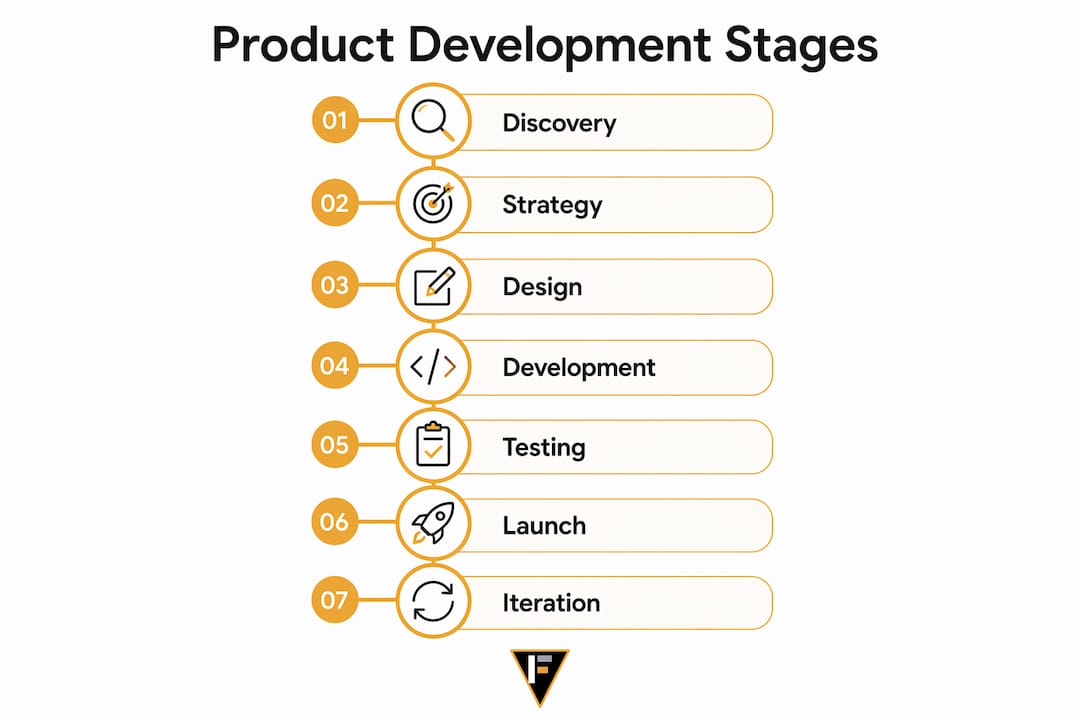
What are the seven stages of the modern product development life cycle?
The 2026 PDLC consists of seven iterative stages reshaped by AI tools, agile delivery, and cloud-native infrastructure. Each stage feeds directly into the next, and skipping any one of them is the fastest route to a costly rebuild.
-
Discovery and ideation. This is where you validate that a real problem exists before writing a single line of code or mixing a single ingredient. AI research tools like ChatGPT-5 and Gemini Ultra accelerate competitive analysis, user persona mapping, and market sizing in hours rather than weeks.
-
Strategy and planning. Once the problem is confirmed, you define scope, success metrics, and delivery milestones. AI-assisted project management tools like Jira, Linear, and Notion AI help teams generate sprint structures and flag scope creep before it compounds.
-
UI/UX design. Tools like Figma AI, Framer, and Uizard generate wireframes and interactive prototypes at speed. Human designers still own the judgment layer, deciding which AI-generated direction actually serves the user.
-
Development. Two-week sprints remain the standard delivery cadence. GitHub Copilot and similar AI code assistants handle boilerplate and repetitive logic, freeing engineers to focus on architecture decisions that AI cannot reliably make.
-
Testing and QA. Automated, AI-driven testing suites catch regressions continuously rather than at release gates. AI-assisted QA reduces bugs by 60% and speeds releases by 40%, which means fewer emergency patches and more predictable ship dates.
-
Launch and deployment. CI/CD pipelines, blue-green releases, and soft launches to segmented user groups reduce go-live risk. A failed launch is rarely a product problem. It is almost always a deployment or communication failure.
-
Post-launch growth and iteration. Tools like Mixpanel, Amplitude, and Hotjar combined with AI synthesis of user feedback enable fast, evidence-backed feature prioritization. This stage is where good products become great ones.
Pro Tip: Map your current process against these seven stages before adopting any new tool. Most teams discover they are skipping discovery or compressing testing, not that they need more software.
How is AI and agentic development reshaping the product development process in 2026?
Agentic product development compresses discovery and design into a structured 12-week program with strong context layers and review gates. This is not simply using AI to write code faster. It is a fundamentally different operating model where AI agents execute against structured tickets, acceptance criteria, and versioned context artifacts that flow from discovery outputs directly to engineering.

The single biggest bottleneck in agentic workflows is not the AI itself. It is the quality of the context fed into it. Teams that invest in clean, modular codebases, documented design systems, and consistent naming conventions get reliable AI outputs. Teams that skip this groundwork get what practitioners call "AI slop," plausible-looking code or copy that fails under real conditions.
The review gate model addresses this directly:
- An AI agent writes the first draft of code, copy, or a test case.
- A second AI reviewer checks it against defined standards.
- A human engineer or product lead makes the final call before anything merges.
This three-layer validation catches the majority of AI errors without slowing delivery to the pace of purely manual work. The operational bottleneck is the quality of context input, which means your documentation and architecture decisions are now a direct competitive advantage.
"AI tools accelerate development by handling repetitive tasks but leave decision-making and validation to product teams." The teams winning in 2026 are not the ones using the most AI. They are the ones using AI on the right tasks while keeping humans in control of judgment calls.
Pro Tip: Before onboarding any AI coding assistant, audit your codebase for modularity and your design files for consistency. A messy foundation multiplies AI errors rather than reducing them.
What are the MVP tiers and cost considerations in 2026?
MVP development costs and timelines vary significantly by tier, and choosing the wrong tier for your validation stage is one of the most expensive mistakes a founder can make.
| MVP Tier | Timeline | Estimated Cost | Best For |
|---|---|---|---|
| No-code or vibe-coded prototype | 1 to 4 weeks | $1K+ | Concept validation, early user feedback |
| Simple custom MVP | 8 to 12 weeks | $15K to $30K | Functional product with core user flows |
| AI-powered MVP with model integration | 16 to 24 weeks | $15K to $250K+ | AI-native features, regulated industries |
The cost ranges above assume clean requirements. Backend complexity hidden beneath simple frontends is the most common cause of timeline and budget overruns. A landing page that looks like a two-week build can require months of backend work if it connects to payment systems, third-party APIs, or compliance frameworks.
Hidden ongoing costs add another 15 to 25% annually on top of build costs, covering server hosting, third-party API fees, security patches, and the post-launch iteration that every real product requires. Budget for these before you commit to a build quote.
Before you spend anything on development, run these three pre-build validation steps:
- Problem interviews. Talk to at least 20 people who represent your target user. Confirm the problem is real, frequent, and worth paying to solve.
- Landing page test. Build a one-page site describing the product and measure sign-up or pre-order intent before the product exists.
- Concierge MVP. Deliver the product's core value manually to a small group of real users. If they will not pay for the manual version, they will not pay for the automated one.
Pro Tip: AI-powered MVPs are not necessarily cheaper or faster than custom builds. Specialized QA, data pipeline complexity, and model fine-tuning add time and cost that standard MVP estimates do not include. Get explicit backend scoping before signing any contract.
You can learn more about reducing launch risk through structured concept validation before committing to a full build.
How does dual-track agile improve product development outcomes in 2026?
Dual-track agile runs discovery and delivery in parallel, with discovery staying one to two sprints ahead of delivery at all times. This structure solves two of the most common product failures: the build trap, where teams ship features nobody asked for, and analysis paralysis, where discovery never converts into shipped product.
The two tracks operate simultaneously but with distinct responsibilities:
Discovery track activities:
- User interviews and usability tests
- Prototype creation and rapid testing
- Technical spikes to assess feasibility
- Backlog refinement with evidence-backed acceptance criteria
Delivery track activities:
- Sprint planning from validated backlog items
- Engineering, code review, and automated testing
- Staging deployments and production releases
- Retrospectives to improve delivery process
Discovery must stay one to two sprints ahead of delivery to avoid backlog starvation. When discovery falls behind, engineers pull unvalidated work into sprints, which is exactly the build trap the model is designed to prevent.
| Role | Primary Track | Shared Responsibility |
|---|---|---|
| Product manager | Discovery | Backlog prioritization |
| UX researcher | Discovery | Usability validation |
| Engineer | Delivery | Technical feasibility spikes |
| QA engineer | Delivery | Acceptance criteria definition |
The dual-track model balances risk and delivery speed by giving engineering a steady pipeline of high-confidence work. Teams that protect discovery time and maintain separate backlogs for each track consistently ship faster and with fewer post-launch pivots than those running a single merged backlog.
Pro Tip: Treat discovery time as non-negotiable in sprint planning. The moment discovery gets deprioritized to meet a delivery deadline, you are borrowing against future sprint quality.
For a broader view of how AI is reshaping iteration speed across product categories, the patterns in physical and digital product development are converging faster than most teams expect.
Key takeaways
Successful product development in 2026 requires a structured, AI-augmented PDLC, validated MVP tiers, and a dual-track agile model that keeps discovery ahead of delivery.
| Point | Details |
|---|---|
| Seven-stage PDLC is the foundation | Each stage from discovery to post-launch iteration must be completed in sequence to avoid costly rebuilds. |
| Context quality drives AI output | Clean, modular codebases and documented design systems are prerequisites for reliable AI-assisted development. |
| MVP tier selection determines cost | Match your MVP type to your validation stage; hidden backend complexity is the leading cause of budget overruns. |
| Discovery must lead delivery | In dual-track agile, discovery stays one to two sprints ahead to prevent backlog starvation and unvalidated builds. |
| Post-launch iteration is non-negotiable | Tools like Mixpanel and Amplitude combined with AI feedback synthesis keep products aligned with real user needs. |
Why I stopped treating AI as a shortcut in product development
I have worked with enough product teams to know that the ones who treat AI as a shortcut almost always pay for it in the QA phase. The teams that treat AI as a force multiplier for disciplined process, not a replacement for it, consistently ship better products faster.
The most counterintuitive lesson I have learned is that the more AI you want to use, the more human rigor you need upfront. Clean architecture, thorough discovery, and documented conventions are not optional overhead. They are the infrastructure that makes AI useful. Skip them and your AI assistant becomes a liability, generating plausible-sounding code that breaks in production or copy that sounds right but misses the user's actual need.
The other trap I see constantly is teams measuring AI success by speed alone. Speed matters, but product analytics and data-driven decisions are what separate products that grow from products that plateau after launch. Shipping fast to the wrong target is not a win.
My honest recommendation for 2026: run a genuine dual-track process, protect your discovery time fiercely, and treat every AI output as a first draft that requires human review. The teams doing this are not just shipping faster. They are shipping products that users actually keep using.
— Ben
How Formlypro supports your product development workflow
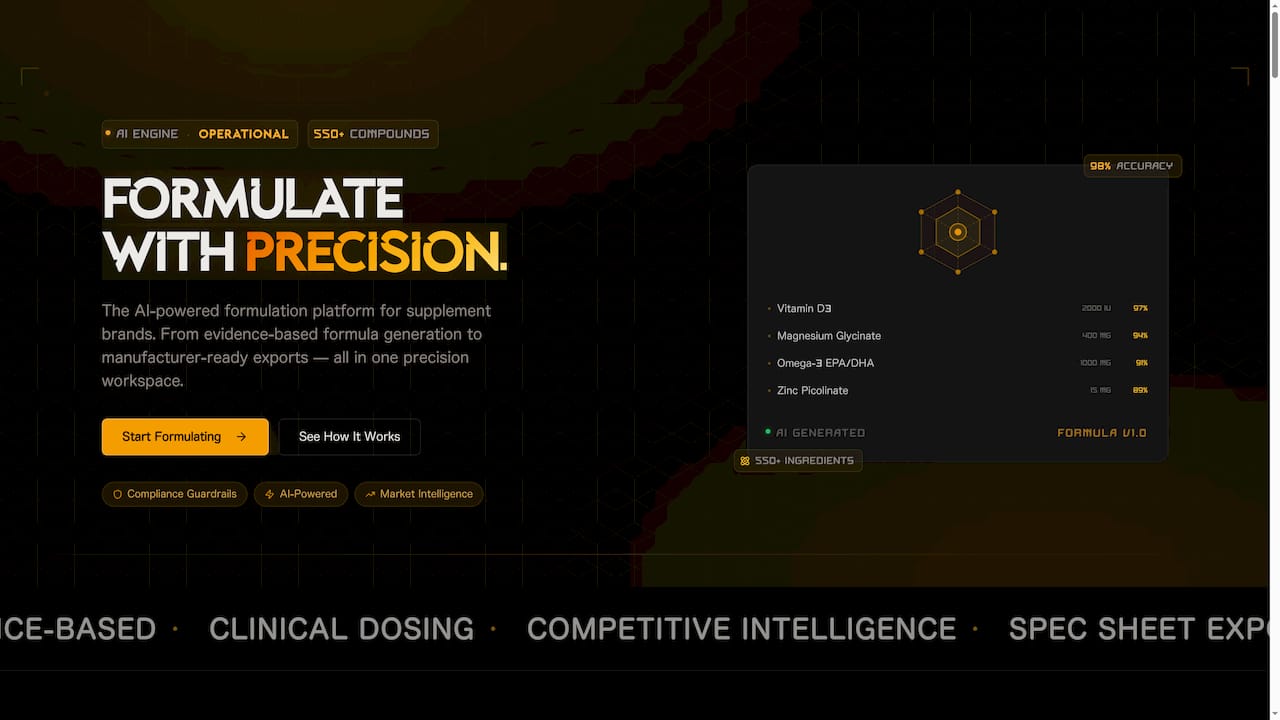
Formlypro is built for exactly the kind of structured, evidence-backed product development this guide describes. The platform's 8-phase plan takes your product from ideation through formulation, prototyping, compliance, and production, with full market and competitive analytics at every stage. The built-in competitor analysis shows you which products are selling and what formulations those brands are using, so your discovery phase starts with real market intelligence rather than assumptions. The AI Mockup designer in the packaging section lets you create custom packaging without a separate design agency. If you are building a physical product or consumer brand in 2026, explore Formlypro's full platform to see how it maps to the PDLC stages covered in this guide.
FAQ
What is the product development life cycle in 2026?
The 2026 PDLC is a seven-stage iterative process covering discovery, strategy, design, development, testing, launch, and post-launch growth. Each stage integrates AI tools and agile delivery methods to reduce time to market and improve product quality.
How much does it cost to build an MVP in 2026?
MVP costs range from $1K for no-code prototypes to $250K or more for AI-powered or regulated-industry builds. Hidden ongoing costs for hosting, APIs, and maintenance add 15 to 25% annually on top of the initial build cost.
What is dual-track agile and why does it matter?
Dual-track agile runs discovery and delivery simultaneously, with discovery staying one to two sprints ahead of engineering. It prevents teams from building unvalidated features while keeping a steady pipeline of high-confidence work for engineers.
How does agentic AI development work in practice?
Agentic development uses structured context artifacts and acceptance criteria that AI agents execute against, with a three-layer review process: agent output, AI review, then human validation. The 12-week agentic program compresses traditional discovery and design timelines significantly.
What is the biggest MVP development mistake to avoid?
Ignoring backend complexity hidden beneath simple frontends is the most common cause of timeline and budget overruns. Always scope backend requirements explicitly before committing to any build quote or delivery timeline.