

TL;DR:
- Excipient selection greatly influences drug stability, bioavailability, and manufacturing success throughout product development. Variability in physical properties and compatibility issues can cause batch failures, regulatory challenges, and product recalls if not properly managed. Combining in silico modeling with laboratory testing ensures reliable compatibility data, supporting robust formulation decisions from the start.
Excipient selection is the strategic process of choosing functional ingredients that determine whether a pharmaceutical formulation succeeds or fails at every stage of development. Why excipient selection matters becomes clear the moment a promising API degrades on the shelf, fails dissolution testing, or triggers a regulatory hold. Excipients influence chemical stability, drug release, bioavailability, and manufacturability. Regulatory bodies including ICH and the major pharmacopeias have long recognized that excipient compatibility is not a secondary concern. It is a primary driver of product quality and therapeutic outcome.
Why excipient selection matters for drug stability and efficacy
Excipients directly shape the microenvironment surrounding an active pharmaceutical ingredient (API), and that microenvironment controls degradation. Moisture-absorbing excipients accelerate hydrolysis. Reducing sugars like lactose trigger Maillard reactions with primary amine APIs. Peroxide-containing excipients drive oxidative degradation. Each of these pathways reduces potency and can generate toxic impurities.
The excipient impact on formulation extends beyond chemistry. Physical properties of excipients affect dissolution rate, drug release profile, and ultimately bioavailability. A poorly chosen binder can slow disintegration. A hydrophobic lubricant used in excess can coat particles and suppress dissolution. These effects translate directly into reduced therapeutic effectiveness.
Formulators must treat excipients as active formulation enablers, not inert fillers. The role of excipients in drugs includes modifying the API's physical and chemical environment throughout the product's shelf life. That responsibility demands deliberate, evidence-based selection from the earliest stages of development.
- Hydrolysis risk: Excipients with high moisture content or hygroscopicity accelerate API hydrolysis, especially for ester and amide bonds.
- Oxidative degradation: Polyethylene glycols and polysorbates carry residual peroxides that oxidize sensitive APIs.
- Maillard reactions: Reducing sugars react with amine-containing APIs, forming colored degradation products and reducing assay values.
- Acid-base incompatibilities: Excipient pH affects API ionization, solubility, and degradation rate in solid dosage forms.
- Dissolution suppression: Excess hydrophobic lubricants like magnesium stearate reduce wettability and slow drug release.
Pro Tip: Run accelerated stress testing at 40°C/75% relative humidity for four weeks during preformulation. This single step identifies the most reactive excipient combinations before you commit to a formulation design.
How excipient variability affects manufacturing and quality control
Excipient variability is one of the most underestimated risks in pharmaceutical manufacturing. Two batches of microcrystalline cellulose from the same supplier can differ in particle size distribution, surface area, and moisture content. These differences change compressibility, flow, and tablet hardness without any change in the chemical identity confirmed by a standard monograph.
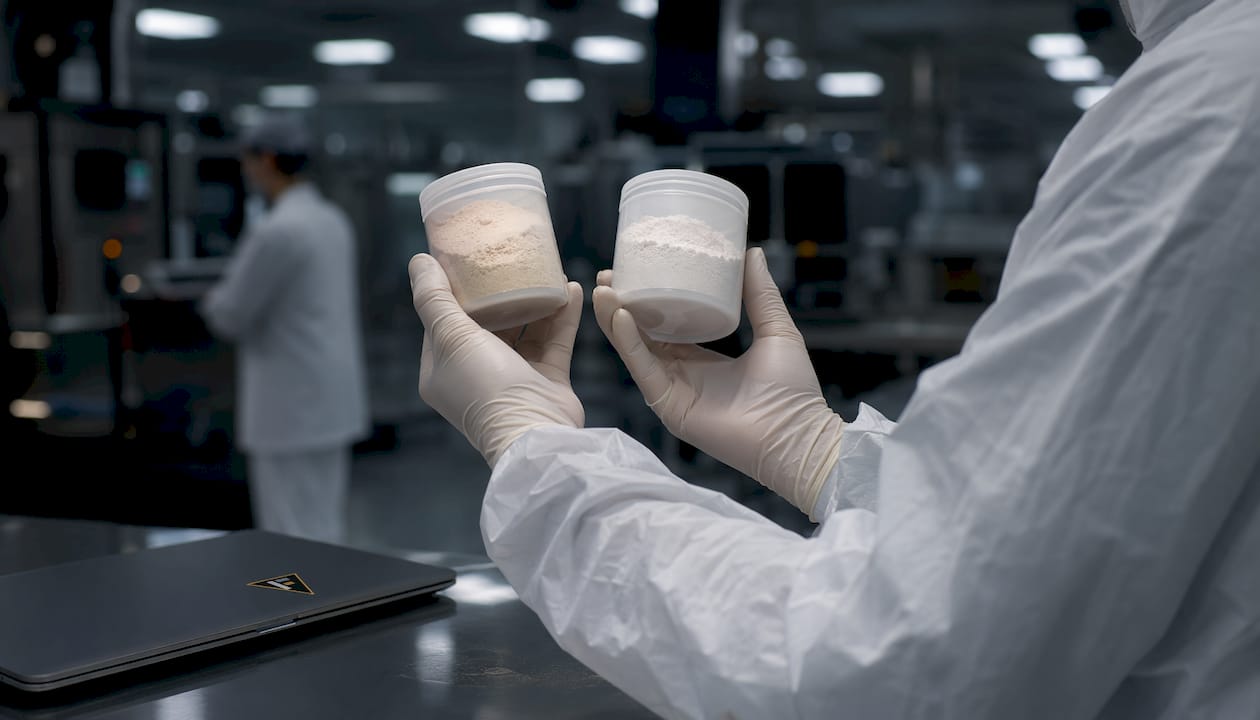
Non-compendial parameters like particle morphology, bulk density, and lot-to-lot pH variability drive manufacturing inconsistency even when the excipient passes all pharmacopeial tests. This is the hidden driver of unexplained batch failures. A formulation that performs perfectly in development can fail at scale simply because the excipient lot has a different particle size distribution.
Regulatory frameworks increasingly require formulators to address this through Quality by Design (QbD). QbD demands that you identify critical material attributes (CMAs) for each excipient and define acceptable ranges. Excipient variability that falls outside those ranges becomes a documented risk, not a surprise.
Excipient recalls traced to poor dissolution and quality failures demonstrate that uncontrolled physical properties carry the same commercial and compliance risk as chemical impurities. Variability in excipient batches has triggered real-world product withdrawals, making batch-level characterization a non-negotiable part of quality assurance.
Managing variability requires more than supplier qualification. The following steps reduce manufacturing risk from excipient inconsistency:
- Define CMAs early. Identify which physical and chemical attributes of each excipient affect your critical quality attributes (CQAs) before scale-up.
- Require lot-level certificates of analysis. Standard pharmacopeial data is not enough. Request particle size, morphology, and moisture data with each lot.
- Build in-process controls. Monitor blend uniformity, compressibility, and disintegration time as real-time indicators of excipient performance.
- Qualify multiple suppliers. Single-source excipients create supply and quality risk. Dual qualification with comparative testing reduces both.
What advanced screening methods reveal about excipient compatibility
Modern preformulation has moved well beyond binary stress testing. A hybrid preformulation strategy combining in silico computational modeling with mandatory in vitro experimental validation now represents the most reliable approach to excipient compatibility assessment. The logic is sequential: use AI models to rank excipient candidates by predicted interaction risk, then confirm findings with physical testing.
In silico tools predict drug-excipient interactions based on molecular descriptors, functional group reactivity, and known degradation pathways. They narrow a field of dozens of excipient candidates to a manageable shortlist. This saves time and material at the earliest stage of development. The limitation is that computational models cannot fully replicate the complexity of a real solid-state formulation, which is why in vitro confirmation is mandatory, not optional.
Experimental methods used in compatibility confirmation include differential scanning calorimetry (DSC), attenuated total reflectance Fourier transform infrared spectroscopy (ATR-FTIR), and isothermal stress testing (IST). Each method detects a different type of interaction. DSC identifies thermal events suggesting physical or chemical incompatibility. ATR-FTIR detects new chemical bonds or functional group shifts. IST measures actual degradation under controlled conditions. Using all three together gives you a complete picture.
Early compatibility screening prevents the most expensive formulation failures. Catching an incompatibility at the preformulation stage costs a fraction of what it costs to discover it during stability studies or, worse, after a regulatory submission.
| Screening method | What it detects | Stage of use |
|---|---|---|
| In silico AI modeling | Predicted interaction risk from molecular data | Initial candidate ranking |
| DSC | Thermal incompatibilities and physical changes | Early in vitro confirmation |
| ATR-FTIR | Chemical bond changes and functional group shifts | Early in vitro confirmation |
| Isothermal stress testing | Actual degradation under controlled conditions | Confirmatory validation |
Pro Tip: Never rely on in silico results alone. Treat computational screening as a filter, not a final answer. Mandatory in vitro testing with DSC, ATR-FTIR, and IST is what converts a prediction into a defensible formulation decision.
What regulatory requirements mean for excipient selection
Excipients face a fundamentally different regulatory environment than APIs. APIs have harmonized international standards, defined impurity limits, and established approval pathways. Excipients do not. Over 1,000 excipients exist in pharmaceutical use, but few are manufactured specifically for pharmaceutical applications, and no single global framework governs their quality.
This gap places the burden of quality assurance directly on the manufacturer. You cannot assume that a pharmacopeial monograph covers all attributes relevant to your formulation. Monographs define chemical identity and purity. They do not define particle size, surface area, or the physical properties that determine how an excipient performs in your specific product.
Co-processed excipients add another layer of complexity. These materials combine two or more excipients at the particle level to improve functionality. They lack official pharmacopeial monographs, which means you must generate extensive characterization data to support regulatory submissions. That data requirement increases development time and cost.
Understanding pharma regulatory requirements for excipients is not optional. Regulatory submissions must include compatibility data demonstrating that each excipient is suitable for its intended function and does not compromise API integrity.
Key regulatory obligations for excipient selection include:
- Suitability documentation: Demonstrate that each excipient is appropriate for its route of administration and does not introduce unacceptable impurities.
- Compatibility data: Include drug-excipient compatibility studies in your regulatory dossier, aligned with ICH Q8 and Q9 guidelines.
- Supplier qualification: Maintain audit records and quality agreements with excipient suppliers as part of your pharmaceutical quality system.
- Co-processed excipient characterization: Generate full physical and chemical profiles when using materials without pharmacopeial monographs.
Best practices for selecting excipients effectively
Function-driven excipient selection produces better outcomes than habit-driven selection. Choosing microcrystalline cellulose because it worked in your last product is not a formulation strategy. Every new API brings different solubility, stability, and processing requirements that demand a fresh evaluation.
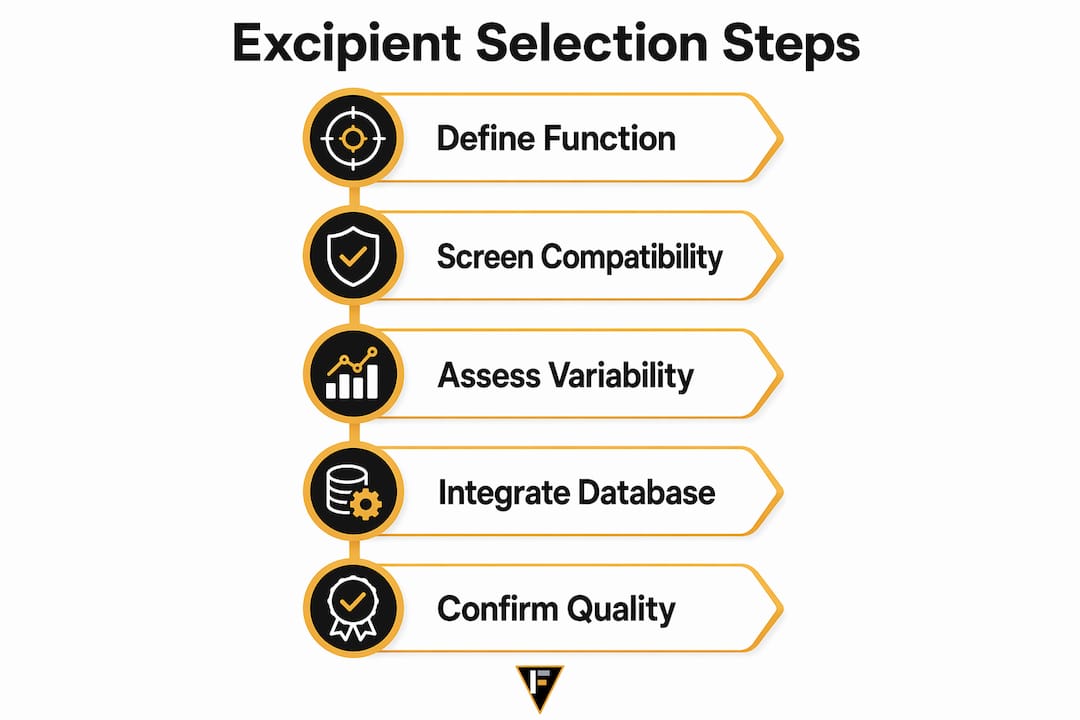
Integrate compatibility screening into your development workflow from day one. Early-stage incompatibility screening using accelerated stress testing is the single most cost-effective step you can take to protect API potency and avoid late-stage failures. Waiting until stability studies to discover an incompatibility adds months and significant cost to your timeline.
Engage excipient suppliers as technical partners, not commodity vendors. Suppliers with pharmaceutical-grade manufacturing programs can provide critical attribute data, lot-level variability reports, and technical support for novel applications. That information directly supports your QbD documentation and regulatory submissions.
Consider end-product requirements from the start. A tablet designed for rapid disintegration has different excipient needs than a modified-release capsule. Co-processed excipients like StarLac are optimized for rapid disintegration, while others like MicroceLac 100 provide mechanical strength but may fail disintegration tests at higher API loads. Matching excipient function to product performance targets prevents reformulation cycles.
- Start with function, not familiarity. Define what each excipient must do before selecting a candidate.
- Screen early with hybrid methods. Combine in silico prediction with DSC, ATR-FTIR, and IST before committing to a formulation design.
- Document everything. Build a compatibility database that supports both internal decisions and regulatory submissions.
- Qualify excipient lots, not just suppliers. Lot-level variability data protects manufacturing consistency at scale.
- Align with bioavailability optimization goals. Excipient choices affect dissolution and absorption. Build that connection into your selection criteria from the start.
Pro Tip: Build a formulation-specific excipient database as you develop each product. Tracking compatibility outcomes, lot variability, and supplier data across projects gives you a compounding advantage that speeds up every future development cycle.
Key Takeaways
Excipient selection is a primary determinant of formulation stability, bioavailability, manufacturing consistency, and regulatory approval, and treating it as a secondary decision is the most common and costly mistake in pharmaceutical development.
| Point | Details |
|---|---|
| Excipients are not inert | They actively shape API stability, dissolution, and bioavailability throughout shelf life. |
| Variability drives failures | Non-compendial physical properties like particle size cause batch failures even when monograph specs pass. |
| Hybrid screening is the standard | Combining in silico AI models with DSC, ATR-FTIR, and IST gives the most reliable compatibility data. |
| Regulatory burden falls on you | No harmonized global framework governs excipients; manufacturers must generate and document suitability independently. |
| Function-driven selection wins | Matching excipient properties to specific product performance targets prevents costly reformulation cycles. |
The most undervalued decision in pharmaceutical development
Most formulation failures I have seen trace back to excipient decisions made too early, with too little data, and too much reliance on what worked last time. The industry has spent decades refining API characterization while treating excipient selection as a checkbox. That imbalance is where products go wrong.
The microenvironment argument is the one that changed how I think about this. An API sitting inside a tablet is not isolated. It is surrounded by excipients that contribute moisture, reactive functional groups, pH shifts, and physical stress. Ignoring that environment while obsessing over API purity is like controlling the recipe while ignoring the oven. The result is predictable.
What I find genuinely useful in current practice is the hybrid screening approach. Running in silico predictions first narrows the field without burning material or time. Then confirming with DSC and ATR-FTIR gives you physical evidence you can put in a regulatory dossier. That sequence is not just efficient. It is defensible. Regulatory reviewers respond to systematic, documented decision-making.
The harder shift is cultural. Excipient selection needs to be treated as a scientific discipline with its own rigor, not a procurement decision. The raw material quality conversation and the excipient selection conversation are the same conversation. Teams that connect those dots earlier build better products faster.
— Ben
Formlypro supports smarter excipient decisions from day one
Formulation development moves faster when your tools match the complexity of the decisions you are making. Excipient selection requires compatibility data, stability predictions, regulatory documentation, and market context, all at once.
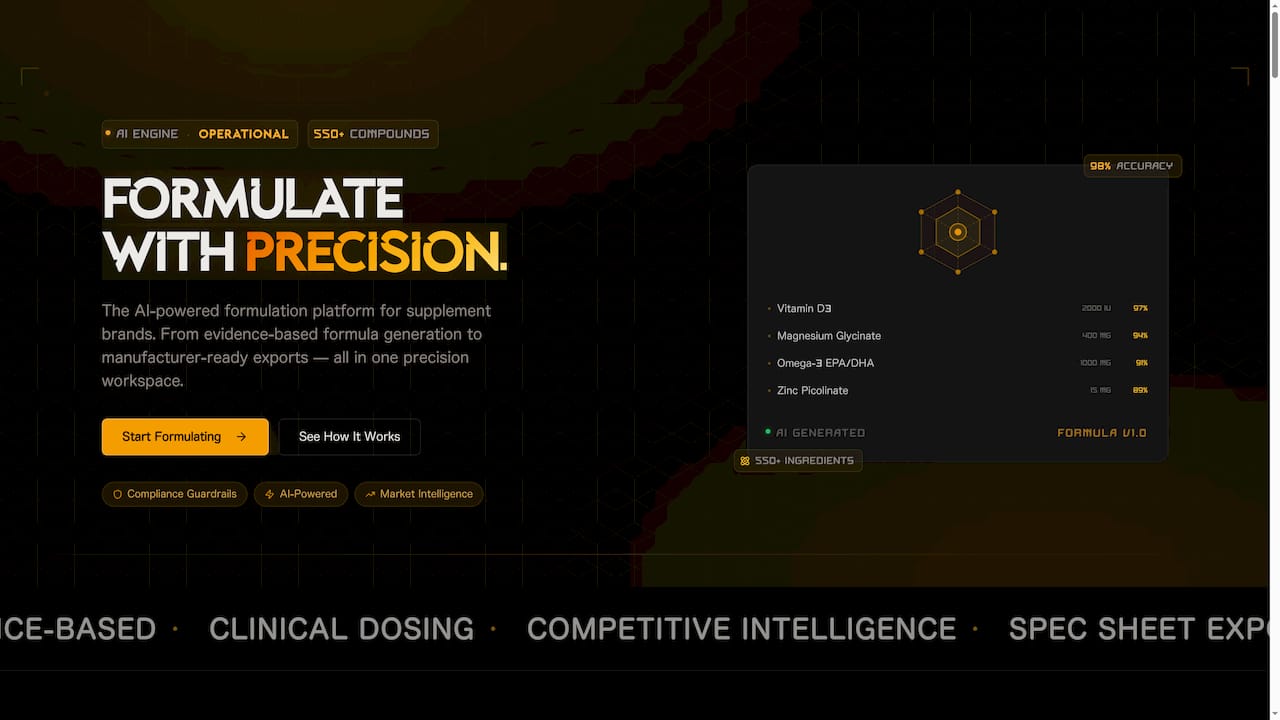
Formlypro brings those capabilities together in one platform. The formulation platform guides formulators through an 8-phase development process that covers preformulation screening, compatibility assessment, stability planning, and compliance documentation. You get market research and competitive analytics alongside your formulation workflow, so your excipient choices are informed by both science and market positioning. The packaging design tools and AI mockup designer mean you can take a product from excipient selection all the way to shelf-ready presentation without switching platforms.
FAQ
What is excipient selection in pharmaceutical formulation?
Excipient selection is the process of identifying and qualifying functional ingredients that support API stability, drug release, and manufacturability in a dosage form. It is governed by compatibility data, regulatory requirements, and product performance targets.
How do excipients affect drug stability?
Excipients affect drug stability by modifying the API's microenvironment through moisture, pH, reactive functional groups, and physical interactions. Incompatible excipients accelerate hydrolysis, oxidation, and Maillard degradation, reducing potency and generating impurities.
What methods are used to screen excipient compatibility?
The most reliable approach combines in silico AI modeling for initial candidate ranking with in vitro confirmation using DSC, ATR-FTIR, and isothermal stress testing. This hybrid screening approach reduces formulation risk and produces regulatory-grade compatibility data.
Why do excipients lack the same regulatory oversight as APIs?
Excipients do not have a harmonized international regulatory framework equivalent to the one governing APIs. Manufacturers must independently qualify excipient quality and suitability, and pharmacopeial monographs often do not cover the physical attributes most relevant to formulation performance.
How does excipient variability cause manufacturing problems?
Lot-to-lot differences in particle size, morphology, and moisture content change compressibility, flow, and dissolution even when chemical identity tests pass. Excipient variability has caused real product recalls, making batch-level physical characterization a core quality control requirement.