

TL;DR:
- Brand research systematically studies consumer perceptions to inform strategic decisions and reduce campaign risks.
- AI accelerates research timelines, enabling frequent testing and continuous learning, which enhances brand development.
Brand research is defined as the systematic study of how consumers perceive, experience, and emotionally connect with a brand. The role of research in branding goes far beyond data collection. It shapes every strategic decision you make, from positioning and messaging to pricing and long-term growth. Without it, brand strategy is built on assumption. With it, you build on evidence. This guide breaks down how brand research works, what frameworks translate findings into decisions, and how AI is compressing timelines that once took months into days.
What is brand research and how does it inform branding strategy?
Brand research systematically studies brand perception and experience to guide positioning, messaging, and growth. That definition matters because it separates brand research from brand strategy. Research is the input. Strategy is the output. Confusing the two is one of the most common mistakes brand teams make.
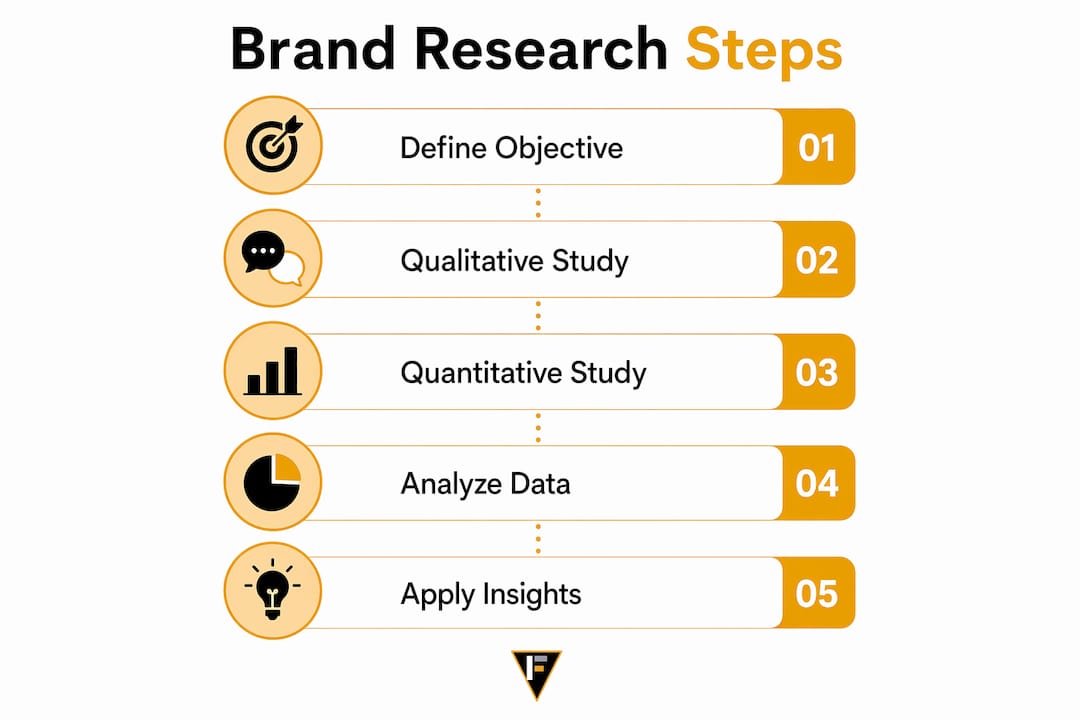
Brand research operates through two primary methods:
- Qualitative research captures motivations, emotions, and language through interviews, focus groups, and open-ended surveys. It tells you why consumers feel what they feel.
- Quantitative research measures the scale of those feelings through structured surveys, brand tracking studies, and behavioral data. It tells you how many consumers feel that way and how strongly.
The objectives of brand research typically cover five areas: awareness, associations, trust, emotional resonance, and differentiation. Each one maps to a different strategic decision. Awareness data informs media spend. Association data shapes creative direction. Trust metrics guide messaging tone. Emotional resonance findings feed into storytelling. Differentiation gaps reveal where competitors are vulnerable.
The most effective approach to translating research into strategy is what researchers call an outside-in method. Inductive categorization from interviews and surveys derives brand attributes that align with consumer motives and market performance. You start with what consumers say, then work backward to what your brand should stand for. This is the opposite of how most brand teams operate, and that reversal is where the real insight lives.

Pro Tip: Run qualitative research before your quantitative study. Qualitative findings give you the right language to use in survey questions. If you skip this step, you risk measuring the wrong things at scale.
How does consumer research reduce risk in brand campaigns?
Continuous consumer research reduces campaign risk and aligns messaging with evolving emotions and unmet needs. The mechanism is a feedback loop: test a creative concept, measure comprehension and emotional response, refine the message, and test again before committing budget.
Here is how that loop works in practice:
- Concept testing measures whether consumers understand what you are communicating. Comprehension failure at this stage is far cheaper than a failed campaign launch.
- Emotional driver analysis identifies which feelings your creative triggers and whether those feelings match your intended brand positioning.
- Unmet needs mapping surfaces gaps between what consumers want and what your brand currently delivers. These gaps are where differentiation lives.
- Iterative message refinement uses findings from steps 1–3 to sharpen copy, visuals, and calls to action before the campaign goes live.
- Post-launch tracking measures whether real-world exposure shifts brand metrics in the intended direction.
Market research uncovers not just what consumers do but why, via qualitative insights about motivations and emotions. That distinction is the difference between a brand that reacts to behavior and one that anticipates it. The brands that consistently outperform in their categories are the ones running research continuously, not just before a major launch.
Modern technology has accelerated this cycle significantly. AI-moderated qualitative interviews and digital survey platforms now return usable findings in days rather than weeks. The consumer insights that once required a six-week research sprint can now inform a campaign brief within a single workweek.
Pro Tip: Do not test only your own creative. Test your competitors' messaging against yours. Knowing where your brand wins and loses in direct comparison is more useful than knowing your absolute scores.
What frameworks link brand research to business outcomes?
Brand health metrics must link awareness, consideration, and emotional resonance to tangible business outcomes like retention and pricing premium. That connection is what separates decision-grade data from vanity metrics. Awareness scores look impressive in a board deck. They only matter when you can trace them to acquisition rates, churn reduction, or willingness to pay.
The table below maps common brand research metrics to the business outcomes they should inform:
| Brand Metric | Business Outcome It Should Drive |
|---|---|
| Unaided brand awareness | Media efficiency and reach planning |
| Brand consideration | Conversion rate and sales funnel entry |
| Emotional resonance score | Customer loyalty and retention rate |
| Net Promoter Score | Referral acquisition and lifetime value |
| Differentiation index | Pricing power and competitive positioning |
Integrated brand analysis and positioning strategies require moving beyond surface-level tracking. The outside-in approach described earlier feeds directly into this framework. Brand attributes derived from consumer language become the anchors for positioning statements, which then get tested for comprehension, belief, and desire. Value proposition testing measures comprehension, belief, desire, and willingness to pay before launch. That four-part test is a practical filter every brand team should run before committing to a positioning platform.
Avoiding vanity metrics requires integrating brand health tracking with downstream commercial outcomes. Metrics like awareness and emotional resonance only earn their place in a strategy document when they connect to retention, pricing, and acquisition over time. The brands that do this well treat research as a continuous management tool, not a one-time project.
How is AI transforming brand research timelines?
Traditional research projects cost tens to hundreds of thousands of dollars and take weeks to months to complete. That timeline creates a structural problem for brand teams. By the time findings arrive, the market has moved. AI is solving this problem directly.
The table below shows how AI compresses the traditional research process:
| Research Phase | Traditional Timeline | AI-Assisted Timeline |
|---|---|---|
| Problem definition and design | 1–2 weeks | 1–2 days |
| Data collection | 3–6 weeks | 3–7 days |
| Analysis and synthesis | 2–4 weeks | 1–3 days |
| Insights delivery | 1–2 weeks | Same day to 2 days |
Generative AI enables smaller teams to conduct larger, higher quality studies with faster turnaround times. The two most significant applications are AI-moderated qualitative interviews and synthetic consumer digital twins. AI-moderated interviews scale qualitative research without sacrificing depth. A study that previously required 20 human moderators can now run with one researcher overseeing an AI-driven interview platform. Synthetic digital twins simulate consumer responses based on behavioral and attitudinal data, allowing brands to test concepts before recruiting a single real participant.
The practical implication for brand strategists is significant. Frequent testing becomes affordable. You can run a concept test before a creative brief, not just before a campaign launch. You can test three positioning options instead of one. The role of AI in packaging and brand development is expanding rapidly, and the teams that adopt these tools now will build a compounding research advantage over competitors who still rely on quarterly tracking studies.
Key takeaways
Effective branding strategy requires research that connects consumer perception directly to measurable business outcomes, not just data collection.
| Point | Details |
|---|---|
| Research precedes strategy | Brand research is the input; strategy is the output. Never reverse this sequence. |
| Outside-in positioning works | Derive brand attributes from consumer language, then build your positioning around them. |
| Consumer research reduces risk | Continuous testing and iteration loops cut campaign failure rates before budget is committed. |
| Metrics must connect to revenue | Awareness and emotional resonance scores only matter when linked to retention, pricing, or acquisition. |
| AI compresses research timelines | AI-moderated interviews and synthetic consumer models cut multi-week research cycles to days. |
Why most brand teams misuse research
Most brand teams treat research as a checkpoint, not a compass. They commission a study before a rebrand, present the findings in a single meeting, and then proceed largely as planned. The research becomes a box to check rather than a tool that shapes decisions.
The deeper problem is interpretation. Data does not make decisions. People do. I have seen brand teams receive qualitative findings that clearly pointed toward a repositioning, then rationalize their way back to the original brief because the findings were inconvenient. Research only works when the team is genuinely willing to act on what it reveals.
The other mistake I see constantly is shallow competitive research. Teams survey consumers about their own brand and ignore the competitive frame entirely. Brand perception is always relative. A trust score of 7 out of 10 means nothing without knowing that your closest competitor scores 8.5. Competitive context is not optional. It is the whole point.
The brands that use research well treat it as a continuous learning system. They test before campaigns, during campaigns, and after campaigns. They track brand health quarterly and connect every metric to a commercial outcome. They ask better questions because they have learned from the last round of research what questions were wrong. That compounding effect is what separates brands that grow from brands that plateau.
— Ben
Build your brand on evidence, not assumptions
Research-backed brand development is not a luxury for large teams with large budgets. The tools available today make it accessible at every stage of brand growth.
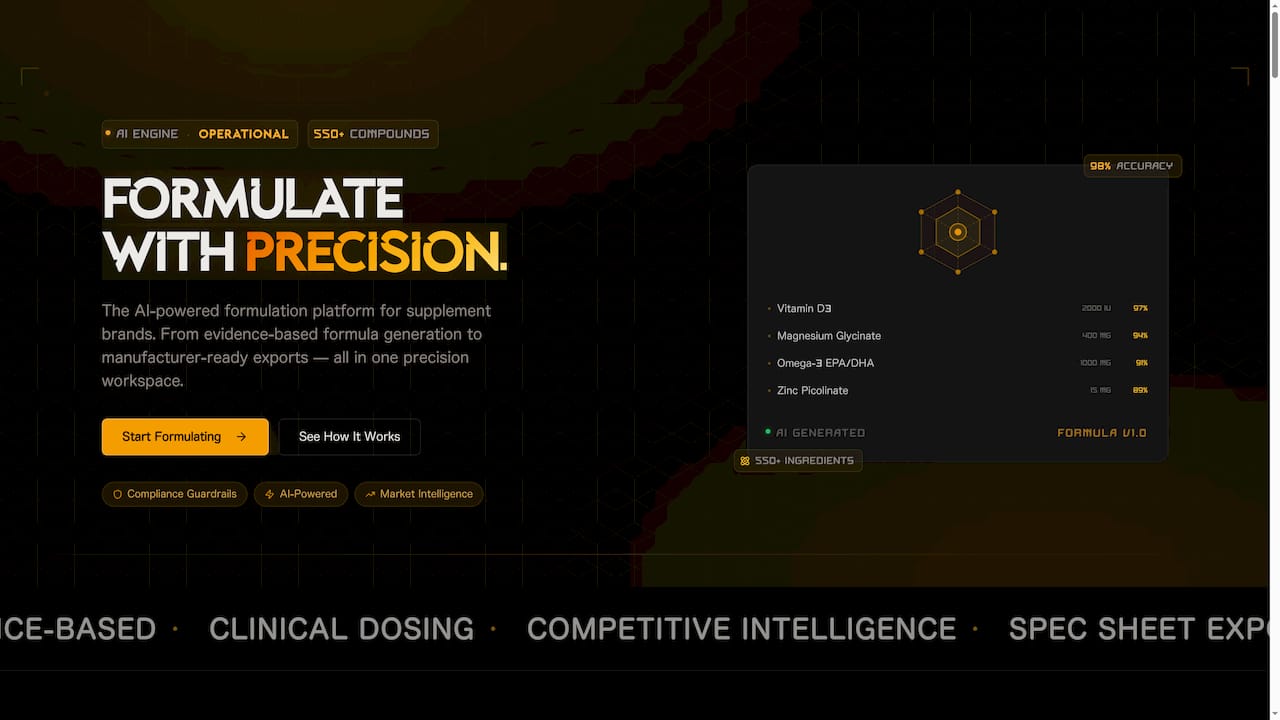
Formlypro is built for exactly this kind of evidence-driven brand work. The platform combines market research tools with competitor analysis, compliance guidance, and an 8-phase product development plan that takes your brand from ideation through production. You get real market and competitive analytics at every stage, not just at launch. If you are building or repositioning a brand and want research embedded in the process from day one, Formlypro gives you the structure to do it right.
FAQ
What is the role of research in branding?
Brand research systematically studies consumer perception, trust, and emotional associations to guide positioning, messaging, and growth decisions. It is the evidence base that separates strategic brand decisions from guesswork.
How does consumer research reduce marketing risk?
Continuous testing and iteration loops allow brand teams to validate creative concepts, messaging, and value propositions before committing campaign budgets. This process identifies comprehension failures and emotional mismatches early, when corrections are inexpensive.
What brand health metrics actually matter?
Metrics like unaided awareness, brand consideration, emotional resonance, and differentiation index matter when they connect directly to business outcomes such as retention rates, pricing power, and customer acquisition costs.
How is AI changing brand research?
AI-moderated qualitative interviews and synthetic consumer digital twins compress traditional research timelines from weeks to days. This makes frequent, iterative testing affordable for brand teams of any size.
What is the difference between brand research and brand strategy?
Brand research generates insights about consumer perception and market dynamics. Brand strategy translates those insights into positioning, messaging, and identity decisions. Research is the input; strategy is the output.