

TL;DR:
- Effective quality assurance involves a continuous PDCA cycle that emphasizes prevention, monitoring, and improvement to ensure reliable product quality. Successful implementation depends on stakeholder engagement, practical SOPs, balanced testing methods, digital workflows, and measuring key metrics like Defect Escape Rate and Cpk. Leadership that views audit findings as opportunities for growth and fosters a quality-driven culture is essential for long-term QA success.
Quality assurance steps are the systematic, cyclical actions organizations take to embed and sustain high product quality through prevention, monitoring, and continuous improvement. Unlike a one-time audit or a final inspection, a mature QA process follows the PDCA cycle (Plan, Do, Check, Act) and integrates standards like ISO 9001 to create a repeatable, measurable system. The difference between brands that consistently ship reliable products and those that fight fires every quarter comes down to how rigorously they execute these steps. Statistical Process Control, Standard Operating Procedures, and structured audit programs are not optional extras. They are the architecture of quality itself.
1. Core quality assurance steps in a modern QA process
An effective QA process follows a continuous cycle of defining objectives, planning, documenting, executing under control, monitoring, and improving. That cycle is not a suggestion. It is the operational backbone of every ISO 9001-compliant system in use today. The six stages map directly onto the PDCA framework, which means every step feeds the next and no stage is ever truly "done."

Pro Tip: Before building any QA documentation, map your actual workflow first. Documentation that reflects what people genuinely do gets followed. Documentation that reflects what managers wish people did becomes shelfware.
Step 1: Define quality objectives
SMART goals convert vague quality aims into measurable KPIs that drive real process control. A goal like "reduce defects" is unenforceable. A goal like "reduce Defect Escape Rate below 1.5% by Q3 2026" gives your team a target, a timeline, and a measurement method. Every subsequent QA step depends on the clarity of this foundation.
Step 2: Plan your quality strategy
Planning translates objectives into specific activities, resource allocations, and risk assessments. This is where you identify which processes carry the highest failure risk and allocate testing and inspection resources accordingly. The art of test planning lies in prioritizing coverage by risk and impact to optimize resource use rather than spreading effort uniformly across all processes.
Step 3: Document processes and develop SOPs
Standard Operating Procedures are the written contract between your quality intent and your team's daily behavior. Overly complex SOPs that are seldom used increase compliance risk rather than reduce it. Keep SOPs short, visual where possible, and tied directly to the task the operator is performing. A two-page SOP that gets followed beats a twenty-page document that sits in a folder.
Step 4: Execute under controlled conditions
Controlled execution means every operator follows the documented process, every time, using calibrated equipment and approved materials. This is where manufacturing compliance standards become operationally relevant. Deviations must be recorded, not ignored, because deviation data is the raw material for your improvement cycle.
Step 5: Monitor performance continuously
Monitoring is not a quarterly report. It is a real-time activity using control charts, process capability indices, and inspection records to detect drift before it becomes a defect. Statistical Process Control uses control limits to distinguish normal process variation from assignable causes that require intervention.
Step 6: Drive continuous improvement
Every monitoring cycle generates data. That data feeds root cause analysis, corrective actions, and updated SOPs. Internal audits are systematic tools to verify compliance and should be treated as improvement opportunities rather than fault-finding exercises. The loop closes, and the cycle begins again at a higher baseline.
2. How quality assurance steps differ from quality control processes
QA is preventive, focusing on designing error-proof processes, while QC is reactive, identifying defects after they occur. Misunderstanding this distinction leads to inspection-only cultures that catch defects but never eliminate their root causes. Both functions are necessary, but they operate at different points in the production timeline and require different tools and mindsets.
| Dimension | Quality Assurance (QA) | Quality Control (QC) |
|---|---|---|
| Focus | Prevention of defects | Detection of defects |
| Timing | Before and during process design | During and after production |
| Key activities | SOP development, audits, training | Incoming inspection, in-process checks, final inspection |
| Responsible roles | QA managers, process engineers | Inspectors, line supervisors |
| Primary tools | PDCA, ISO 9001, risk assessments | Statistical Process Control, sampling plans |
Quality control in manufacturing operates at three critical inspection stages: incoming materials, in-process, and final inspection, all supported by SPC. This means QC is the detection layer that catches what QA's prevention layer missed. Running both in parallel creates a system where defects are both less likely to form and less likely to escape.
3. Practical steps for effective QA implementation
Translating QA theory into daily operations requires more than a policy document. The following practices separate organizations that implement QA successfully from those that produce documentation no one reads.
- Secure stakeholder buy-in early. Poor engagement of frontline staff is the leading cause of QA system implementation failure. Run structured buy-in sessions with operators, supervisors, and department heads before rolling out any new process. Resistance drops sharply when people understand the "why" before the "what."
- Write SOPs for the person doing the job. Use plain language, numbered steps, and photographs or diagrams where the task is physical. Test each SOP by having a new employee follow it without assistance. If they get lost, the document needs revision, not the employee.
- Balance manual and automated testing. Balancing manual and automated testing strategically produces thorough quality coverage without creating redundant effort. Automate repetitive, high-volume checks. Reserve manual testing for judgment-dependent evaluations where human interpretation adds value.
- Integrate digital workflow systems. Modern plants integrate digital and risk-based workflows with Manufacturing Execution Systems that enable real-time QA process visibility. Paper-based systems create lag between a process deviation and the corrective response. Digital systems close that gap to minutes. Explore digital compliance workflows to understand how leading brands are making this transition.
- Treat internal audits as process verification, not policing. Schedule audits at regular intervals, share findings transparently, and track corrective actions to closure. In healthcare and regulated industries, internal audit compliance connects directly to risk reduction and regulatory standing.
Pro Tip: Assign a named owner to every corrective action from an audit. Actions without owners become actions without outcomes.
4. Key metrics and monitoring steps that drive continuous improvement
Measuring QA effectiveness requires metrics that reflect both process health and output quality. The following indicators form the core of any serious monitoring program.
| Metric | What it measures | Why it matters |
|---|---|---|
| Defect Escape Rate (DER) | Proportion of defects detected after release | Lower DER indicates stronger QA coverage upstream |
| Process Capability Index (Cpk) | How well a process meets specification limits | Cpk below 1.33 signals a process at risk of producing out-of-spec output |
| First Pass Yield (FPY) | Percentage of units passing inspection without rework | High FPY reduces cost and cycle time |
| Audit Finding Closure Rate | Percentage of audit findings resolved on schedule | Tracks whether corrective actions are actually implemented |
| Customer Complaint Rate | Frequency of quality-related complaints per period | Connects internal QA performance to external customer experience |
Defect Escape Rate quantifies the proportion of defects detected after product release and serves as the most direct measure of QA system effectiveness. A rising DER signals that your prevention and detection layers are both failing. SPC control charts and process capability indices like Cp and Cpk provide the in-process signal that tells you whether a process is drifting before the DER climbs.
Root cause analysis tools like the 5 Whys and the 8D methodology convert metric data into corrective actions. Pareto charts identify which defect categories account for the majority of failures, directing improvement resources where they produce the greatest return. Management reviews close the loop by evaluating all metric data, audit findings, and customer feedback together to set priorities for the next planning cycle.
Key takeaways
Effective quality assurance requires a closed-loop system where prevention, monitoring, and improvement operate together rather than as isolated activities.
| Point | Details |
|---|---|
| Follow the PDCA cycle | Define objectives, plan, document, execute, monitor, and improve in a continuous loop. |
| Separate QA from QC | QA prevents defects through process design; QC detects them through inspection. Run both. |
| Prioritize stakeholder buy-in | Early engagement of frontline staff is the single biggest factor in successful QA implementation. |
| Measure what matters | Track Defect Escape Rate, Cpk, and First Pass Yield to connect process health to output quality. |
| Keep SOPs usable | Short, practical SOPs that reflect actual workflows get followed; complex ones create compliance risk. |
Why most QA programs fail before they start
I have reviewed QA programs across product categories ranging from nutraceuticals to consumer packaged goods, and the failure pattern is almost always the same. Organizations invest heavily in documentation and almost nothing in culture. They produce a Quality Manual that satisfies an auditor and confuses everyone else.
The uncomfortable truth is that quality is everyone's responsibility. QA provides the framework, but operations own the execution. When leadership treats QA as a compliance checkbox rather than a competitive advantage, the entire system degrades. Frontline workers follow the path of least resistance, not the path described in the SOP binder.
What actually works is treating the first implementation phase as a change management project, not a documentation project. Get your production leads, your procurement team, and your customer service staff into the same room before a single SOP is written. Their input makes the system functional. Their buy-in makes it sustainable.
I also push back hard on the instinct to automate everything immediately. Automation is powerful, but it amplifies whatever process it runs on. Automate a broken process and you get faster, more consistent failures. Fix the process manually first, prove it works, then automate it. That sequence saves months of rework.
The best QA implementations I have seen share one trait: leadership that treats a failed audit finding as useful data rather than an embarrassment. That mindset shift, more than any tool or framework, is what separates organizations that improve from those that stagnate.
— Ben
How Formlypro supports your quality assurance workflow
Building a QA process from scratch is resource-intensive, especially when compliance requirements shift and formulation complexity increases.
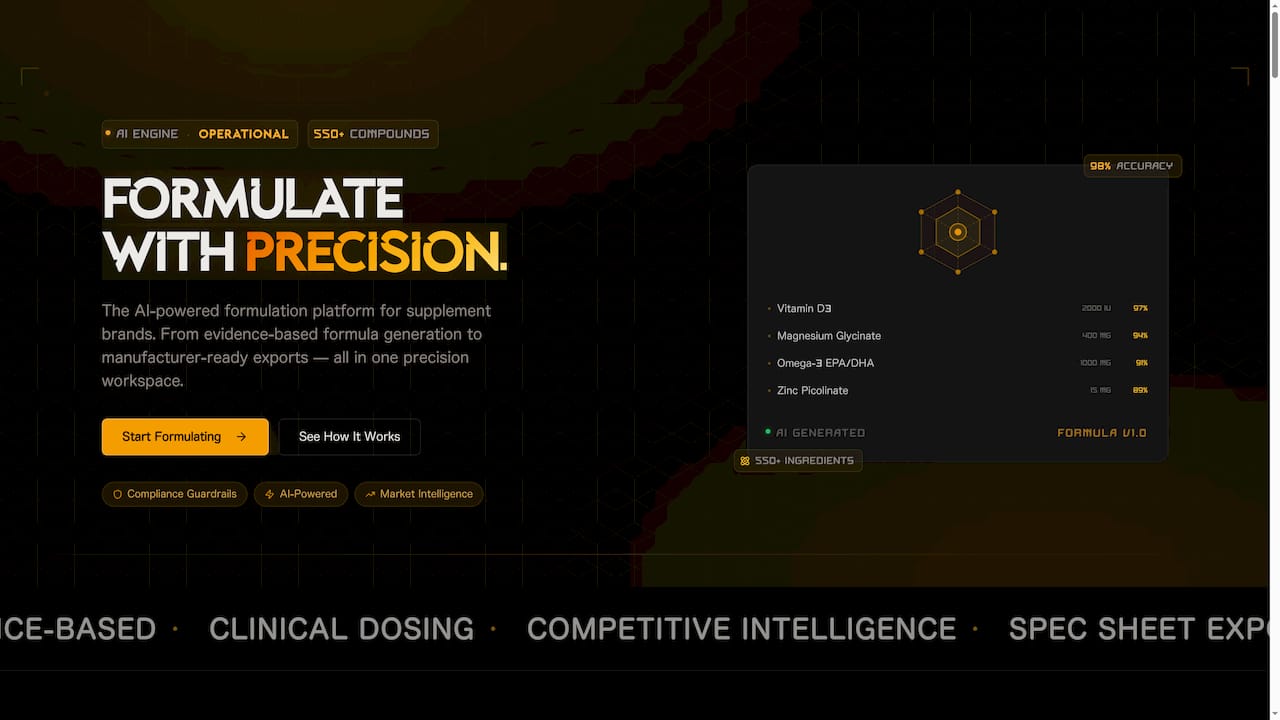
Formlypro is built for brands that need to manage quality, compliance, and formulation in one place. The platform guides you through an 8-phase product development process covering formulation, prototyping, compliance, and production, with built-in compliance checklists that keep your team audit-ready at every stage. Real-time data collection replaces manual paperwork, and the competitor analysis tools show you exactly what formulations are performing in your category. If you are building a product that needs to meet regulatory standards and hit market with confidence, explore Formlypro to see how the platform handles the compliance and quality infrastructure for you.
FAQ
What are the basic quality assurance steps?
The core quality assurance steps follow the PDCA cycle: define quality objectives, plan your strategy, document processes through SOPs, execute under controlled conditions, monitor performance using metrics like Defect Escape Rate and Cpk, and drive continuous improvement through audits and root cause analysis.
How do quality assurance steps differ from quality control?
QA is preventive and focuses on designing processes that stop defects from forming, while QC is reactive and uses inspections at incoming, in-process, and final stages to detect defects that have already occurred. Effective quality management requires both working in parallel.
What is the most important step in quality management?
Securing stakeholder buy-in before implementation is the most critical step. Poor engagement of frontline staff is the leading cause of QA system failure, and no framework or tool compensates for a team that does not understand or trust the process.
Which metrics best measure QA effectiveness?
Defect Escape Rate, Process Capability Index (Cpk), and First Pass Yield are the three most direct indicators of QA system health. Together they show whether your prevention layer is working, whether your processes are capable, and whether output quality is improving over time.
How often should internal QA audits be conducted?
Internal audits should be scheduled at regular, predefined intervals tied to process risk and regulatory requirements. ISO 9001 requires a documented audit program, and findings should be tracked to closure with named owners assigned to every corrective action.