

A traceability lot code identifies a specific production run of ingredient or finished product using FDA's canonical definition. The one rule that makes it work: treat the lot ID as the primary key for every transaction and require a scan (not a typed entry) at receiving, blending, and packaging. Skip that enforcement step, and your recall queries will lie to you.
TL;DR:
- Properly linking supplier lot numbers to internal container IDs and verifying certificates of analysis are critical steps to prevent mixing errors at receipt.
- Creating a new lot number for every blended batch and explicitly recording input lot links is essential for accurate genealogy tracking through rework and blending.
- Enforcing scan-based lot capture, stable numbering formats, and integrating data across ERP, MES, and WMS systems are vital for an audit-ready traceability program.
- Conducting biannual mock recalls, measuring response times, and closing high-risk gaps like quarantine enforcement and system integration improves recall efficiency.
- Aligning formulation decisions and packaging code mappings, and using compliance platforms to automate recordkeeping, significantly enhances traceability accuracy.
Table of Contents
- Lot Traceability Supplements: Numbering Strategy and Design Principles
- Managing Supplier Lots, Container IDs, and Incoming Inspection
- How Do You Track Genealogy Through Blending and Rework?
- Finished Goods: Packaging Codes, Pallet Identity, and Expiry Rules
- Which Systems Actually Need to Talk to Each Other?
- What Should a Mock Recall Actually Measure?
- Your Rollout Plan for Audit-Ready Traceability
- How Formulation and Compliance Choices Shape Traceability
- Formlypro: A Complementary Option for Compliance Documentation
- Sources
Lot Traceability Supplements: Numbering Strategy and Design Principles
A lot number is only useful if it means the same thing to every system that touches it. That sounds obvious until you inspect a typical supplement manufacturer's records and find three different departments using three different definitions of "lot."
Start with vocabulary, because sloppy terminology is where most traceability programs break down. A batch ID usually refers to a single manufacturing run through one piece of equipment. A lot ID can span multiple batches blended together, or it can equal one batch exactly, depending on your process. A sublot is a subdivision of a lot created for quality holds or partial releases. A container ID tracks an individual physical unit, like a specific drum or tote, and it may or may not map one-to-one with a supplier's lot number.
The lot numbering strategy that works for most manufacturers follows a few non-negotiable rules:
- Build in a site code and a year or date code so lot numbers stay unique across facilities and time, forever.
- Never reuse a lot number, even after a product is discontinued or a lot is fully consumed.
- Keep the format stable. Changing your numbering scheme without a documented cutover date creates a permanent blind spot in your genealogy.
- Print lot numbers as scannable barcodes or 2D codes, not just human-readable text. A misread six-digit number typed by hand is how "wrong lot shipped" incidents happen.
Governance matters as much as format. Someone has to own the numbering policy, decide when a split or merge creates a new lot number versus a sublot, and approve any exception. Without a named owner, the scheme drifts within a year.
Pro Tip: Audit your lot number format once a year, even if nothing seems broken. The most common failure isn't a bad format on day one. It's format decay as new SKUs, co-packers, or ERP modules get bolted on without anyone updating the original rule.
Managing Supplier Lots, Container IDs, and Incoming Inspection
Raw material traceability starts the moment a truck backs up to your dock, and it's the single most common place supplement manufacturers lose the thread. The mistake is treating the supplier's lot number as interchangeable with your internal lot number. It isn't, and conflating them causes real problems the first time you split a supplier drum across two production runs.
The fix follows a defined sequence:
- Record the supplier's lot number as an attribute, never as your primary key. Your internal system needs its own lot or container ID even when a shipment contains only one supplier lot.
- Assign a unique container ID to every partial drum or tote the moment it's opened. Preserving supplier lot numbers while enforcing internal container IDs prevents what practitioners call "drum drift," where partial containers get mixed or misidentified after multiple withdrawals.
- Verify the Certificate of Analysis matches the physical lot before it clears quarantine. A COA that references a different lot number than what's on the container is a receiving failure, not a paperwork technicality.
- Trigger incoming testing based on documented criteria, not gut feel, and log the result against both the supplier lot and your internal container ID.
- Hold the material in quarantine status inside your system, not just physically in a cage, until testing and COA review both clear.
Supplier contracts should require advance notice of any lot number format changes and mandate that COAs always reference the exact lot shipped. Supplier qualification frameworks built around documented COA verification and routine incoming testing give you leverage to push back when a vendor's paperwork doesn't match reality. Formlypro's guidance on ingredient sourcing covers how to build these expectations into supplier agreements before you ever place an order.
How Do You Track Genealogy Through Blending and Rework?
Work-in-process is where lot traceability supplements programs either prove their worth or collapse under pressure. The moment you blend three raw material lots into one production batch, you've created a genealogy record that a recall query has to be able to reverse instantly.
Every blend output needs its own lot number, and that new lot must carry documented links back to every input lot that went into it. Skipping this step is the single most common gap auditors find in supplement manufacturing.
Get the mechanics right by following these principles:
- Create a new lot ID for blend output every time inputs from more than one source lot combine, and record the exact quantity contributed by each parent lot.
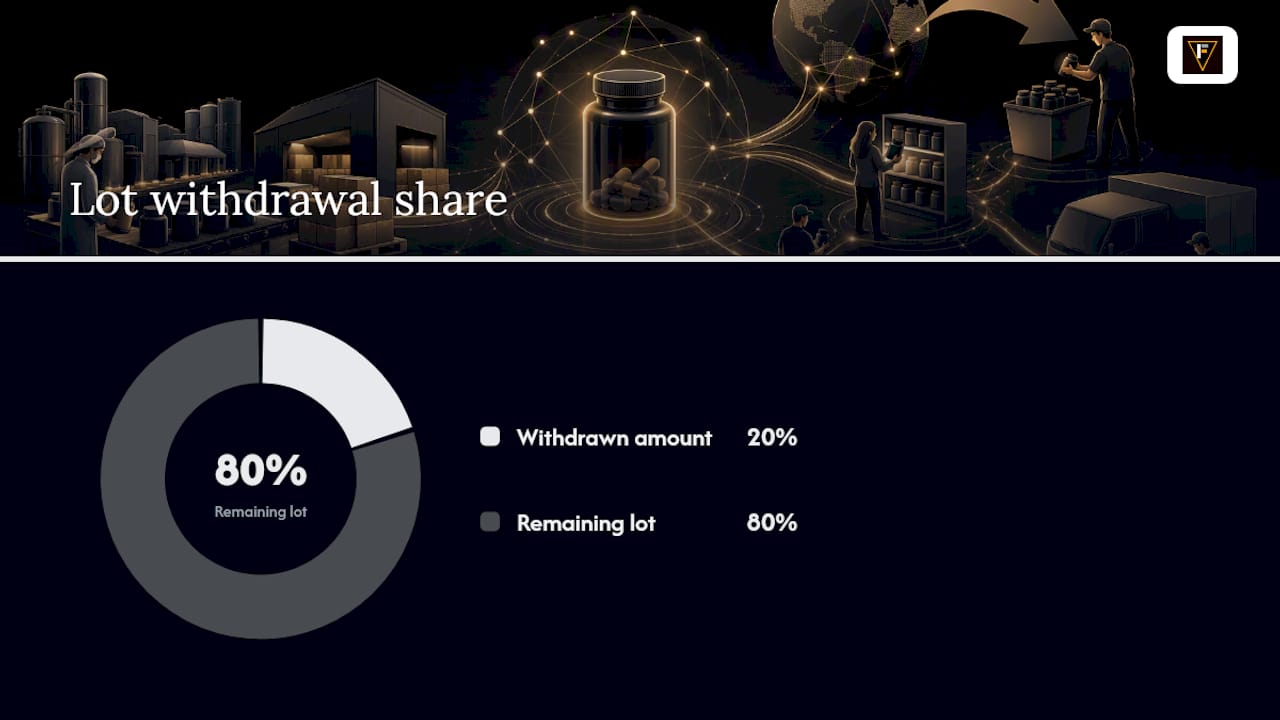
- Reconcile partial withdrawals as they happen. If you pull 40 kilograms from a 200-kilogram lot for one batch, your system needs to show 160 kilograms remaining under that same lot, not a vague "some amount left."
- Never let a rework event inherit the original lot number silently. Rework should generate a new child lot number that links explicitly to both the original lot and a rework record explaining why the material was reprocessed.
- Log timestamps for every genealogy event, not just the final quantities. Auditors and recall investigators need to know when a split or merge happened, not just what happened.
Formlypro's coverage of in-process quality control walks through how digital batch records capture these genealogy events in real time instead of reconstructing them after the fact from paper logs, which is where most manufacturers still get stuck.
Finished Goods: Packaging Codes, Pallet Identity, and Expiry Rules
Your finished-goods lot number has to survive translation into a packaging code, and that translation is where a lot of otherwise solid traceability programs quietly fail. The packaging code printed on a bottle is often shorter or formatted differently than your internal system's lot number, which means you need a documented crosswalk, not an informal habit someone remembers.
Decide early whether the packaging code will be identical to the internal lot number or a controlled alias mapped to it in your system. Either works. What doesn't work is letting packaging teams invent shorthand codes on the fly without registering the mapping somewhere queryable.
A few rules keep this section of the process audit-ready:
- Case and pallet labels need a scannable code that ties back to lot identity and shipment number, so a warehouse pick error shows up in your system before the truck leaves.
- Expiry dates should calculate from manufacture date plus validated shelf life, adjusted downward if any component ingredient has a shorter stability window than the finished product.
- Document any stability testing exceptions that extend or shorten a standard shelf life, and attach that documentation to the specific lot it applies to.
- Enforce FEFO (first expired, first out) at the warehouse management system level, blocking any pick of an expired lot rather than relying on staff to check dates manually.
Pro Tip: If your shelf-life calculation depends on the shortest-lived raw material in the formula, build that dependency into your ERP's expiry logic directly. Manually tracking which SKUs have a "hidden" shorter shelf life because of one ingredient is a recipe for shipping expired product without anyone noticing.
FEFO enforcement paired with lot-level tracking is one of the clearest signals an auditor looks for when evaluating whether your rotation practices match your documentation.
Which Systems Actually Need to Talk to Each Other?
Lot traceability supplement programs live or die on integration, not on any single system's feature list. Your ERP, QMS, MES, LIMS, WMS, and any third-party logistics provider all need to exchange the same core data elements, or you end up with five partial pictures instead of one complete one.
The data that has to flow without manual re-entry includes the lot ID itself, the associated supplier lot, COA results, in-process test results, and full genealogy links. If any of those live only in a spreadsheet that doesn't sync back to your ERP, your recall query has a gap exactly where you need it to be airtight.
Integration approaches generally split into two camps. An ERP-first architecture treats the ERP as the system of record for lot identity, with the MES and LIMS feeding data back into it. An MES-first approach flips that, letting the manufacturing execution system own genealogy while the ERP handles financials and inventory value. Both work. What fails is a hybrid built without deciding which system wins when two records disagree.
If you use a third-party logistics provider, your contract needs to require mandatory lot capture at receipt, lot tagging on every outbound order line, and the ability to generate a recall report on demand, not after a two-week ticket queue. Combining digital batch records with physical authentication methods like DNA tracers or bio-barcodes adds a verification layer that catches fraud digital records alone can miss.
- Require scan-based capture at every handoff point, never manual keyboard entry for lot numbers.
- Timestamp every transaction automatically, and make those logs immutable once written.
- Test your integration by pulling a genealogy report across all connected systems quarterly, not just during an audit.
What Should a Mock Recall Actually Measure?
A mock recall is the only way to know whether your traceability system works before a real one forces the question. Run one at least twice a year, and treat the results as a hard metric, not a compliance checkbox.
The process follows a simple sequence:
- Pick one supplier lot at random and treat it as though it just tested positive for contamination.
- Run a backward query to identify every finished-goods lot that contains material from that supplier lot.
- Run a forward query to enumerate every customer order, retailer shipment, and distribution point that received product from those finished lots.
- Assemble the documentation package an FDA investigator would expect, including COAs, test results, and shipment records, and time how long it takes.
Manufacturers with strong genealogy links can cut this process from days down to hours. That speed difference isn't just an efficiency win. A slow identification process means more product stays on shelves and in customers' hands while you're still figuring out what's affected, and the direct and indirect costs of a mishandled recall compound over the following year or two.
Follow the 21 CFR Part 111 recordkeeping requirements as your baseline, and use FDA's traceability lot code guidance to make sure your simulation tests the exact records an investigator would request first.
Your Rollout Plan for Audit-Ready Traceability
Fixing traceability gaps doesn't require a system overhaul on day one. It requires sequencing the work so the highest-risk gaps close first.
- Assign ownership. One person signs the lot-numbering policy, and one role (often quality) has authority to enforce scan capture at every station, no exceptions.
- Close the receiving gap immediately. Mandatory lot capture at receipt, with COA verification before quarantine release, stops the most common source of downstream errors.
- Fix the packaging crosswalk. Document exactly how internal lot numbers map to printed packaging codes, and register any alias formally.
- Turn on FEFO enforcement in your WMS so expired lots physically can't be picked for an outbound order.
- Tackle system integration next, connecting ERP, LIMS, and WMS data flows so genealogy queries don't require manual reconciliation across spreadsheets.
- Update supplier contracts to require lot-level COA matching and advance notice of any numbering changes.
- Set a recurring audit cadence. Run a mock recall twice yearly and track your time-to-document metric as a real KPI, reported to leadership.
Pro Tip: Don't wait for a perfect system before running your first mock recall. Running one against your current, imperfect process is exactly how you find out which gap to fix first.
How Formulation and Compliance Choices Shape Traceability
Traceability isn't separate from formulation. Ingredient sourcing decisions, stability testing results, and packaging formats all determine how clean your genealogy records can be later. Some platforms tie compliance checklists and formulation records together so brand teams can see how an ingredient swap or a packaging change ripples into their documentation before it becomes a recall-day problem. If you're evaluating a platform, ask how it exports records an investigator would actually request.
— Ben
Formlypro: A Complementary Option for Compliance Documentation
Some platforms don't replace ERP or WMS, but fill the gap supplement brands feel between formulation decisions and the compliance paperwork those decisions eventually generate.

The platform's compliance checklist and formulation records stay linked from the moment you draft a formula, through stability considerations, to the documentation an auditor or FDA investigator would request. That matters because most manufacturers rebuild these records manually in a spreadsheet every time a formula changes, and that's exactly where version mismatches and missing COAs creep in. Formlypro also includes an AI packaging mockup designer, so the same platform that tracks your compliance records can generate the packaging your finished-goods lot number eventually gets printed on. If your team is evaluating how to tighten the link between formulation, documentation, and audit readiness, start with a Formlypro demo and walk through your current compliance workflow against the platform's export options.
Sources
- Traceability Lot Code
- The Hidden Cost of One Lot Failure for Supplement Brands
- FoodReady introduces new mock-recall traceability capabilities
- Natural product tagging: the next frontier in traceability