

TL;DR:
- Effective formulation networking involves targeted pre-event preparation, technical conversations, and consistent follow-up. Building relationships across multiple organizational levels and sharing honest technical insights foster durable professional connections. Emphasizing giving before asking creates a strong, trustworthy network that advances your formulation work.
Formulator networking tips are concrete strategies that help product developers build professional relationships, share technical knowledge, and create collaboration opportunities within the formulation industry. The best networking strategies for formulators go far beyond exchanging business cards at trade shows. They require preparation, authentic conversation, and consistent follow-up built around technical value. This article covers the most effective methods for building connections in formulation, from pre-event research to long-term relationship maintenance, so you can grow a network that actually moves your work forward.
1. How to prepare before formulation industry events
Preparation is the single biggest predictor of networking success at formulation events. Formulators who arrive with a plan consistently leave with better contacts than those who show up and hope for the best.

Start by setting measurable goals. Decide how many meaningful conversations you want to have, not how many business cards you want to collect. Three substantive conversations beat fifteen forgettable introductions every time.
Research attendees, speakers, and exhibitors before the event using LinkedIn and the event app. Identify the people most relevant to your current formulation challenges, whether that is stability testing, scale-up, or regulatory compliance. Build a Top 5 priority contact list and prepare a specific conversation opener for each person based on their recent work or published content.
- Review speaker abstracts and exhibitor profiles at least one week out
- Connect on LinkedIn before the event with a short, specific message
- Prepare 2–3 questions per target contact related to formulation challenges you are both likely facing
- Confirm any pre-scheduled meetings 24 hours in advance
The Top 5 targeted approach consistently produces higher quality interactions than treating events as general meet-and-greet opportunities. Quality over quantity is not a cliché here. It is the actual mechanism that makes networking productive.
Pro Tip: Write your five target names and one specific question for each on your phone before you walk in. Reviewing it between sessions keeps you focused and prevents the common trap of drifting toward whoever is easiest to talk to.
2. How to have meaningful conversations at networking events
The most effective formulator relationship building happens through technical exchange, not small talk. Your goal in every conversation is to learn something specific about the other person's formulation work and share something genuinely useful in return.
Use a simple framework: introduce yourself with one sentence about your current work, ask a direct question about their formulation challenges, and then listen more than you talk. Formulators respect peers who ask sharp questions. Vague openers like "What do you do?" waste the limited time you have.
Sharing lessons from formulation failures is one of the most effective trust-builders in this industry. Discussing a stability issue you solved or an emulsion that failed during scale-up signals competence and honesty. It invites reciprocal openness in a way that polished success stories never do.
- Keep each conversation to roughly 12 minutes to maintain depth without losing energy
- Reference specific topics: stability testing, regulatory hurdles, excipient sourcing, or scale-up challenges
- Avoid pitching ingredients or services unless directly asked
- Before ending, ask permission to follow up and confirm the best contact method
Pro Tip: Reference a specific formulation topic you noticed in their LinkedIn profile or a talk they gave. "I saw you presented on nasal delivery at the summit last year. We ran into a similar viscosity issue" opens a real conversation immediately.
3. Follow-up best practices for formulation professionals
Follow-up is where most formulator networking fails. The conversation was good, the intention was there, and then nothing happened. Following up within 48 hours with a personalized message that references a specific detail from your conversation is the standard that separates memorable contacts from forgotten ones.
Your follow-up message should do three things: remind them of the specific topic you discussed, add one piece of value (a relevant article, a resource, or a connection), and propose a concrete next step. "Great to meet you" messages go nowhere. "I found that white paper on HEC viscosity we discussed" messages get responses.
Real relationship building in formulation happens after events, often through sharing technical white papers and case studies during the follow-up period. Think of networking as a 90-day cycle: pre-event outreach, active event engagement, and 60 days of value-based follow-up.
| Timing | Immediate follow-up | Ongoing maintenance |
|---|---|---|
| When | Within 48 hours of meeting | Quarterly, no specific trigger needed |
| Message type | Personalized, references specific conversation | Check-in, shares relevant content or congratulates a win |
| Goal | Confirm connection, propose next step | Keep relationship warm with no immediate ask |
| Format | Email or LinkedIn message | Email, LinkedIn comment, or short note |
| Value added | Relevant resource or introduction | Industry article, regulatory update, or shared insight |
Quarterly check-ins with 10–15 key contacts with no ask attached keep relationships warm and genuine over time. Set a calendar reminder and treat it like any other professional obligation.
Pro Tip: Do an annual audit of your contact list every January. Identify five connections you have not spoken to in over a year and send a brief, specific message. A formulation scalability resource or a relevant regulatory update makes a natural reason to reconnect.
4. How to build a strategic network as a formulator
Building connections in formulation requires thinking beyond events. The strongest professional networks in this industry are built through consistent technical contribution, not just attendance at summits.
Develop relationships at multiple levels within the organizations you work with. R&D contacts give you technical depth. Procurement contacts give you commercial context. QC and regulatory contacts give you compliance insight. A single point of contact inside a company is a fragile relationship. Multiple contacts across functions create a durable partnership.
Presenting ingredients and services through outcome-based technical support rather than direct pitching is the approach that R&D teams and manufacturers actually respond to. Solve a development bottleneck. Offer regulatory support. Model cost implications. That is the language of formulation partnership.
The "double opt-in" rule applies when making introductions: confirm both parties want to connect before making the introduction. Unsolicited introductions damage your credibility with both contacts.
Networking channels beyond in-person events worth building into your regular practice:
- LinkedIn technical discussion threads and formulation-focused groups
- Industry webinars hosted by ingredient suppliers or regulatory bodies
- Small roundtables organized through professional associations like the Society of Cosmetic Chemists (SCC) or the American Chemical Society (ACS)
- Private Slack or Discord communities for formulators
- Peer review and co-authorship on technical white papers
Building over 50 genuine relationships by providing value before you need favors is the give-first framework that prevents the transactional reputation that kills long-term networking in B2B formulation. Share a formulation risk reduction resource before you need a referral. Offer a compliance insight before you need an introduction.
5. In-person vs. virtual vs. hybrid: which works best for formulators?
Effective networking for chemists and product developers now spans three distinct formats. Each has real trade-offs worth understanding before you commit your time and budget.
| Format | Depth of connection | Reach | Cost | Best for |
|---|---|---|---|---|
| In-person | High | Limited to attendees | Higher (travel, registration) | Senior decision-makers, complex partnerships |
| Virtual | Moderate | Global, accessible | Low to moderate | Broad outreach, early-stage connections |
| Hybrid | High + broad | Combines both | Moderate to high | Maximizing both depth and reach |
In-person events like the Nasal Formulation & Delivery Summit offer structured matchmaking tools that let attendees book meetings days before the event. Speed-networking sessions at these summits can provide over six hours of peer-to-peer interaction time. That density of contact is impossible to replicate virtually.
Virtual networking expands your reach to global contacts without travel costs. The trade-off is that relationship depth builds more slowly. Video calls and webinar Q&A sessions are useful for early-stage connections, but they rarely replace the trust built over a shared lunch at a technical summit.
Hybrid models are the standard for major formulation events in 2026. Event matchmaking tools integrated into conference apps allow both in-person and remote attendees to schedule meetings, making hybrid formats more efficient than either format alone. If you can only attend one event in person this year, choose the one where your Top 5 target contacts are most likely to appear.
Key takeaways
The most effective formulator networking strategy combines targeted pre-event preparation, technical conversation, and a consistent give-first follow-up cadence to build durable professional relationships.
| Point | Details |
|---|---|
| Prepare a Top 5 list | Target five high-priority contacts with researched openers before every event. |
| Follow up within 48 hours | Reference a specific conversation detail and propose a concrete next step. |
| Use a 90-day cycle | Pre-event outreach, active engagement, and 60 days of value-based follow-up build real partnerships. |
| Give first, ask later | Share articles, insights, and introductions before you need anything in return. |
| Go multi-level inside organizations | Build contacts across R&D, procurement, QC, and regulatory for durable relationships. |
Why most formulator networking advice misses the point
Most networking advice tells formulators to "be authentic" and "follow up promptly." That is not wrong. It is just not enough. After years of watching how relationships actually form in this industry, the pattern is clear: the formulators with the strongest networks are not the most outgoing people in the room. They are the most technically generous.
The colleagues I have seen build the best professional networks share one habit. They talk openly about what did not work. A failed emulsion, a stability issue that took three reformulations to solve, a regulatory submission that came back with unexpected questions. That kind of honesty is rare in a professional setting, and it is magnetic. It signals that you are a real practitioner, not a sales pitch in a lab coat.
Cold pitching ingredients or services without technical context is the fastest way to get quietly removed from someone's mental contact list. Manufacturers and R&D teams are busy. They respond to people who solve problems, not people who create new ones by showing up with a catalog. If you want to be remembered, show up with a compliance insight or a data point relevant to their current project.
The other mistake I see constantly is frantic outreach right before someone needs something. A job change, a new product launch, a supplier crisis. Relationships built under pressure feel transactional because they are. The formulators who avoid this maintain a quiet, consistent cadence of contact throughout the year. Quarterly check-ins with no agenda. A shared article. A congratulations on a product launch. That is what a real professional network feels like from the inside.
Build the reputation of someone who gives before they ask. It takes longer to establish than aggressive outreach, but it compounds in a way that cold networking never does.
— Ben
Build your formulation network with Formlypro
Networking is more productive when your formulation work is organized and shareable. Formlypro gives product developers a structured platform to manage formulations, track compliance, and document the technical work that makes you worth connecting with.
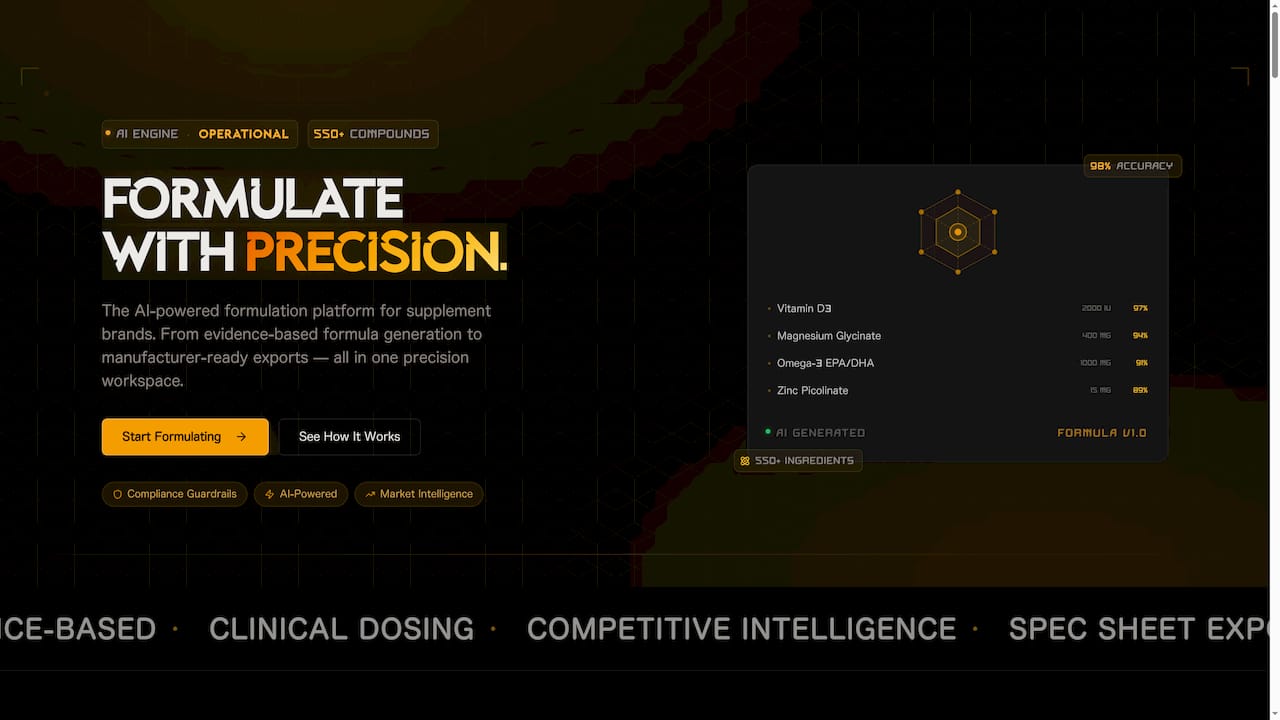
When you meet a potential collaborator at a summit or in a LinkedIn thread, having your formulation process documented and your compliance handled means you can move from conversation to collaboration faster. Formlypro's 8-phase product development plan, competitor analysis tools, and AI-powered packaging designer give you the technical foundation that makes every networking conversation more credible. Explore Formlypro and see how it supports your work from ideation through production.
FAQ
What are the most effective formulator networking tips?
The most effective formulator networking tips are preparing a Top 5 target contact list before events, having technical conversations focused on shared challenges, and following up within 48 hours with a personalized message and a concrete next step.
How soon should you follow up after a formulation networking event?
Follow up within 48 hours using a message that references a specific detail from your conversation. This window is the standard for standing out in a crowded inbox and converting a meeting into a real professional relationship.
What networking channels work best for formulators beyond in-person events?
LinkedIn technical groups, industry webinars, professional associations like the Society of Cosmetic Chemists, and small roundtables are the most productive channels for building connections in formulation outside of live events.
How do you maintain a professional network in the formulation industry?
Check in with 10–15 key contacts quarterly by sharing a relevant article, congratulating a professional win, or offering a useful insight with no ask attached. This cadence keeps relationships warm without feeling transactional.
Why is sharing formulation failures useful in networking?
Discussing lessons from stability failures or scale-up problems signals genuine expertise and builds trust faster than polished success stories. Openness about technical challenges is highly respected within the formulation community.