

TL;DR:
- Dedicated formula software enhances product development by providing version control, compliance tracking, and ingredient management, unlike spreadsheets. AI tools like Formula Genius and Formula Bot accelerate formula creation, but domain-specific platforms like Formula 5.4 better support regulatory and industry needs. Successful implementation depends on integrating these tools into structured workflows and focusing on validation and collaboration.
Formula software is a specialized category of calculation software designed to create, manage, and validate the ingredient formulas and calculations behind physical products. For entrepreneurs building supplements, cosmetics, food products, or industrial goods, the right formula management system is the difference between a product that passes compliance and one that never ships. Tools like Formula 5.4, Formula Genius, and Formula Bot have pushed the category forward in 2026, bringing AI-powered formula generation and version control into workflows that once relied entirely on spreadsheets. This guide breaks down what these tools do, how they compare, and which ones belong in your product development stack.
What is formula software and why does it matter?
Formula software covers any platform built specifically to handle the creation, editing, and tracking of product formulations. The term is often used interchangeably with "formulation management software," which is the recognized industry term. The distinction matters because general calculation software like Excel handles math. Formula software handles the context around that math: ingredient sourcing, regulatory limits, batch scaling, version history, and team collaboration.
Key capabilities you should expect from any serious formula management system include:
- Formula editing and version control: Every change to a formula is logged, timestamped, and reversible. This is non-negotiable for compliance and reproducibility.
- Calculation and formula validation: The software checks that your math is correct and that ingredient ratios stay within defined limits. Formula correctness and semantics are the core engineering challenge, not just the math itself.
- Integration with spreadsheet tools: Most platforms connect to Excel or Google Sheets so your team does not have to abandon familiar workflows.
- AI-powered formula generation: Tools like Formula Genius convert plain English instructions into Excel and Google Sheets formulas, SQL queries, and scripts without requiring code expertise.
- Material and ingredient management: Track physical and chemical properties, supplier data, and cost per unit alongside your formula.
- User roles and collaboration: Control who can view, edit, or approve a formula. This matters when you have a formulator, a compliance officer, and a product manager all touching the same file.
- Scalability: The software should handle a single prototype and a 10,000-unit production run without breaking your calculations.
Pro Tip: Before evaluating any tool, write down your three most common formula errors from the past year. If the software does not directly prevent those errors, it is not the right fit.
Formula software integrates with spreadsheets but provides specialized controls and validation that general spreadsheet tools simply do not offer. That gap is where product developers lose time and money.

How does formula software differ from spreadsheets?
Excel and Google Sheets are powerful calculation tools. They are not formula management systems. The difference shows up the moment you need to track who changed an ingredient percentage, why they changed it, and whether the new version still meets regulatory limits.
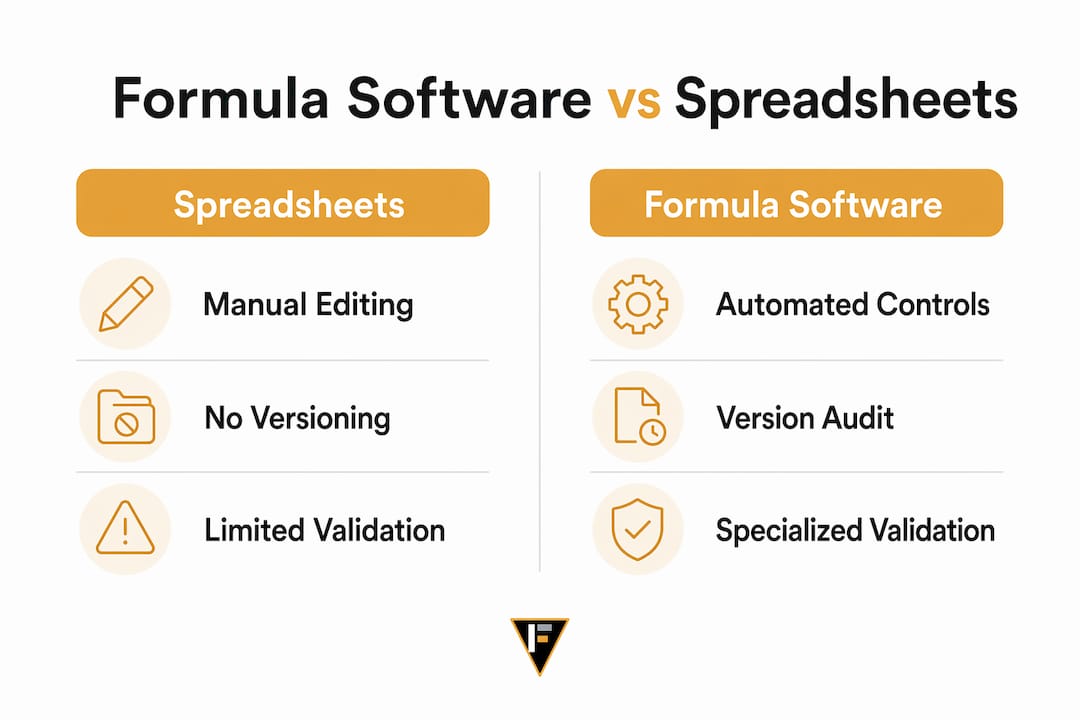
Here is a direct comparison:
| Feature | Excel / Google Sheets | Dedicated Formula Software |
|---|---|---|
| Formula editing | Manual, no audit trail | Versioned, logged, reversible |
| Validation | No built-in limits | Constraint checks and alerts |
| Ingredient database | Manual entry | Managed library with properties |
| Compliance tracking | None | Built-in regulatory flags |
| Collaboration | Shared file conflicts | Role-based access and approvals |
| Scaling calculations | Manual formulas | Automated batch scaling |
| AI formula generation | Add-on only | Native in modern platforms |
Open-source options like cellforge, a React spreadsheet component built on HyperFormula, show that formula-first design is possible even in lightweight tools. Cellforge supports lossless XLSX round-trips and editable virtualized grids with formula evaluation. It is a developer-facing option, not a plug-and-play product development tool, but it illustrates how formula-first architecture differs from a standard spreadsheet at the code level.
Specialized platforms like Formula 5.4 go further. Formula 5.4 is built specifically for paint formulation, with enhanced comparison tools and admin controls released in april 2026. That level of domain specificity is what separates formula software from a spreadsheet with clever formulas.
Pro Tip: If your team is still managing formulas in shared Google Sheets, run a version audit. Count how many times a formula changed in the last 90 days without a written record. That number is your risk exposure.
Which formula software tools should entrepreneurs consider?
The market in 2026 includes domain-specific platforms, AI-powered tools, and open-source components. The right choice depends on your product category and how much of your workflow you want to automate.
Formula 5.4
Formula 5.4 is the leading dedicated platform for paint and coating formulation. Its april 2026 release added enhanced comparison tools and admin controls that improve usability for larger teams. It tracks physical and chemical properties, manages composition, and handles regulatory requirements. If you are in coatings or industrial products, this is the category benchmark.
Formula genius
Formula Genius converts plain English into Excel formulas, Google Sheets formulas, SQL queries, and scripts. You describe what you want in normal language, and the tool generates the correct formula. The plain-English-to-formula conversion is its core function, and it targets users who know what calculation they need but not how to write it. For entrepreneurs who are not spreadsheet power users, this removes a real bottleneck.
Formula bot
Formula Bot is trusted by over 1 million users for AI-powered formula generation and automatic data analysis inside Excel. That user base reflects genuine adoption, not just marketing. It generates formulas, explains existing ones, and visualizes data without requiring any coding knowledge. It is the fastest entry point for teams already working in Excel.
Qalculate!
Qalculate! is an open-source desktop calculator with advanced math functions including numerical integration, differentiation, and symbolic math. It is not a product formulation tool, but it is a strong option for engineers who need a reliable math formula application for standalone calculations outside a spreadsheet environment.
| Tool | Best For | AI Features | Open Source |
|---|---|---|---|
| Formula 5.4 | Paint and coatings formulation | No | No |
| Formula Genius | Excel/Sheets formula generation | Yes | No |
| Formula Bot | Excel data analysis and formulas | Yes | No |
| cellforge | Developer-built spreadsheet apps | No | Yes |
| Qalculate! | Engineering math calculations | No | Yes |
For entrepreneurs exploring alternatives to complex ingredient and dosage platforms, the top formula software alternatives post on the Formlypro blog covers eight options worth reviewing before you commit to a subscription.
How to use formula software effectively in product development
Knowing which tool to use is only half the work. How you integrate it into your workflow determines whether it saves you time or creates new problems.
- Start with your formula architecture. Before entering a single ingredient, define your formula structure: what properties you are tracking, what regulatory limits apply, and what a "passing" formula looks like. This prevents rework later.
- Import your existing data cleanly. Most platforms accept Excel or CSV imports. Audit your existing spreadsheet data before importing. Garbage in, garbage out applies here more than anywhere else.
- Set up version control from day one. Name your versions consistently (v1.0, v1.1, v2.0) and write a one-line note for every change. This habit takes 30 seconds per edit and saves hours during compliance reviews.
- Use AI features for first drafts, not final versions. Formula Genius and Formula Bot are excellent for generating a starting formula or calculation. Always validate the output against your ingredient database and regulatory limits before treating it as final.
- Assign roles before you invite collaborators. Decide who can edit, who can approve, and who can only view. Changing permissions after a team is already working in the system creates confusion and version conflicts.
- Run scaling checks at every prototype stage. Formulation analytics can accelerate R&D by 50% when used consistently. The gains come from catching scaling errors early, not from the software itself.
Pro Tip: Build a "formula freeze" rule into your process. Once a formula enters prototype testing, no edits are allowed without a new version number and a written reason. This single rule prevents the most common source of test data confusion.
The most common pitfall is treating formula software as a storage tool rather than a workflow tool. The value is in the validation, the version history, and the compliance flags. If you are only using it to save files, you are leaving most of the value on the table. Peptide and pharmaceutical researchers face similar workflow challenges, and the peptide formulation development process offers a useful parallel for understanding how structured formula management applies across product categories.
Key takeaways
Dedicated formula software outperforms spreadsheets for product development because it combines calculation accuracy with version control, compliance tracking, and team collaboration in a single system.
| Point | Details |
|---|---|
| Formula software vs. spreadsheets | Spreadsheets handle math; formula software handles compliance, versioning, and ingredient management. |
| AI tools accelerate workflows | Formula Bot and Formula Genius generate formulas from plain English, cutting time for non-technical founders. |
| Version control is non-negotiable | Every formula change needs a logged reason and version number to support compliance and reproducibility. |
| Domain-specific tools win | Formula 5.4 for coatings and Formlypro for consumer products outperform general tools in their categories. |
| Analytics drive R&D speed | Formulation analytics can cut R&D time by 50% when applied consistently across the development cycle. |
Why most founders pick the wrong tool first
I have watched a lot of product developers make the same mistake: they pick formula software based on the feature list, not the workflow fit. A tool can have AI formula generation, version control, and compliance flags, and still be wrong for your team if the interface requires a 40-hour learning curve before your first useful output.
The tools that actually stick are the ones where a founder with no chemistry background can open a formula, understand what they are looking at, and make a decision. Formula Bot earns its 1 million user count because it removes friction, not because it has the deepest feature set. Formula 5.4 earns its reputation in coatings because it speaks the language of that industry, not because it is the most technically advanced software on the market.
My honest observation after watching this space evolve: the AI features are real, but they are not magic. Formula Genius converting plain English into Excel formulas is genuinely useful. It does not replace a formulator who understands why an ingredient is in a formula. The best use of AI in formula software is to handle the mechanical work so your team can focus on the decisions that require judgment.
For entrepreneurs building consumer products, the gap I see most often is between formulation and compliance. Teams spend months perfecting a formula and then discover a regulatory issue that requires reformulation. The software tools that close that gap, the ones that flag compliance issues during formulation rather than after, are the ones worth paying for.
The future of formula software is tighter integration between formulation, market data, and compliance in a single platform. That is not a prediction. That is already happening.
— Ben
How Formlypro fits into your product development stack
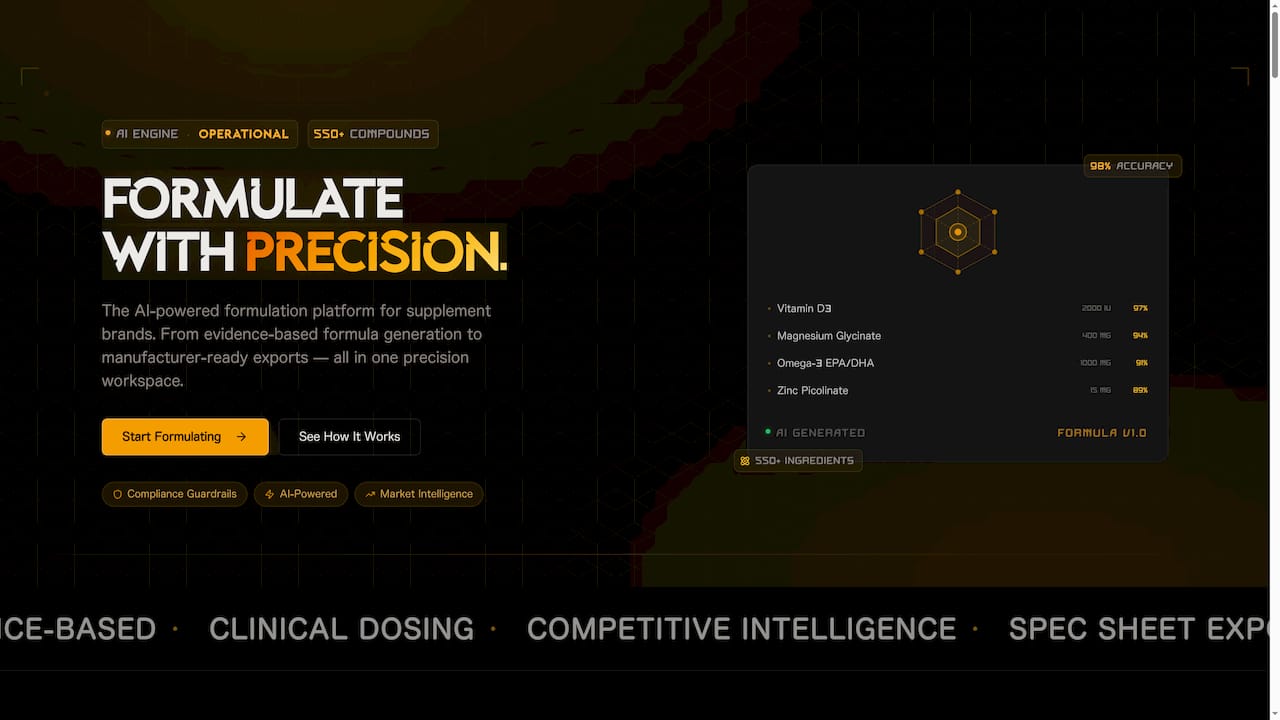
Formlypro is built specifically for entrepreneurs and product developers who need more than a formula calculator. The platform covers the full product development cycle: formulation, compliance, market research, competitor analysis, packaging design, and production planning across an 8-phase workflow. You get formula management with calculation accuracy and compliance guidance built in, plus an AI Mockup designer for custom packaging and market positioning tools that show you what competing products contain. If you are taking a product from idea to shelf, start with Formlypro to see how the platform handles every phase without requiring you to stitch together five separate tools.
FAQ
What is formula software used for in product development?
Formula software is used to create, edit, validate, and track product formulations, including ingredient ratios, batch scaling, and compliance checks. It replaces manual spreadsheet workflows with structured version control and validation.
How is formula software different from excel?
Excel handles calculations but has no built-in ingredient database, compliance flags, or version audit trail. Dedicated formula software provides all three, making it the better choice for regulated product categories.
Can AI tools like formula bot replace a professional formulator?
Formula Bot and Formula Genius accelerate formula creation by converting plain English into working formulas, but they do not replace domain expertise. AI handles the mechanical translation; a formulator handles the judgment calls.
What is the best formula software for consumer product entrepreneurs?
Formlypro is purpose-built for consumer product entrepreneurs, covering formulation, compliance, market research, and packaging in one platform. For Excel-based workflows, Formula Bot is the fastest entry point with over 1 million users.
Is open-source formula software a viable option for startups?
Open-source tools like cellforge and Qalculate! are viable for developers and engineers with technical resources. For non-technical founders, a managed platform with built-in compliance and support is a more practical starting point.