

TL;DR:
- Agencies serve as strategic partners that ensure compliance and feasibility at every stage of product formulation.
- Early involvement with agencies prevents costly reformulation and helps meet regulatory requirements from the start.
Agencies in product formulation are defined as technical and regulatory partners that integrate compliance, scientific validation, and market intelligence directly into the development process. Brand managers and product developers who understand the role of agencies in product formulation gain a measurable advantage: formulation decisions lock in delivery systems and ingredient concentrations that dictate compliance across markets, making early agency involvement non-negotiable. Regulatory bodies like the FDA, EMA, and PMDA each impose distinct requirements, and agencies translate those requirements into formulation-level decisions before a single prototype is built. Formlypro structures this entire process through an 8-phase plan that takes brands from ideation through production, embedding compliance at every stage.
What core functions do agencies perform in the product formulation process?
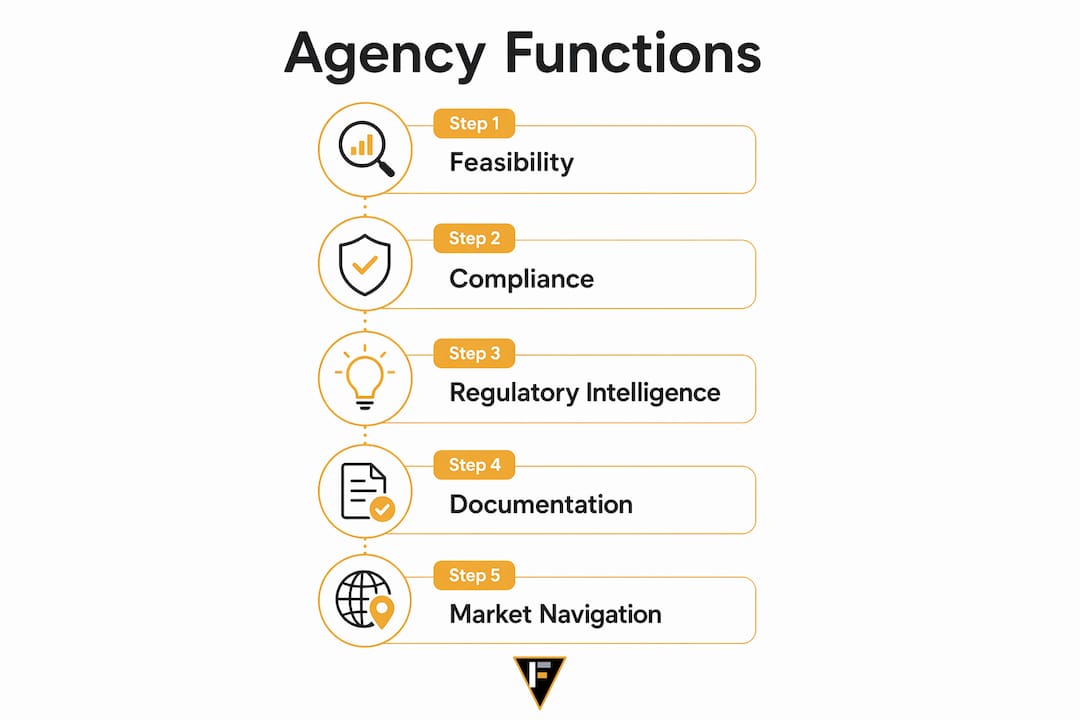
Agencies perform far more than paperwork review. Their core function is to act as a technical checkpoint at every stage of development, from raw material sourcing through manufacturing validation.

The most underappreciated function is feasibility analysis. Before a formula is finalized, agencies assess material availability, chemical stability, and cost viability. A formula that looks perfect in a lab may rely on an ingredient with a six-month supply lead time or a concentration that exceeds EU limits. Catching that in week two costs nothing. Catching it after a pilot batch costs months.
Regulatory compliance is embedded from the start, not bolted on at the end. Agencies supporting over 90 specialized experts navigate FDA, EMA, and PMDA frameworks simultaneously, reducing time-to-market by building regulatory requirements into the formulation brief itself. That approach prevents the most expensive outcome in product development: a complete reformulation after regulatory rejection.
Documentation management is the third major function. Agencies produce audit-ready technical dossiers that include stability data, excipient purity records, and safety assessments. Incomplete documentation forces brands to hire second consultants, which doubles costs and delays launch timelines. A complete dossier from the start eliminates that risk entirely.
The fourth function is lifecycle management. Agencies do not disappear after launch. They monitor post-market surveillance data, manage label updates triggered by new regulations, and prepare variation submissions when formulas need adjustment. That ongoing oversight protects the brand from penalties and market withdrawals long after the product hits shelves.
- Feasibility analysis: Material sourcing, stability screening, and cost modeling before prototyping begins
- Regulatory compliance integration: FDA, EMA, and PMDA requirements built into the formulation brief
- Technical documentation: Stability data, excipient purity, and safety assessments compiled into audit-ready dossiers
- Lifecycle management: Post-market surveillance, label updates, and variation submissions
Pro Tip: Require your agency to deliver a compliance gap analysis before the first prototype is approved. That single document will surface regulatory conflicts that would otherwise surface during submission review.
How do agencies use regulatory intelligence to navigate global markets?
Regulatory intelligence is the practice of monitoring legislative changes across markets and translating those changes into formulation decisions before they become compliance failures. Agencies that provide this service act as early warning systems, not just approval processors.
The practical value is significant. A formula compliant in Q1 2026 in the US may be illegal in the EU by launch without anticipatory agency guidance. Ingredient concentration limits, permitted preservatives, and labeling requirements all shift on different timelines across different jurisdictions. An agency tracking those changes in real time adjusts the formulation before the change takes effect, not after a recall notice arrives.
Agencies also translate scientific data into health-authority-ready presentations. A toxicology study written for internal review reads very differently from a submission document prepared for the FDA's Center for Drug Evaluation and Research or the EMA's Committee for Medicinal Products for Human Use. Agencies bridge that gap by reformatting, contextualizing, and prioritizing data in the language regulators expect.
Harmonizing international compliance is where agencies create the most leverage for brands targeting multiple markets simultaneously. A single formulation strategy that satisfies FDA, EMA, and PMDA requirements from the start eliminates the need for three separate development tracks. Agencies help brands avoid costly withdrawals by providing oversight from pre-clinical development through post-market surveillance, covering the full product lifecycle under one coordinated strategy.
Accelerated approval pathways are another area where regulatory intelligence pays off directly. Agencies familiar with FDA Breakthrough Therapy designation or EMA PRIority MEdicines (PRIME) eligibility criteria can position a formulation to qualify, cutting months from the approval timeline. That speed advantage compounds when a brand is racing to establish market position before competitors.
Pro Tip: Ask any agency you evaluate to show you a recent example of a proactive formulation adjustment they made in response to a regulatory change. If they cannot produce one, their regulatory intelligence function is reactive, not predictive.
What strategic advantages do integrated agency collaborations provide?
The difference between treating an agency as a vendor and treating it as an integrated team member is the difference between managing handoffs and managing outcomes. Firms embedding agencies via collaborative models outperform those using agencies only as handoff vendors by resolving cross-functional bottlenecks in real time. That is not a marginal improvement. It changes the fundamental speed and reliability of the development process.
The four strategic advantages of full integration are:
-
Silo elimination. Integrated agency teams sit at the intersection of chemistry, engineering, and manufacturing. When a formulation change affects production equipment tolerances, the agency flags it immediately rather than waiting for a formal review cycle. That real-time communication prevents the cascading delays that kill launch timelines.
-
Design for manufacturability (DFM). DFM ensures formulas scale from lab to production without redesign. Most brand managers do not encounter DFM as a formal discipline until they have already experienced a scale-up failure. Agencies that apply DFM principles from the first formulation brief prevent that failure entirely.
-
Audit-ready documentation from day one. When agencies are integrated rather than consulted at the end, documentation is built continuously rather than assembled under deadline pressure. That produces cleaner technical files, fewer regulatory queries, and faster approval timelines.
-
Faster development cycles. Top-tier agencies apply an 8-phase process from market insight through pilot batch quality inspection. That structured process eliminates the ambiguity that slows internal teams who are building a development framework from scratch on every new project.
Pro Tip: Build agency involvement into your project charter at the ideation stage, not the submission stage. The cost of early involvement is always lower than the cost of late-stage reformulation.
How can brand managers select and collaborate with agencies effectively?
Selecting the right agency is a decision that shapes every downstream outcome. The wrong agency creates documentation gaps, misses regulatory windows, and hands off incomplete work that forces you to hire additional consultants. The right agency functions as a permanent extension of your development team.
Criteria for agency selection
Evaluate agencies on four dimensions before signing any agreement:
- Regulatory depth: Does the agency have demonstrated experience with FDA, EMA, and PMDA submissions for your specific product category? Ask for submission histories, not just capability lists.
- Lifecycle coverage: Does the agency support post-market surveillance and variation management, or do they exit at launch? Agencies that exit at launch leave you without support during the most compliance-intensive period.
- Communication structure: Does the agency assign a dedicated regulatory lead, or do you communicate through a rotating account team? Continuity of contact directly affects documentation quality.
- Documentation standards: Request a sample technical dossier. If it is incomplete or poorly organized, that is the quality you will receive under deadline pressure.
Best practices for integration
Once selected, the agency needs to be embedded in your workflow, not consulted at milestones. Share your internal project management tools with the agency team. Include agency leads in formulation review meetings, not just regulatory review meetings. Require the agency to attend manufacturing partner discussions so DFM considerations are raised before tooling decisions are made.
Milestone reviews should be structured around regulatory checkpoints, not just development phases. A review at the end of formulation development that does not include a compliance gap assessment against current FDA and EMA guidance is a missed opportunity. Use a regulatory compliance checklist at each milestone to confirm that documentation, stability data, and labeling are current.
Formlypro's 8-phase plan structures exactly this kind of integrated workflow, embedding compliance, market research, and formulation validation into a single coordinated process. Brand managers who follow a structured phase plan reduce the risk of late-stage reformulation and avoid the double-consultant cost that comes from incomplete agency documentation.
Pro Tip: Require a written handover protocol from your agency at each phase gate. That document should confirm what was completed, what regulatory decisions were made, and what the next phase requires. Without it, institutional knowledge lives in email threads.
Key Takeaways
Agencies in product formulation are strategic partners that determine compliance, speed, and cost outcomes across the entire product lifecycle, not just at the point of regulatory submission.
| Point | Details |
|---|---|
| Early agency involvement | Embedding agencies at ideation prevents costly reformulation and compliance failures at submission. |
| Regulatory intelligence | Agencies monitor FDA, EMA, and PMDA changes in real time to adjust formulations before launch. |
| DFM prevents scale-up failure | Design for manufacturability ensures lab formulas translate to production without redesign delays. |
| Integrated teams outperform vendors | Agencies embedded in internal workflows resolve cross-functional bottlenecks faster than handoff models. |
| Documentation quality determines cost | Audit-ready dossiers from the start eliminate the need for second consultants and reduce approval timelines. |
Why I think most brands still get agency collaboration wrong
The shift I have watched over the past several years is real: agencies have moved from compliance clerks to genuine strategic partners. But most brand managers have not updated their mental model to match. They still bring agencies in at the submission stage, hand over a completed formula, and expect a clean approval. That approach fails more often than it succeeds.
The brands that consistently launch on time and on budget treat their agency the way a construction firm treats a structural engineer: present from the blueprint stage, not called in after the walls are up. The importance of agencies in formulation is not just regulatory. It is architectural. The decisions made in the first two weeks of formulation development determine what is possible in every phase that follows.
The uncomfortable truth is that most brands underinvest in agency relationships because they see them as a cost center rather than a risk management function. A single post-launch recall costs more than years of integrated agency fees. The math is not complicated. What is complicated is convincing a product team to slow down at ideation to get the regulatory foundation right. That is the conversation worth having early, and it is the one most teams avoid until it is too late.
— Ben
Formlypro and the agency-integrated formulation process
Brand managers and product developers who want the structure of integrated agency collaboration without the overhead of managing multiple external partners have a direct path forward with Formlypro.

Formlypro's platform combines an 8-phase product development plan with built-in compliance guidance, market research, competitive analysis, and a packaging design tool with an AI mockup designer. Every phase from ideation through production is structured to embed regulatory and formulation decisions together, the way an integrated agency model works in practice. Brand managers can build market-ready formulations with research-backed ingredient data, compliance checkpoints, and packaging design all in one place. Explore what Formlypro offers at formlypro.com.
FAQ
What is the role of agencies in product formulation?
Agencies in product formulation act as technical and regulatory partners that integrate compliance requirements, feasibility analysis, and documentation management from the earliest stages of development. Their involvement prevents costly reformulations and ensures products meet FDA, EMA, and PMDA standards before submission.
When should brand managers involve agencies in product development?
Agencies should be involved at the ideation stage, not the submission stage. Early involvement allows agencies to embed regulatory requirements into the formulation brief and apply design for manufacturability principles before prototyping begins.
What is regulatory intelligence in the context of formulation?
Regulatory intelligence is the ongoing monitoring of legislative changes across markets, allowing agencies to adjust formulations proactively before new ingredient limits or labeling rules take effect. A formula compliant in one jurisdiction today may require adjustment before launch in another.
How do agencies reduce product development costs?
Agencies reduce costs by delivering audit-ready technical dossiers that eliminate the need for second consultants, applying DFM principles that prevent scale-up failures, and catching compliance conflicts before they require full reformulation.
What should brand managers look for when selecting a formulation agency?
Evaluate agencies on regulatory depth across FDA, EMA, and PMDA frameworks, lifecycle coverage through post-market surveillance, communication continuity with a dedicated regulatory lead, and the quality of their technical documentation standards.