
Choosing formulation and compliance software that combines time savings, regulatory accuracy, and affordable access frustrates brands seeking to develop new products efficiently. Many incumbents hide pricing, require enterprise procurement, or force users to manage regulatory checks and documentation outside their core software. This comparison covers features, regulatory support, and price across four alternatives so you can pick a Pathforward Formulator replacement that meets your workflow needs.
Table of contents
Formlypro
At a glance
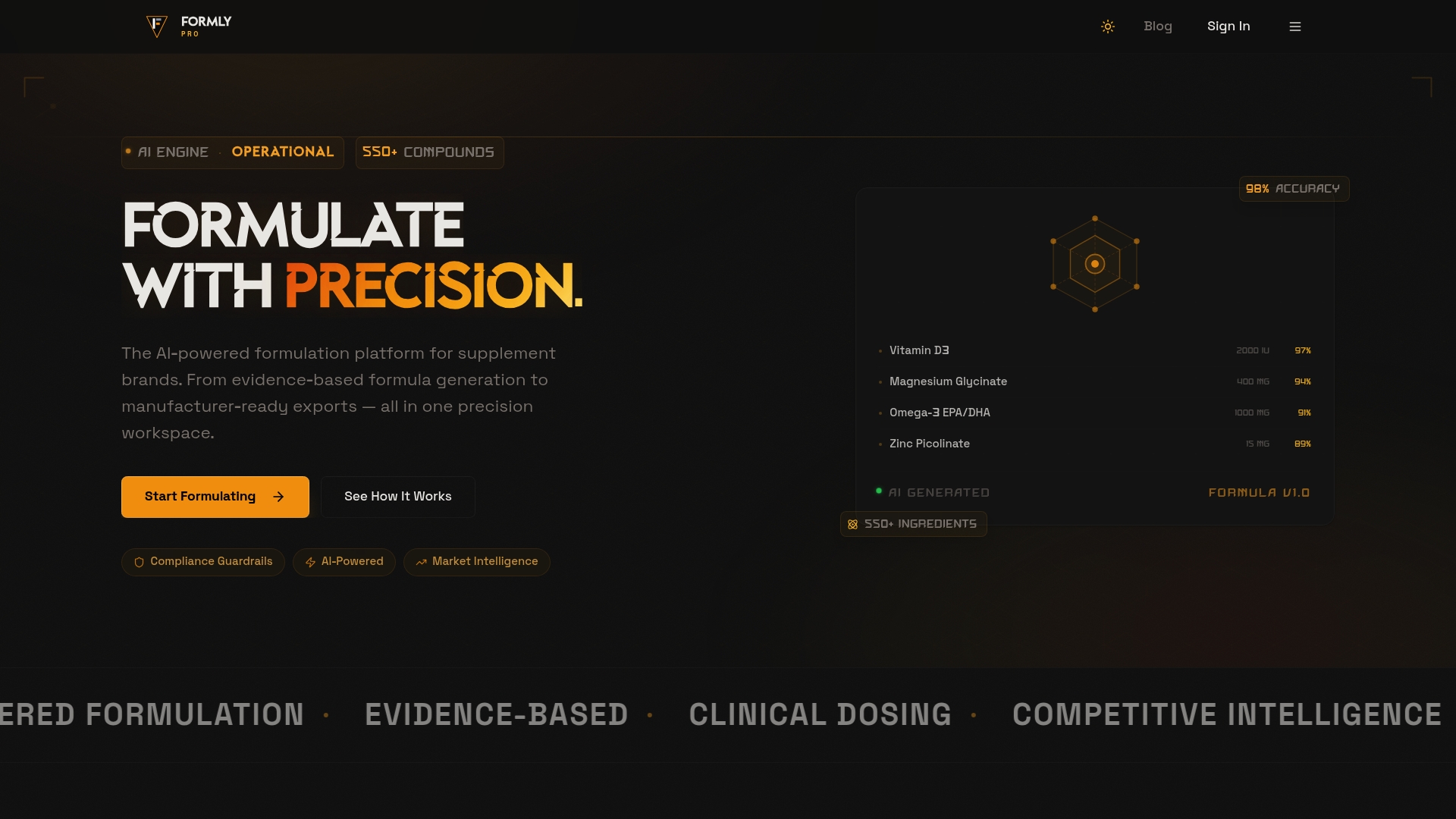
FormlyPro reports it can reduce product development time by up to 90%. That claim points to large time savings when teams move from manual formulation to guided workflows. The platform targets supplement brands and aims to shorten R&D and lower per-product costs.
Core features
FormlyPro combines formula generation, compliance checks, market research, and packaging tools inside one web only workspace. The system includes an evidence library that flags safety and regulatory concerns. It offers planning tools to track product progress from idea to manufacturer.
- AI-generated formulas with evidence-backed references for ingredient choices.
- ingredient library with safety and regulatory flags and source notes.
- Competitor label parsing and side by side comparisons for market positioning.
- Product pipeline planner that tracks tasks, milestones, and exports.
- Manufacturer ready spec sheets and compliance guardrails for vendor handoff.
Key differentiator
The platform's single most distinct capability is the pairing of AI-generated evidence-backed formulas with built-in competitor analysis and compliance guidance. That combination keeps formulation, label comparison, and regulatory checks in the same workflow. Teams do not need to stitch separate tools to turn a formula into a manufacturer spec.
Pros
-
Reduces R&D time. The vendor advertises development time cuts up to 90 percent, which shortens iteration cycles and accelerates launch planning.
-
Cuts per-product cost. According to the company, users can save over $5,000 per product compared with traditional development approaches.
-
Built for end-to-end product creation. The platform includes formulation, market research, compliance guardrails, and manufacturer ready exports so handoff to production is cleaner.
-
Competitive intelligence baked in. Competitor label parsing and side by side comparison help you spot formulation gaps and label claims to replicate or avoid.
-
Packaging and launch support. The product includes an 8 phase plan and an AI Mockup designer for packaging so you can iterate packaging and claims in the same account.
Cons
- Depends on AI suggestions; expert review remains necessary for highly regulated products and for final compliance sign off.
Who it's for
FormlyPro fits supplement companies and product developers who need faster formulation cycles and clear compliance guidance. It suits startups that lack internal formulation teams and mid size brands expanding product lines. It also helps agencies creating manufacturer ready specs for clients.
Unique value proposition
An integrated 8 phase product launch plan plus an AI Mockup packaging designer sets FormlyPro apart for teams that want all steps captured in one workspace. That combination reduces time lost moving files between specialists and preserves compliance context from formula through production. The outcome is fewer handoffs and clearer spec exports for manufacturers.
Real world use case
According to the company, a startup used FormlyPro to cut its R&D timeline from eight months to a few weeks. The startup used the platform for evidence backed formula drafts, competitor analysis, packaging mockups, and manufacturer ready exports. That consolidated workflow reduced external consultant hours and accelerated the first production run.
Pricing
FormlyPro offers subscription tiers that scale with features and team needs. Start free at $0, then $99/month for Build, $249/month for Pro, $599/month for Scale, and custom pricing for Enterprise. Higher tier plans unlock advanced features and larger export capacity.
Website: https://formlypro.com
Good face project
At a glance
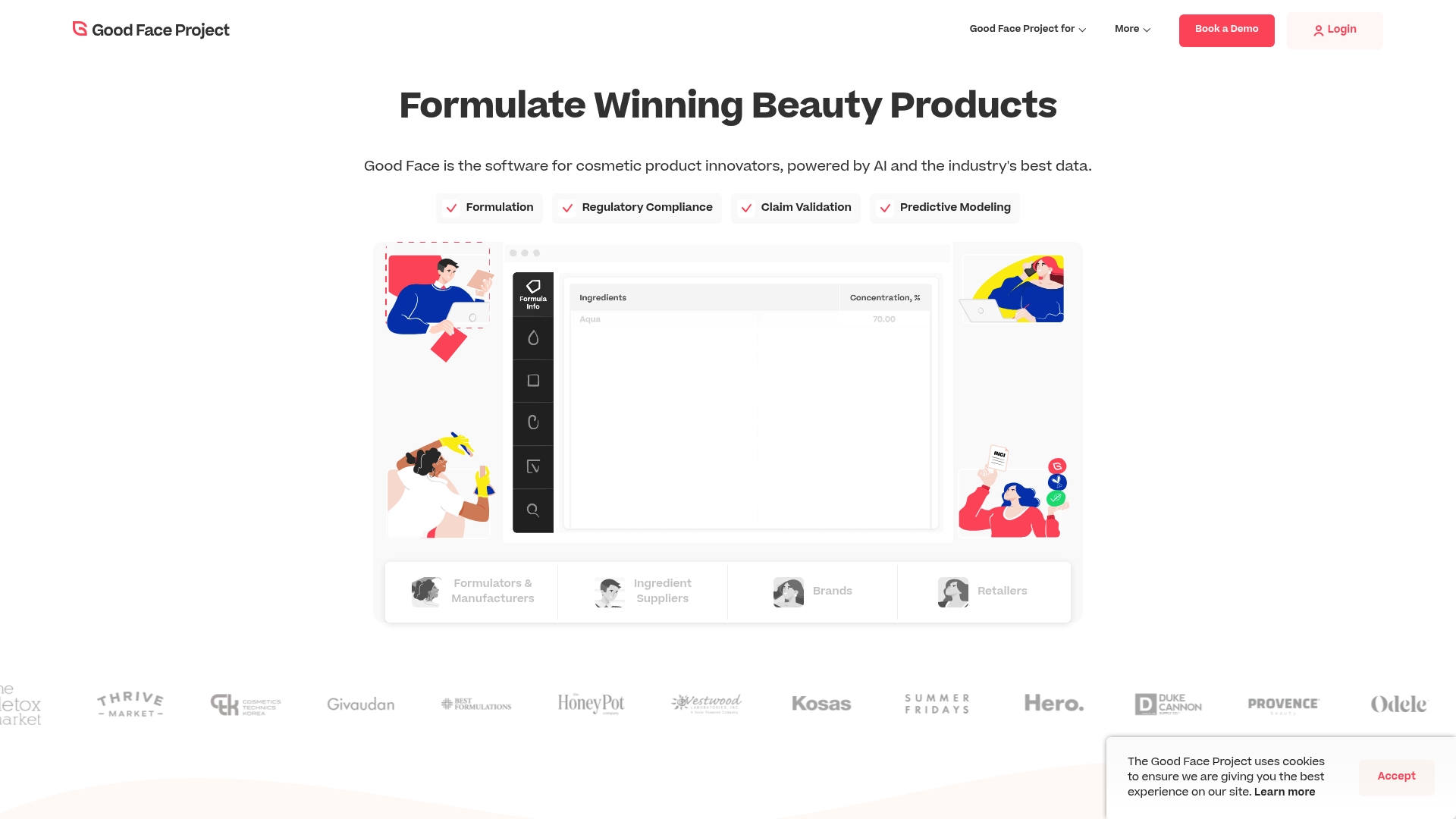
The vendor advertises real time updated global regulations and standards as a core capability. That claim places regulation reference directly inside formulation workflows. The platform also claims an extensive ingredient database paired with private raw material management. These features aim to cut back on rework during product R&D and speed decision making.
Core features
- Real time global regulation updates available within the product design workflow. This keeps regulatory flags visible as formulas change.
- Extensive ingredients database with safety and efficacy notes. Users can search ingredients and view documented constraints for multiple markets.
- Cloud based formulation and compliance workspace for teams and partners. The system supports shared documents and version control for formulas.
- Private raw material data management and validation. Brands can keep supplier data private while validating materials against rules.
- Partner portal for collaboration and document sharing. External R&D partners can access controlled sections without exposing IP.
Key differentiator
Good Face Project centers on integrating regulation reference directly into formulation work. That claim above means compliance checks appear early in the recipe building process. The product combines that regulatory focus with ingredient level safety and efficacy notes. For formulators handling multiple markets this reduces guesswork and late stage reformulation.
Pros
-
Simplifies regulatory checks within the formula editor. Users can spot prohibited ingredients for target markets while editing a formula.
-
Keeps supplier and raw material records private. Teams can validate materials without exposing trade secret data to partners.
-
Centralizes ingredient safety and efficacy details. R&D teams avoid hunting through multiple spreadsheets and supplier PDFs.
-
Supports collaboration with a partner portal. External partners can contribute to development with controlled access to files and formulas.
-
Cloud based access for distributed teams. R&D, regulatory, and sourcing can work from the same dataset.
Cons
-
Public case studies or third party reviews are limited. The available content does not provide independent verification of claims.
-
No explicit list of integrations or documented API capability appears in product data. That may complicate data sync with ERP or PLM systems.
-
Pricing is not published and appears aimed at enterprise customers. Smaller brands should plan for a sales driven procurement process.
Who it's for
Good Face Project fits cosmetic formulators, regulatory teams, and R&D groups inside manufacturers and ingredient suppliers. It suits brands that must clear formulas across several markets and want ingredient level evidence in one place. It also works for teams that share work with external labs or suppliers and need controlled collaboration.
Real world use case
A brand uses Good Face Project to validate raw materials before a pilot batch. The team checks ingredients against target market rules inside the editor and flags replacements. They share the draft formula with a contract lab through the partner portal while keeping supplier specs private. That workflow reduces back and forth and shortens time to prototype.
Pricing
Pricing is not published. The vendor signals enterprise or industry level pricing and usually sells through direct engagement with procurement. Expect custom quotes based on seats, modules, and integration needs.
Website: https://thegoodfaceproject.com
Coptis PLM solution
At a glance
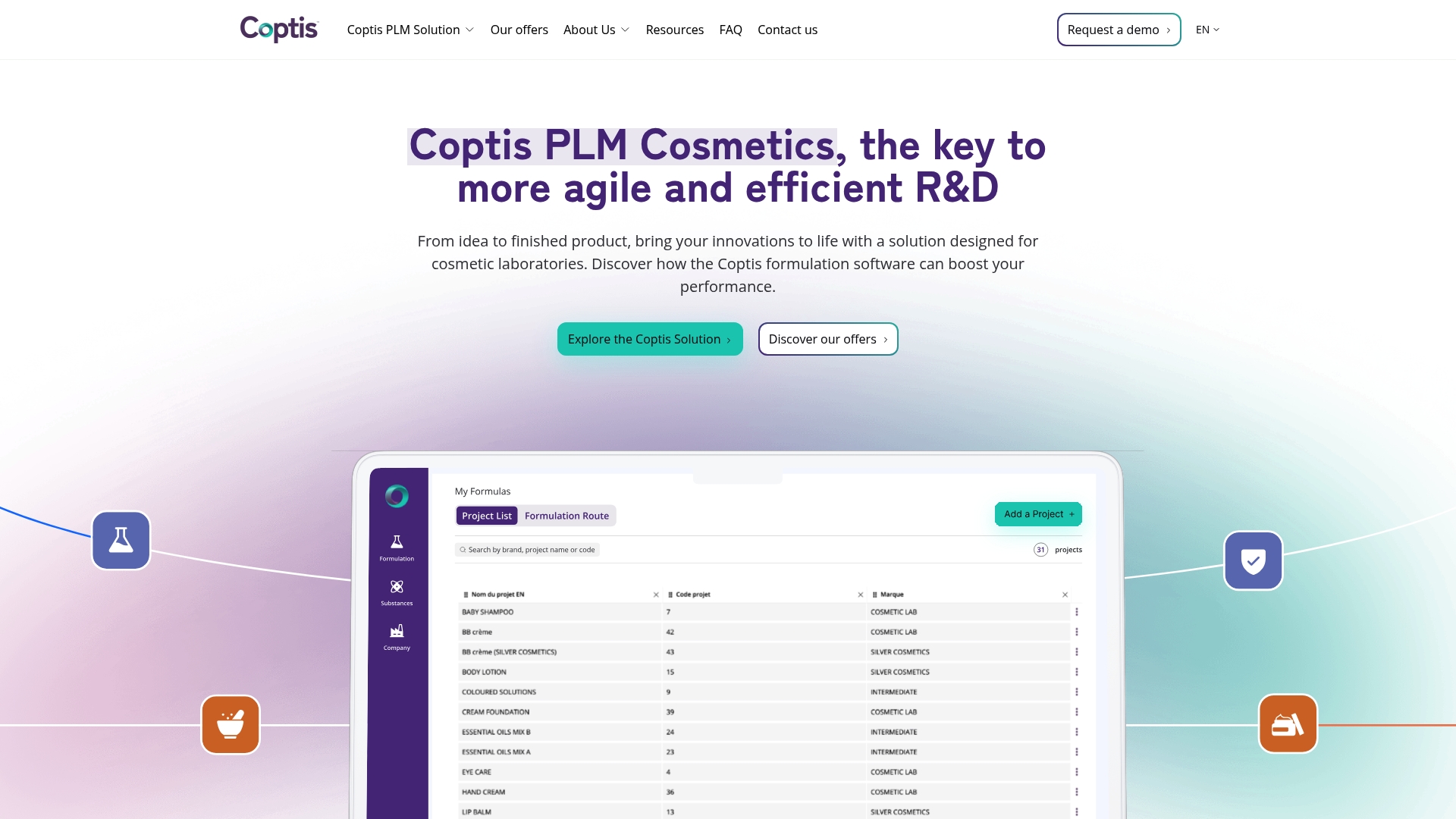
Global presence in Paris, New York, and Singapore anchors Coptis to major cosmetics markets. The vendor describes the product as built for cosmetic laboratories with more than 25 years of industry experience. Coptis focuses on speeding formulation work, tracking compliance, and centralizing R&D data for lab teams.
Core features
Coptis helps labs optimize formulation workflows with tools for recipe management and version control. It supports eco friendly formulation recording and cost tracking so teams can compare ingredient choices. The system includes modules to meet global regulatory requirements and to store regulatory dossiers. It centralizes and secures R&D data across projects. The platform advertises AI acceleration to assist collaboration and suggestion of formulation options.
Key differentiator
Coptis aims specifically at cosmetic laboratories rather than general product makers. The product combines formulation management, regulatory dossier handling, and lab collaboration in a single, lab-focused package. That focus makes it a fit for teams that need domain-specific fields, ingredient libraries, and lab workflow support rather than a generic PLM tool.
Pros
- Deep industry experience backing the product. This shows up in lab-oriented features and terminology familiar to formulators.
- Local support in multiple regions. Offices in Paris, New York, and Singapore mean access to local account contacts and training schedules.
- Covers the full product development cycle from marketing briefs to finished product. Teams can keep formulation records, regulatory files, and test data together.
- Active user community and user clubs. Peer knowledge sharing helps labs adopt best practices faster.
- Responsive technical support and training offerings. The vendor lists training as part of onboarding for new lab users.
Cons
- Pricing and licensing details are not published on the site. That makes budgeting difficult for smaller teams.
- The product page omits specific third party integrations. Buyers will need to confirm integration points during sales conversations.
- The system may be complex for very small labs or solo formulators. Workflow depth adds setup and training burden for small teams.
When it may not fit
Coptis may not fit solo entrepreneurs or micro labs with simple record keeping needs. Small teams that lack an IT or compliance lead will face a steeper implementation. If you need clear, upfront pricing or plug and play integrations, this product requires vendor conversations before commitment.
Who it's for
Cosmetic laboratories and R&D teams that require a lab-centric PLM program. Best for groups that manage multiple product lines and need regulatory dossier control alongside formulation history. Also suited to labs that plan formal training and dedicated admin support.
Real world use case
A mid sized cosmetic lab adopts Coptis to centralize formulation files, stability test results, and regulatory statements. The lab uses the system to compare ingredient variants and to assemble exportable compliance dossiers. That reduces repeated data entry and keeps marketing, R&D, and compliance aligned.
Pricing
The vendor lists pricing as not applicable on the public site and provides informational materials only. Prospective buyers must contact sales for licensing models, tier options, and training costs.
Website: https://coptis.com
KosmetikOn
At a glance
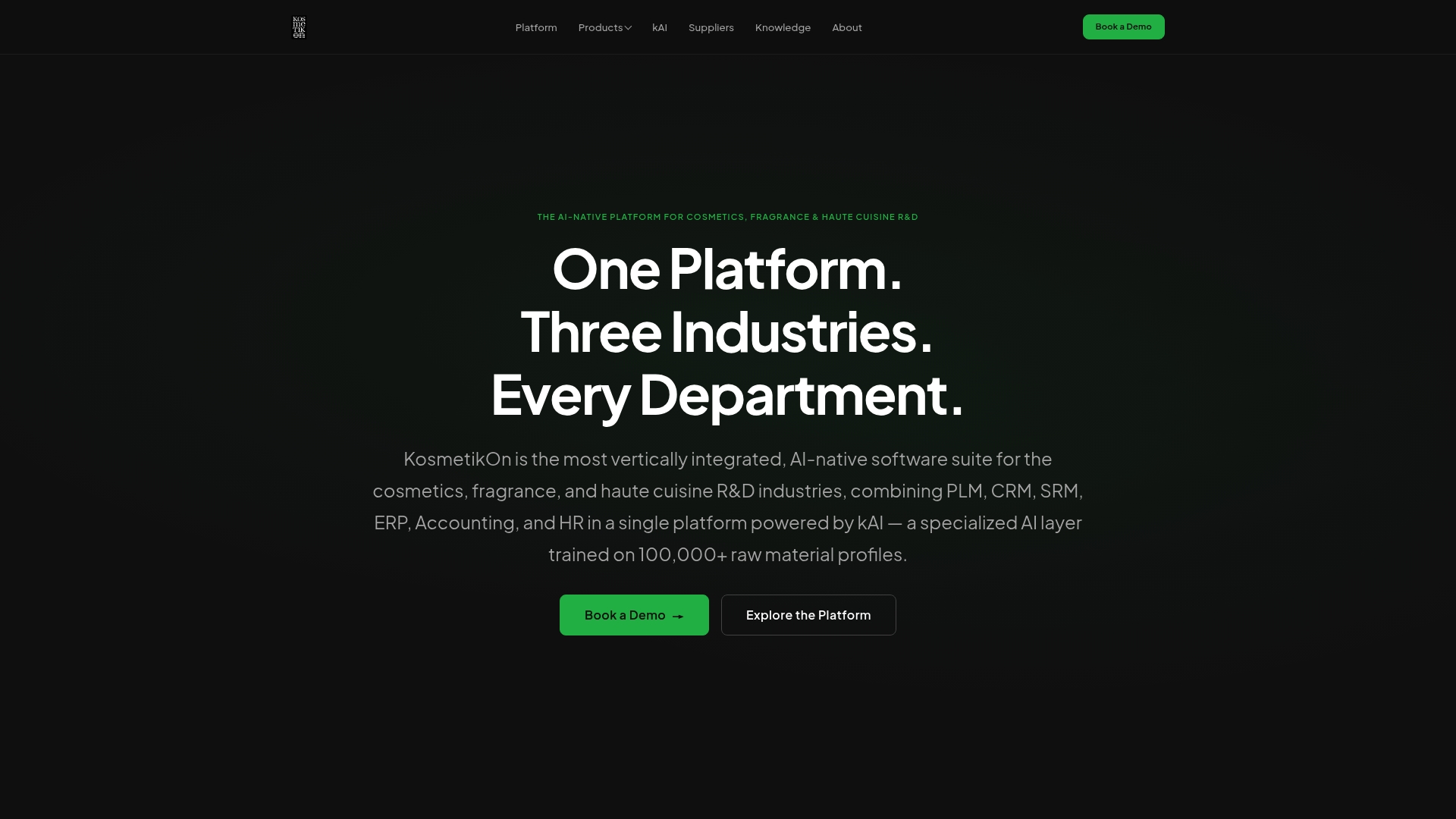
KosmetikOn reports kAI was trained on 100,000+ raw material profiles. That training claim underpins the platform's ingredient suggestions and safety checks. The product combines PLM, CRM, SRM, ERP, accounting, and HR into a single connected architecture for cosmetics and fragrance workflows. It targets mid-size to large firms that need traceability from R&D through manufacturing.
Core features
- kAI powered ingredient recommendations and safety assessments tied to industry datasets.
- PLM plus procurement, manufacturing, and sales modules in one system to keep formulas, batches, and documents together.
- Automated regulatory checks for EU Cosmetics, IFRA, and REACH with INCI list generation and Margin of Safety calculations.
- Supplier ecosystem and Labify® Factory ERP integration for batch management, traceability, and document exchange.
- Built-in document generation for SDS, dossiers, and certificates of analysis.
Key differentiator
KosmetikOn bundles industry-specific datasets with a proprietary AI layer. That combination focuses the platform on cosmetics, fragrance, and haute cuisine workflows. The vendor positions this as a single platform that replaces multiple point systems and reduces manual handoffs between R&D, regulatory, procurement, and manufacturing. For regulated product teams this alignment reduces duplication of formula data across departments.
Pros
-
Industry data speeds compliance tasks. Purpose-built raw material profiles and regulatory statuses reduce guesswork during formulation.
-
The platform centralizes lifecycle management. Keeping formulas, batch records, and supplier documents together lowers re-entry errors.
-
Automated documentation cuts hours from dossier and SDS preparation. That benefit matters when you must respond to audits or supplier requests quickly.
-
Integration with manufacturing controls and batch management supports traceability from lab to production. This helps quality and recall readiness.
-
The system connects procurement and supplier communication. Teams can request samples and exchange certificates without separate email threads.
Cons
-
Independent verification of some vendor claims is limited. The product materials make strong claims that rely on the vendor's own reports.
-
The platform's scope adds complexity and cost. Small or very early-stage brands may find the implementation overhead heavy.
-
Deployment and training will likely require time and dedicated change management. Expect an implementation phase rather than an instant switch.
Who it's for
Companies in cosmetics, fragrance, or haute cuisine with established R&D and manufacturing functions will gain the most. Mid-size to large teams that need integrated formula management, regulatory validation, and supplier traceability should consider this product. Single-person brands or firms without manufacturing ties will probably find the platform overspecified.
Real world use case
A cosmetic R&D lab imports a new formula into KosmetikOn, runs the platform's safety checks, and generates an INCI list and SDS. The lab then requests certificates from suppliers within the same system. Once validated, the formula transfers to the Labify® Factory ERP module for batch production and traceability documentation.
Pricing
KosmetikOn does not list public pricing. The vendor signals enterprise or custom quotes are likely. Expect license and implementation costs aligned with multi-module deployments and integration work.
Website: https://kosmetikon.io
Comparison of alternatives
Choosing the right formulation platform depends on balancing end-to-end features with specific industry needs.
Feature comparison
FormlyPro offers an advanced array of tools, combining AI-driven formula generation with market analysis and compliance functionalities. Alternatively, platforms like Good Face Project emphasize ingredient-level regulatory updates within workflows, excelling in formulations for regions with diverse safety regulations. Similarly, KosmetikOn integrates product lifecycle management with compliance tools tailored for cosmetics, while Coptis focuses deeply on laboratory operations with a notable alignment to eco-friendly practices.
Application-specific strengths
KosmetikOn’s exceptional regulatory tools for cosmetics set it apart, combining compliance automation with lifecycle management features. In contrast, Good Face Project’s adaptation for multi-market compliance makes it a prudent choice for brands navigating diverse regional requirements. Coptis, on the other hand, offers a detailed focus on laboratories, with resources like detailed training support that benefit more structured teams.
Best fit
- For startup teams seeking rapid product iteration cycles, FormlyPro offers speed and versatility.
- For organizations requiring ingredient transparency across multiple compliance jurisdictions, Good Face Project fulfills this niche particularly well.
- For laboratories prioritizing eco-friendly initiatives and compliance workflows, Coptis PLM Solution is an ally.
- For companies integrating diverse operational requirements into a centralized framework, KosmetikOn demonstrates excellent system connectivity.
Our pick
FormlyPro’s unique feature of combining competitor analysis with compliance workflows within the same platform makes it the prime choice for small-to-medium supplement brands. For multi-regional cosmetic representatives prioritizing lab traceability and documentation, KosmetikOn delivers tailored expertise.
Deciding among formulation and compliance platforms revolves around which offers the most integrated and streamlined feature set.
| Product | Core Feature | Key Differentiator | Best For | Pricing | Notable Limitation |
|---|---|---|---|---|---|
| FormlyPro | AI-generated evidence-backed formulas | Paired competitor analysis and compliance | Supplement companies | Free to $599/mo | Expert review needed for high regulation |
| Good Face Project | Real-time global regulation updates | Regulation checks during formulation | Cosmetic formulators | Not disclosed | Limited third-party validation |
| Coptis PLM Solution | Comprehensive lab-centric tools | Focused on cosmetic laboratories | Cosmetics R&D labs | Not disclosed | Complex setup for small teams |
| KosmetikOn | Integrated lifecycle management tools | Proprietary AI with industry datasets | Cosmetics and fragrance brands | Not disclosed | High cost and implementation complexity |
Accelerate your supplement formulation with Formlypro
If you're exploring pathforwardformulator.com alternatives to speed up your product development without sacrificing compliance or market insight, Formlypro offers a powerful solution. It tackles common challenges like lengthy R&D cycles, complex compliance checks, and the need for competitive intelligence—all within a single platform designed for supplement brands.
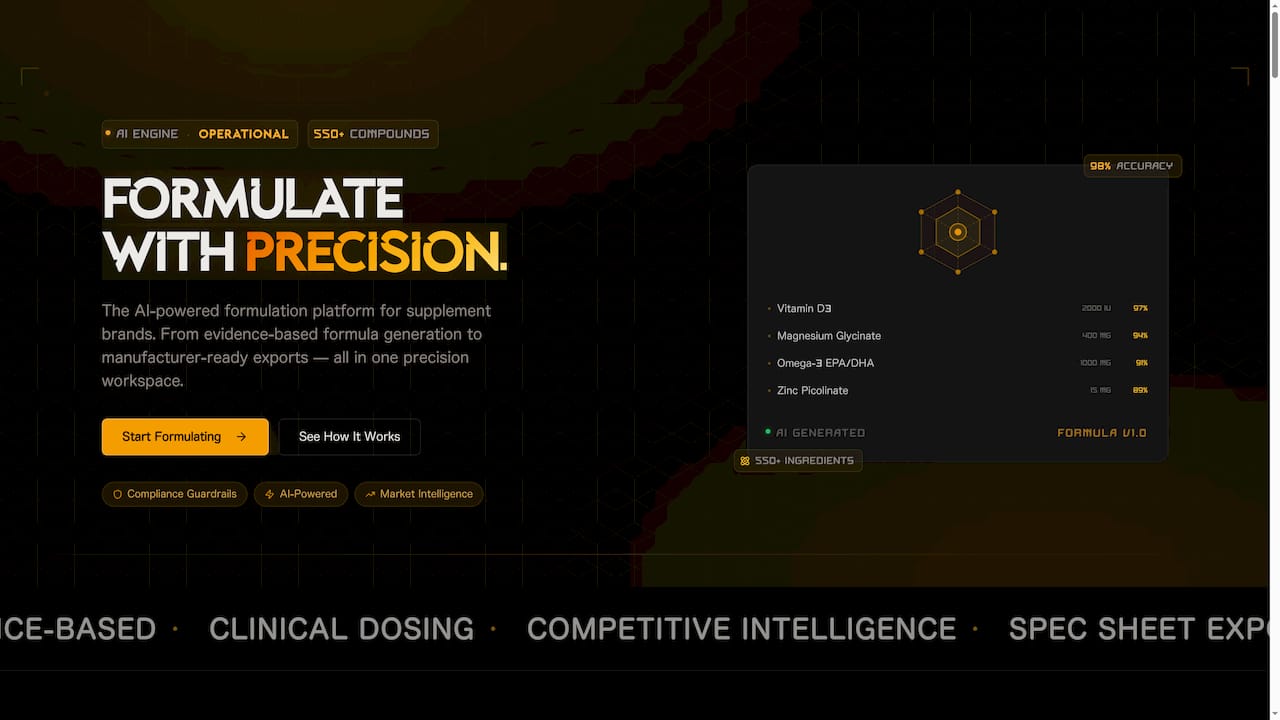
Choose Formlypro to reduce your formulation time by up to 90 percent while gaining access to research-backed formulas, competitor analysis, and an 8-phase launch plan. Get started now at Formlypro and turn your next product idea into a manufacturer-ready, compliant formula with packaging mockups all in one place.
FAQ
What capabilities make Formlypro a strong choice for product development?
FormlyPro excels in reducing R&D time dramatically, claiming cuts of up to 90%. The platform combines AI-generated formulas with compliance checks, which helps streamline the product development process. You can leverage these features to accelerate your product launch and create formulations efficiently.
How does Formlypro compare to good face project in terms of suitability for startup brands?
Good Face Project provides a strong focus on integrating real-time global regulations directly into formulation workflows, which is beneficial for teams needing extensive compliance assurance. In contrast, FormlyPro is ideal for speedier formulation cycles, especially for startups looking to streamline their product development without a dedicated formulation team.
What is a major benefit of using Formlypro for market research?
FormlyPro offers competitor label parsing and side-by-side comparisons, which aid in market positioning and identifying formulation gaps. This feature can be instrumental for effectively adapting to market demands and refining product strategies.
Can startups with limited resources benefit from FormlyPro's pricing structure?
Yes, FormlyPro's pricing begins free at $0, allowing startups to access essential features before deciding to upgrade. The tiered pricing structure scales with the team's needs, making it accessible and manageable for small brands.
What support does Formlypro provide for compliance in product creation?
FormlyPro includes compliance guardrails and evidence-backed references for ingredient choices, which are crucial for ensuring regulatory adherence. These built-in checks can help mitigate risks when transitioning products to market.